Last updated 10.26.2026
Immediate vs. delayed dental implant placement: What changes after an extraction
Compare immediate and delayed dental implant placement after an extraction, including how bone, infection, healing and provisional teeth can affect treatment timing.
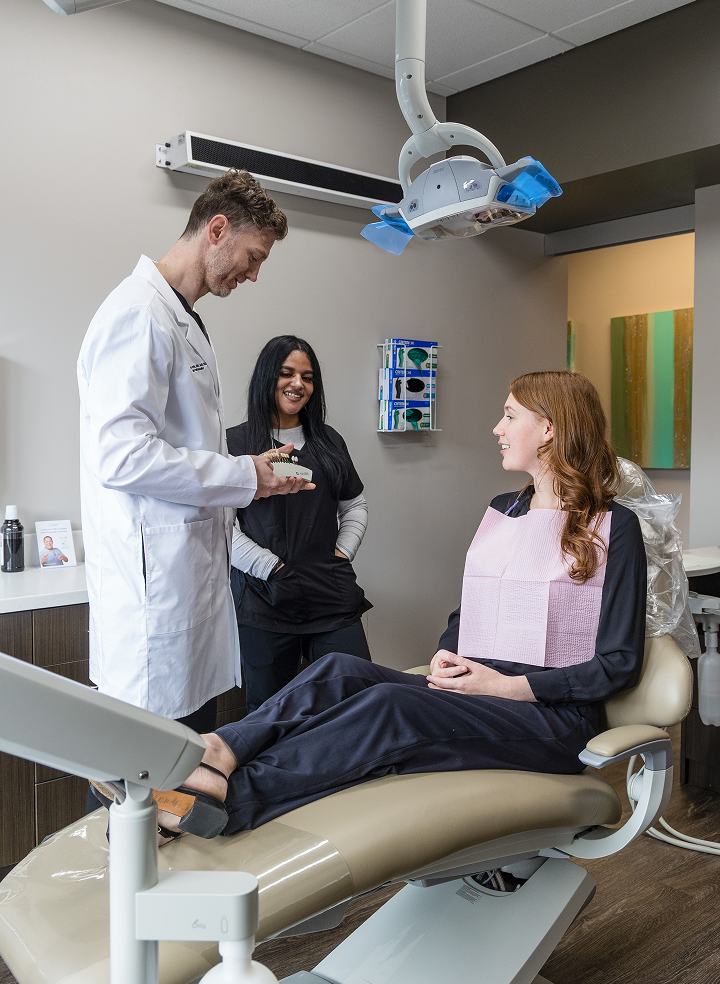
If a tooth needs to be removed and you are considering a dental implant, one of the first questions may be whether the implant can be placed during the same appointment. Sometimes it can. In other situations, the extraction site needs time to heal before implant placement is considered.
These approaches are generally described as immediate and delayed implant placement. Immediate placement means the implant is inserted during the same surgical visit in which the tooth is removed. Delayed placement separates the extraction and implant procedures, allowing some degree of healing to occur before the implant is placed.
Neither approach is automatically better. The right timing depends on the condition of the extraction site, available bone, surrounding gum tissue and the position needed for the future replacement tooth. Infection or inflammation may also influence the plan, along with the patient’s medical history and other factors that can affect healing.
There is another distinction that is just as important. Placing an implant immediately does not necessarily mean receiving a final tooth immediately. Implant placement, provisional teeth and the final restoration are different parts of treatment. Understanding those differences can help patients understand the options that may be available after an extraction.
What immediate and delayed placement actually mean
With immediate placement, the tooth is removed and the dental implant is placed during the same surgical visit. Once the tooth has been extracted, the clinician evaluates the site and positions the implant according to the available bone and surrounding anatomy.
When patient conditions are ideal, combining extraction and implant placement may allow both procedures to be performed during the same surgical visit. This is called immediate implant placement. The implant is positioned to support the future restoration, and the surrounding tissues need time to heal. Depending on the condition of the site, bone grafting may also be performed as part of the procedure.
Delayed placement follows a different sequence. The tooth is removed first and the extraction site is allowed to heal for a few months before implant placement. Usually, the extra healing time is needed to resolve inflammation or infection in the extraction area, or the bone needed grafting due to lack of bone volume for the implant. The tradeoff is that delayed treatment separates the procedures and extends the time between extraction and implant placement.
A clinician recommending delayed placement is not necessarily being overly cautious, just as a clinician recommending immediate placement is not necessarily offering a more advanced approach. The useful question is why a particular sequence makes sense for your extraction site and the tooth being replaced.
What determines whether an implant can be placed at extraction?
Several factors come together when the care team decides whether immediate placement is appropriate. The condition of the extraction socket matters. If parts of the surrounding bone have been damaged or lost because of periodontal disease, infection, trauma or another problem, the clinician needs to determine what other procedures, such as managing the infection or placing bone graft, is necessary to prepare the future implant site.
Gum tissue and nearby anatomy are part of that assessment. The position of adjacent teeth, nerves, sinus spaces and other structures may influence where an implant can be placed without additional procedures.
Medical history, medications, oral hygiene and nicotine use can add another layer to the decision. These factors do not create a single rule that applies to everyone, but they can influence healing and the treatment sequence.
Three-dimensional CBCT X-ray imaging can help clinicians evaluate the bone and nearby anatomy before treatment. The examination and imaging provide information that may assist in treatment planning, but the actual condition of the extraction site may not be fully apparent until the tooth is removed.
That is why an immediate-placement plan sometimes changes on procedure day.
Why the plan can change after the tooth is removed
A well-planned procedure can still require an adjustment after extraction. Once the tooth is out, the clinician can directly evaluate the socket walls, remaining bone, soft tissue and the extent of any defect or disease in the area. Those findings may confirm that immediate placement is appropriate, or they may support a delayed sequence.
A change in timing does not necessarily mean something went wrong. It can mean the clinician received new information from the extraction site and adjusted the treatment accordingly.
This possibility is worth discussing before the procedure because it can affect more than the implant itself. If immediate placement is not possible, will the extraction site be grafted? What will you have for a temporary tooth? When will the site be reevaluated? Could the revised sequence change the treatment cost estimate?
These are practical questions, particularly when a visible front tooth is being removed. Understanding the contingency plan before treatment can help patients prepare for potential changes in the treatment sequence.
How infection and bone grafting affect implant timing
Patients sometimes assume that an infected tooth automatically rules out immediate implant placement. The clinical evidence is more nuanced. Research and implant consensus guidance indicate that immediate placement may be possible in selected sites with previous infection when the area can be appropriately managed and the conditions needed for implant placement are present.
That does not mean every infected extraction site is suitable for an immediate implant. The extent and location of the infection, condition of the bone and soft tissue and ability to thoroughly manage the site all matter.
Feeling better when antibiotics are given before the extraction does not answer the implant-timing question either. Improvement in pain or swelling is not the same as determining that the extraction site can support an implant. The surgical team still needs to evaluate the area.
Bone grafting can also be sequenced in several different ways. When an implant is placed immediately, graft material may sometimes be used around the implant to address the space between the implant and extraction socket or adjacent bone deficiency. In a delayed approach, graft material may be placed in the extraction site and allowed to heal before implant placement is considered.
A larger bone deficiency may require a separate grafting procedure and a different sequence altogether.
If grafting is recommended, ask what problem the graft is intended to address and how it changes the treatment plan. The presence of a graft alone does not tell you whether immediate or delayed placement is preferable.
Immediate placement is not the same as immediate loading
This is one of the most important distinctions for patients researching “same-day implants.”
Immediate placement describes when the implant is inserted into the jawbone. Immediate loading describes when a restoration is attached to that implant. Those decisions are related, but they are not interchangeable.
A clinician might remove a tooth and place an implant during the same appointment, then allow the implant to heal without attaching a provisional replacement tooth. In another situation, an implant may receive a provisional restoration during the same appointment as implant placement.
Full arch treatment creates another version of this distinction. A qualifying patient may have multiple implants placed and receive a provisional set of teeth during surgery day. Those provisional teeth are not the final restoration. Healing and follow-up still occur before the restorative process is complete.
When an advertisement uses terms such as “same-day teeth” or “teeth in a day,” ask exactly what happens on procedure day. Are teeth being extracted? Are implants being placed? Will you receive a provisional restoration? Is it fixed or removable? When is the final restoration expected?
Those answers may provide additional context beyond the advertising phrase itself.
What will you have for a tooth while the site heals?
The possibility of going without a visible tooth can be one of the biggest concerns when delayed implant placement is recommended. Ask about the temporary restoration before the extraction takes place rather than assuming you will have to live with a missing tooth gap.
Depending on the site and treatment plan, a temporary option may include a removable tooth, a bonded provisional restoration or another type of provisional prosthesis. Each approach has some limitations, particularly when the extraction or graft site needs to be protected from pressure.
If an implant is placed immediately, a provisional tooth may sometimes be possible. That still does not mean the tooth can immediately be used for unrestricted chewing. The provisional restoration may be designed to protect the implant from excessive force while healing takes place.
Appearance is a reasonable concern. The goal is to address it as part of restorative planning without allowing the desire for an immediate tooth to override the biological conditions needed for healing.
Before scheduling the extraction, ask what you are expected to leave with and what restrictions will apply to the temporary restoration.
Does immediate placement make the entire process faster?
Immediate placement can combine extraction and implant surgery into the same appointment. It does not change the biological healing that follows implant placement nor does it decrease the time needed for making the provisional teeth and restorative steps.
For that reason, comparing treatment plans only by the date the implant enters the jaw can be misleading. Ask for the complete sequence from extraction through the final restoration. Find out what clinical milestones determine when treatment moves from one appointment to the next.
Recovery differs as well. With immediate placement, the extraction and implant procedure occur during the same visit and grafting may also be involved. With delayed placement, the patient first recovers from the extraction and any grafting, then returns for implant surgery later.
Whichever sequence is recommended, follow the postoperative instructions provided by the treating team. Food texture, oral hygiene, medication, nicotine use and provisional tooth restrictions may all be relevant to protecting the surgical site.
Frequently asked questions
Is it better to place a dental implant immediately after extraction?
Not in every case. The appropriate timing depends on the extraction site, available bone, soft tissue, infection or inflammation, health considerations and the restoration being planned.
Does immediate implant placement mean I get my final tooth that day?
No. Implant placement and restoration timing are separate decisions. Some patients may receive provisional teeth during the implant healing treatment, while the final restoration is provided later.
Can a bone graft be done with an immediate implant?
Sometimes. Grafting can be performed with immediate implant placement in selected cases or as a separate procedure before later implant placement. The recommendation depends on the bone condition and treatment plan.
What happens if an immediate implant is planned but cannot be placed after extraction?
The treatment sequence may change based on what the clinician finds at the extraction site. The alternative plan could involve grafting, a provisional tooth and delayed implant placement. Ask about that contingency before treatment.
Taking the next step
If a tooth needs to be removed, you do not need to decide for yourself whether the implant should be immediate or delayed. Ask the care team to explain what the examination and 3D X-ray imaging show, why the tooth needs to be extracted and what conditions need to be present for an implant to be placed during the same visit.
Just as importantly, ask what happens if the site looks different after the tooth is removed. Knowing the alternative plan can clarify what you would have for a provisional tooth, whether grafting might be needed and how the treatment sequence could change.
During a free ClearChoice® consultation, the team can review your oral health and 3D X-ray imaging, discuss possible implant timing and explain what provisional and final replacement teeth may involve. The objective is not to make treatment immediate in every patient, but it is to choose a sequence that makes sense for the extraction site and the restoration being planned.
Disclaimer: This article provides general educational information and does not determine implant timing for an individual patient. Immediate placement, delayed placement, grafting and restoration timing depend on individual clinical findings and may change based on findings during treatment.