Last updated 10.22.2026
Dental implants after a stroke: What patients and caregivers should know
Can you get dental implants after a stroke? Learn how medical history, medications and recovery needs can affect dental implant treatment.
A stroke can change everyday routines in ways that aren't immediately obvious. Eating may require more concentration, brushing can become difficult because of weakness in one hand and attending appointments may involve additional planning. When someone who has experienced a stroke begins considering dental implants, these changes become part of an important question: Is dental implant treatment appropriate for them?
The answer depends on their current health, medications and ability to manage treatment and recovery. Their dental team must also evaluate their remaining teeth, gums and available jawbone. Some patients may be candidates for implants following medical and dental evaluation, while others may benefit from postponing treatment or exploring alternatives. Understanding what the evaluation involves can help patients and caregivers prepare for treatment decisions.
Can you get dental implants after stroke?
Having experienced a stroke does not automatically prevent someone from receiving dental implants. However, the timing of the stroke and the patient's current health can influence whether elective dental surgery is appropriate. Recovery varies considerably. Some people return to most of their previous activities while others experience lasting changes in mobility, speech, swallowing or coordination. These differences may affect their ability to attend appointments and follow postoperative instructions.
The dental team needs to understand the patient's medical history and current condition before recommending treatment. Depending on the circumstances, they may also need information from the physician or specialist managing the patient's care. There is no universal waiting period that establishes when dental implants can be placed after a stroke. Someone recovering from a recent hospitalization may require a different approach from a person whose health has remained stable for several years. The decision should reflect the patient's current condition and the proposed procedure rather than a predetermined timeline.
How medical history and medications affect treatment
A complete medical history is particularly important when planning dental treatment after a stroke. Patients should tell their dental team about their stroke, subsequent hospitalizations and any ongoing health conditions. They should also explain significant changes in their health since their most recent medical appointment. This information helps the dental team understand whether additional medical consultation is needed before treatment can proceed.
Medication management deserves particular attention because some stroke survivors take anticoagulant or antiplatelet medications to reduce the risk of future blood clots. These medications can affect bleeding during and after dental procedures but stopping them without appropriate medical guidance can introduce medical risks. When a patient's medical circumstances or proposed treatment require special consideration, any medication changes should be discussed with the prescribing clinician.
Patients should never stop, reduce or change prescribed medication on their own in preparation for dental implant surgery. Bringing an accurate medication list to the consultation, including dosages and recent changes, helps the dental team understand the patient's current treatment and identify questions that may need to be addressed with another healthcare professional.
Evaluating oral health and replacement options
Medical history is only one part of the assessment. The dental team must also determine whether implants are an appropriate solution for the patient's oral health needs. The evaluation begins with an examination of the remaining teeth, gums and supporting structures. If implants are being considered, three-dimensional X-ray imaging can provide information about the available jawbone and surrounding anatomy. These findings help the team evaluate potential implant positions and develop a treatment plan.
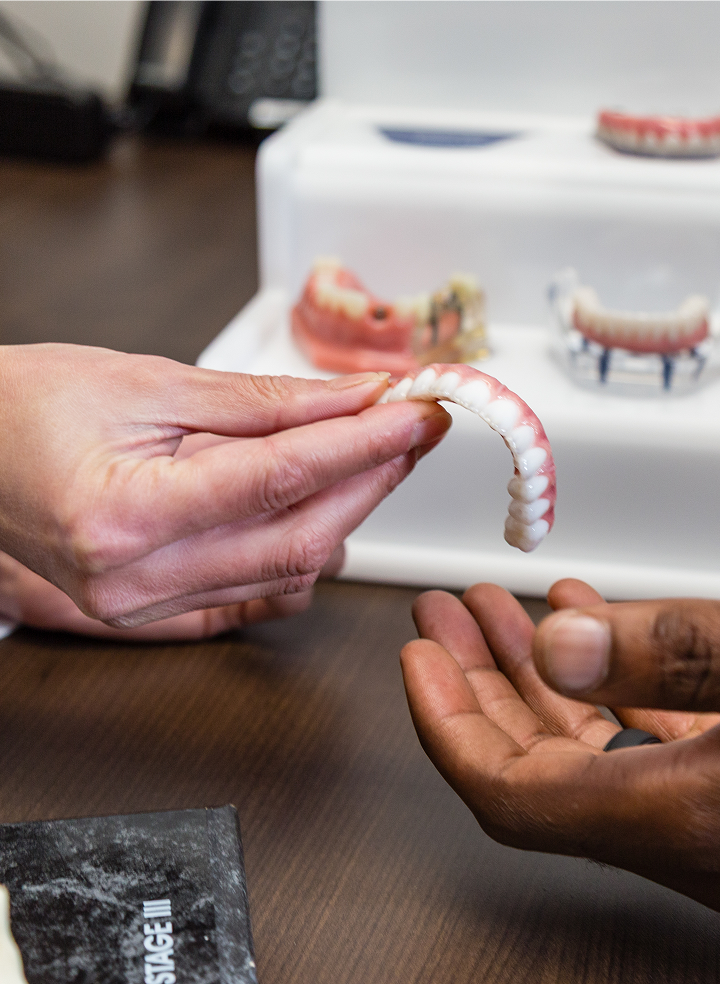
Patients who have lost several teeth may have different options from those replacing a single tooth. Depending on their circumstances, possibilities may include conventional dentures, implant-supported removable dentures or fixed implant-supported teeth. Preserving natural teeth should remain part of the discussion, so if extraction is recommended, patients can ask why the tooth cannot be retained and whether other treatments are available. The goal is to identify appropriate options while accounting for the patient's medical circumstances and daily needs.
Planning around mobility, communication and swallowing
Some of the most important considerations after a stroke have little to do with the implants themselves. A patient who experiences fatigue may find lengthy appointments difficult, while someone who uses a wheelchair or walker may need assistance entering the treatment center or transferring into a dental chair. Discussing these needs beforehand allows the team to explain what accommodations may be available and helps patients plan for the time and support treatment may require.
Communication also deserves attention. Stroke-related language difficulties can affect a person's ability to express themselves, but difficulty speaking should not be confused with an inability to understand information or participate in decisions. Written instructions, additional time for questions or assistance from a caregiver may make appointments easier to navigate. Patients and caregivers can discuss communication preferences with the dental team before the first appointment so the team can share important treatment information in a way that works for the individual.
Swallowing difficulties require particular care because some stroke survivors experience dysphagia, which makes swallowing food or liquids difficult. According to the American Stroke Association, dysphagia can increase the risk of complications, including aspiration (inhaling food) and inadequate nutrition. Patients may already follow instructions regarding food textures, liquid consistency or eating techniques. These become particularly important during dental recovery because general recommendations to eat soft foods after dental surgery will require discussion of the food and how it is prepared to fit into an established post-stroke swallowing plan.
Patients should share their current dietary and swallowing instructions with the dental team before treatment. When necessary, the team may coordinate with the patient's physician or other members of the stroke rehabilitation team such as a speech-language pathologist or dietitian to help confirm that postoperative recommendations are compatible with their existing care. This is particularly important when the patient has dietary restrictions that could affect nutrition during recovery.
What caregivers should know about recovery
Caregivers can play a valuable role in dental treatment when a stroke has affected mobility, communication or the ability to manage daily activities. Their involvement should reflect the patient's preferences and the assistance they need. Before treatment, a caregiver may help organize medical information, attend consultations and take notes. They can also assist with transportation and clarify arrangements for the day of surgery, particularly when the patient requires mobility assistance or experiences fatigue during longer appointments.
After treatment, practical support may include preparing appropriate meals, helping the patient follow postoperative instructions and assisting with oral hygiene when needed. The dental team should explain the expected recovery process and identify symptoms that require attention. Some discomfort, swelling or minor bleeding may occur after dental surgery, depending on the procedure. Patients and caregivers should contact the treating team if symptoms become concerning or differ from the instructions provided.
Recognizing the difference between a dental concern and a medical emergency is important. The American Stroke Association identifies sudden balance problems, vision changes, facial drooping, arm weakness and speech difficulties as possible warning signs of stroke. Anyone experiencing these symptoms requires immediate emergency medical attention. Call 911 rather than assuming they are related to dental treatment.
Choosing replacement teeth that are practical to maintain
Long-term maintenance is important for anyone receiving dental implants. After a stroke, it may deserve additional consideration because changes in coordination or hand strength can affect the ability to perform daily oral hygiene. Fixed implant-supported teeth remain in place during ordinary daily activities and require regular cleaning around the implants and beneath the restoration using techniques recommended by the dental team.
Patients take out removable implant-supported dentures for cleaning, although the implants and attachment components still require ongoing care. Neither approach is automatically easier for someone who has experienced a stroke. A patient with limited hand coordination may find certain cleaning tools difficult to use, while another may manage them comfortably. Some patients have caregivers who can provide assistance when necessary, which may influence the practicality of different restoration options.
Before choosing a restoration, ask the dental team to demonstrate the recommended cleaning routine. Consider whether the patient can perform it consistently and whether additional support will be available if needed. Professional maintenance appointments are also part of long-term implant care, so patients should understand the expected follow-up schedule and discuss transportation or accessibility concerns that could make regular visits difficult.
If patients have an implant restoration prior to having a stroke and now find they cannot perform the needed maintenance, a new restoration might be designed to fit the existing implants and accommodate their oral hygiene needs. Ask your ClearChoice® prosthodontist.
Frequently asked questions
How long after a stroke can someone get dental implants?
There is no universal waiting period. The appropriate timing depends on the patient's medical condition, physical condition, medications and the treatment being considered. The dental team may need information from the patient's healthcare professionals before treatment can proceed.
Do blood thinners prevent someone from receiving dental implants?
Not necessarily. Anticoagulant and antiplatelet medications require consideration during treatment planning for implants. Any proposed medication changes must be discussed with the prescribing clinician.
Can someone receive Day One Teeth after a stroke?
A history of stroke does not automatically determine whether a patient may be considered for implant treatment. Eligibility depends on the patient's current health, oral condition and treatment requirements. The team must evaluate the patient's current health, oral condition and treatment requirements. If the patient can undergo implant surgery, placing Day One Teeth is possible.
Can a caregiver attend dental implant consultations?
Yes. With the patient's permission, a caregiver can attend appointments, help communicate relevant information and assist with understanding treatment recommendations. The patient should remain involved in decisions to the extent they are able and wish to participate.
Taking the next step
Considering dental implants after a stroke requires a treatment plan that accounts for both oral health and the patient's broader medical circumstances. Preparing for the consultation can make that process easier. Bring an accurate medication list, relevant medical information and details about any changes in mobility, communication or swallowing. If a caregiver will be involved in treatment or recovery, discuss that arrangement with the dental team.
During a free ClearChoice consultation, the team can evaluate your oral health, review 3D X-ray imaging and discuss potential tooth replacement options. They can also identify additional medical information that may be needed before treatment decisions are made.
Medical disclaimer: This article provides general educational information and does not constitute individualized medical advice or medical clearance. Treatment decisions should be made by qualified healthcare professionals familiar with the patient's medical history. Never change prescribed medication without appropriate clinical guidance.