Last updated 07.29.2026
Can you reverse gingivitis? 6 simple steps to heal your gums at home

Written by: Dr. Vrinda Mohunta, MS, BDS, FACP
Can you reverse gingivitis? Learn the at-home gingivitis treatment steps that heal your gums, plus the warning signs it's time to see a professional.
Noticing a little pink in the sink when you brush isn't something to ignore — but it isn't a reason to panic, either. Maybe your gums have looked redder than usual lately, or they feel puffy and tender along the gumline. Maybe a friend or family member has mentioned your bad breath, and you've started wondering if something's actually wrong. It's easy to assume the worst, or to quietly hope it will just go away on its own.
Here's the reassuring news: in its early stage, gingivitis is usually reversible with consistent care. You haven't done irreversible damage, and you don't necessarily need a dramatic intervention to turn things around — you need the right daily habits, applied consistently, and an understanding of when those habits aren't enough on their own.
This article walks through what gingivitis actually is, why it develops, a step-by-step routine you can start at home today, a realistic timeline for what to expect, and the warning signs that mean it's time to bring in a professional.
What Is Gingivitis?
Gingivitis is the earliest stage of gum disease. It develops when plaque — a sticky film of bacteria that constantly forms on your teeth — by brushing and flossing. Left in place for as little as a day or two, plaque begins to harden into tartar (also called calculus), which irritates and inflames the gum tissue around your teeth. Once tartar forms, it creates an even rougher surface for new plaque to cling to, which is part of why gum inflammation can snowball if it isn't addressed.
Anyone can develop gingivitis, but certain factors make it more likely, including:
Inconsistent brushing or flossing
Smoking or tobacco use
Hormonal changes, such as during pregnancy or puberty
Certain medications that reduce saliva flow
Underlying conditions like diabetes, which can affect gum healing
A diet high in sugar and refined starches
That inflammation is what causes the symptoms most people associate with gingivitis:
Red or swollen gums
Bleeding when brushing or flossing
Tenderness or sensitivity along the gumline
Persistent bad breath or a bad taste in your mouth
By contrast, healthy gums are firm, pale pink, and don't bleed during normal brushing or flossing. If you're not sure how your gums compare, this guide to what healthy gums look like is a useful side-by-side reference.
Can You Reverse Gingivitis?
Yes — and this is the key distinction worth understanding. Because gingivitis has not yet caused permanent damage to the bone or connective tissue that holds your teeth in place, it can typically be reversed through improved oral hygiene and, when needed, a professional cleaning. The inflamed gums you're seeing are your body's response to bacteria sitting on the tooth surface at the gum line — remove the source of irritation consistently, and the gum tissue has the ability to calm down and heal.
That's very different from what happens if gingivitis is left untreated. Over time, unchecked gum inflammation can progress into periodontitis, a more advanced form of gum disease that involves bone loss around the teeth. Periodontitis is not reversible at home — the damage to bone and supporting tissue is permanent, and managing it requires professional treatment to prevent further loss. You can read more about that distinction in our overview of what periodontal disease is.
This is exactly why catching gingivitis early — and acting on it consistently, rather than waiting to see if it clears up on its own — matters so much. It's also worth being realistic: no home routine can promise a specific outcome or timeline, since how completely your gums respond depends on the severity of the inflammation, your overall health, and how consistently you follow through. What the routine below can do is give your gums the best possible conditions to heal.
How to Reverse Gingivitis: Your Step-by-Step Gingivitis Treatment Routine
This is the heart of the article: a simple, repeatable daily routine that, done consistently, forms an effective gingivitis treatment you can start today. No single product or one-off effort will undo gum inflammation overnight. Consistency is what actually drives results — and many people who stick with a routine like this notice improvement within a couple of weeks.
Here's how to reverse gingivitis, step by step.
1. Brush Properly Twice a Day
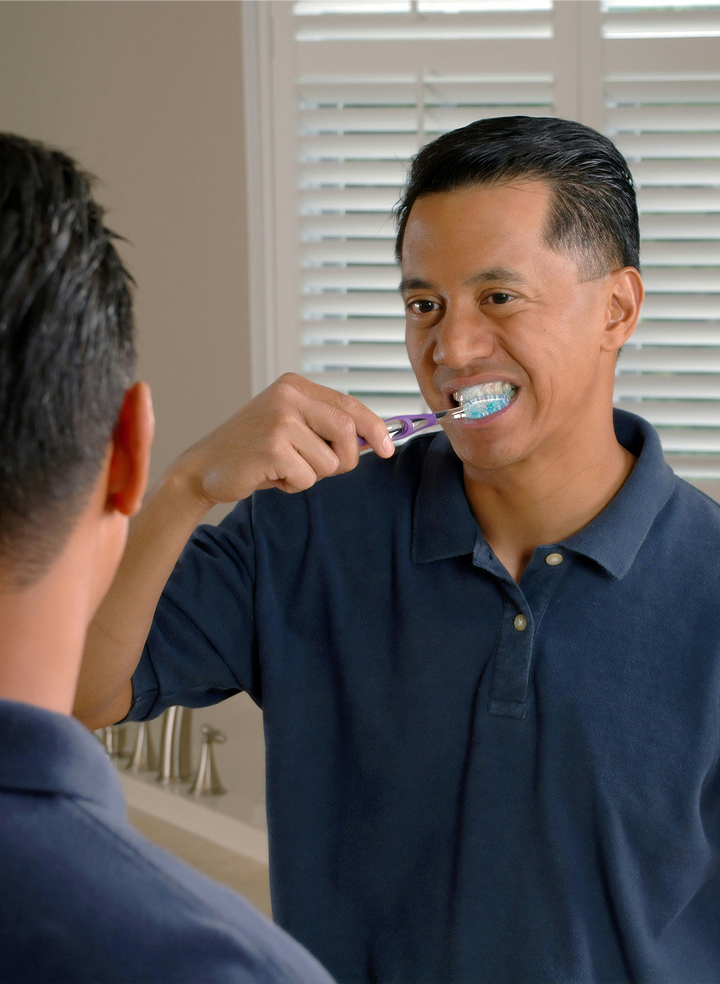
Use a soft-bristled or electric toothbrush with fluoride toothpaste, and brush for a full two minutes, twice a day. Hold the brush at roughly a 45-degree angle to the gumline and use gentle, small strokes — inflamed gums are more sensitive, so there's no need to scrub hard to get them clean. In fact, aggressive brushing can further irritate gums that are already inflamed, so let the bristles do the work rather than pressing harder.
Don't skip the back teeth or the inside surfaces facing your tongue — these areas are easy to rush through but collect just as much plaque as the front of your smile. It's also worth replacing your toothbrush (or electric brush head) every three months, since worn bristles clean less effectively and might not reach between the teeth along the gumline.
Toothpaste choice can matter too; some formulations are specifically designed to support gum health and reduce inflammation over time. Our guide to the best toothpaste and toothbrush for gum disease can help you choose what's right for you.
2. Clean Between Your Teeth Every Day
Brushing alone can't reach the plaque that collects between teeth and just below the gumline — which is often exactly where gingivitis starts. That's what makes daily interdental cleaning essential, not optional, even if your gums feel a bit sensitive right now.
You have several options here, so pick whichever one you'll actually use consistently:
Traditional string floss
Floss picks
Interdental brushes (small brushes designed to fit between teeth)
A water flosser, which uses a stream of water to dislodge plaque and debris and can carry antibacterial solutions between your teeth and around the gumline
If you're using floss, curve it into a gentle C-shape around each tooth and slide it just beneath the gumline rather than snapping it straight down against the gum tissue. Water flossers can be a good alternative if traditional floss feels difficult to manage or if you have dental work that makes floss tricky to navigate.
And if your gums bleed a little when you first start flossing regularly, that's common — it usually improves within a week or two as the underlying inflammation subsides and the gum tissue heals.
3. Add an Antibacterial Mouth Rinse
An antimicrobial iodine rinse or essential-oil mouth rinse can help reduce the volume of bacteria that drive gum inflammation, reaching some areas that brushing and flossing miss. Think of it as a complement to brushing and flossing, not a replacement for them — rinsing alone won't remove the physical plaque and tartar that need to be brushed and scraped away.
If your gums are already irritated, an alcohol-free formula is often gentler on the tissue and less likely to cause a stinging sensation. Since not every rinse is right for every mouth — and some are better suited to short-term use than daily long-term use — it's worth asking your dental provider which one they'd recommend for your specific situation. Our roundup of best products for gum disease is a good starting point if you're not sure where to begin.
4. Quit Smoking and Tobacco Use
Smoking and other tobacco use weaken your body's ability to fight infection and heal tissue — which makes gum disease both harder to reverse and more likely to progress toward periodontitis. Tobacco use also reduces blood flow to the gums, which can mask early bleeding and make it harder to notice how much inflammation is present until the disease has advanced further.
Quitting is genuinely one of the most impactful changes you can make for your overall health and your gum health, alongside the rest of this routine — and the benefits to your gums start accumulating quickly once you stop. If you're ready to quit, your physician or dental provider can point you toward programs, medications, and support designed to help make it stick.
5. Support Your Gums with Diet and Hydration
What you eat affects your gums, too. Sugary and starchy foods feed the bacteria in plaque, so limiting them gives that bacteria less fuel to work with and less opportunity to produce the acids and byproducts that irritate gum tissue. Leaning on nutrient-dense whole foods, fruits, and vegetables — particularly those rich in vitamin C, which supports gum tissue repair — helps your body do its part of the healing work.
Saliva also plays a protective role by helping to rinse away food particles and keep bacteria in check, so staying well hydrated matters more than most people realize. If dry mouth is a persistent issue for you — surprisingly, dry mouth can often be a side effect of a medication you're taking — mention it to your provider, since there are ways to manage it that can make a real difference in how your gums respond to treatment.
6. Get a Professional Dental Cleaning
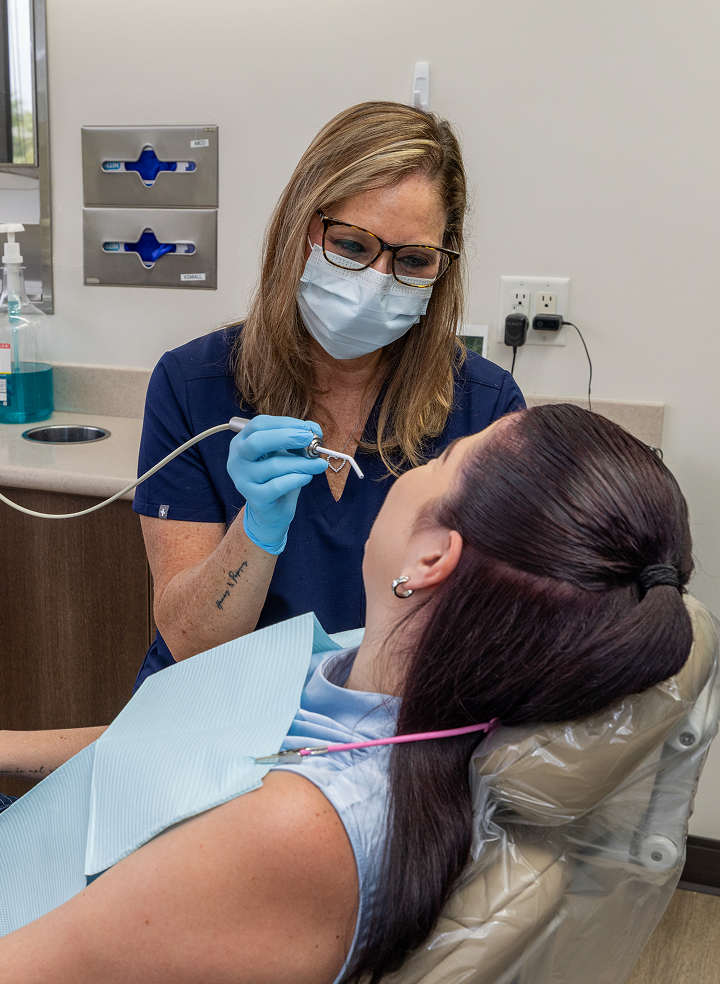
Once plaque hardens into tartar, brushing and flossing can no longer remove it — only a professional cleaning, using specialized instruments, can. This step may help resolve cases of gingivitis that have not responded fully to at-home care, since it eliminates the hardened buildup that's been continuously irritating the gum tissue.
During a routine cleaning, your hygienist will typically scale away tartar above and slightly below the gumline, then polish the teeth to smooth the surface and make it harder for new plaque to stick. Routine cleanings are generally recommended every six months, though your dentist may suggest more frequent visits — such as every three or four months — if your gums need extra support while healing. Beyond removing tartar, your dental team can also coach your brushing and flossing technique and catch small problems before they grow into bigger ones. Learn more about maintaining your results over time in our guide to oral hygiene and maintenance.
How Long Does It Take to Reverse Gingivitis?
Everyone's timeline looks a little different, but with consistent care, many people notice less bleeding and swelling within one to two weeks. Full healing — where the gum tissue returns to its normal color, firmness, and shape — can take a bit longer, especially if the inflammation was more advanced or has been present for a while.
Several factors can influence how quickly your gums respond, including how consistently you follow the routine above, whether you smoke, and underlying health conditions like diabetes that affect how the body heals. The important thing to watch for is steady improvement over those first couple of weeks. If you're following the routine diligently and your symptoms aren't gradually getting better — or if they seem to be getting worse — that's a signal, not a reason to try harder on your own, but a reason to get a professional opinion.
When to See a Dentist About Your Gums
Home care can resolve many cases of gingivitis, but it's not a substitute for professional evaluation when your symptoms suggest something more advanced. Reach out to a dentist if you notice:
Gums that keep bleeding despite consistent brushing and flossing
Swelling or pain that's getting worse, not better
Gums that appear to be receding or pulling away from the teeth
Loose or shifting teeth
Persistent bad breath that doesn't improve with better oral hygiene
Symptoms that haven't improved after a couple of weeks of diligent home care
These signs can point to periodontitis, which typically requires professional treatment such as scaling and root planing (a deeper cleaning that reaches below the gumline to smooth the tooth root and remove bacteria). In more advanced cases, your dentist may recommend additional therapies or refer you to a periodontist for specialized care. The sooner it's addressed, the better the chances of preventing further bone and tooth loss. Our page on periodontal disease treatment explains what that process looks like in more detail.
Achieve Better Gum Health with ClearChoice
Healthy gums are the foundation for keeping your natural teeth for the long term — and for anyone who has already experienced tooth loss, healthy gums are the foundation for successful, lasting tooth replacement with dental implants.
If gum disease has already progressed to the point of tooth loss or your dentist has told you that your remaining teeth have severe, irreversible periodontal disease, know that you still have options. ClearChoice can walk you through what's possible for restoring your smile and giving you back a full set of functioning teeth using dental implants. Schedule a free consultation to talk through your situation with the ClearChoice team that specializes in oral health through implant treatment.
Reversing Gingivitis: The Bottom Line
Caught early, gingivitis is generally reversible — that's genuinely good news if you're seeing early symptoms right now. A consistent daily routine of proper brushing, interdental cleaning, and healthy habits, paired with regular professional cleanings, remains a highly effective approach to treating and preventing gingivitis.
Just keep an eye on your progress. Steady improvement is the goal, and if your symptoms worsen or plateau, that's your cue to get a professional evaluation rather than wait it out.
Want to learn more about your options to restore long-term oral health? Visit our dental implants FAQ for answers to common questions, or schedule a free consultation with ClearChoice today.