Last updated 09.30.2026
Gum recession: Why it happens and what it means for keeping your teeth

Written by: Dr. Cara Kennedy, DMD
Learn why gum recession happens, what it means for keeping your teeth, and which gum recession treatment options can help protect your smile.
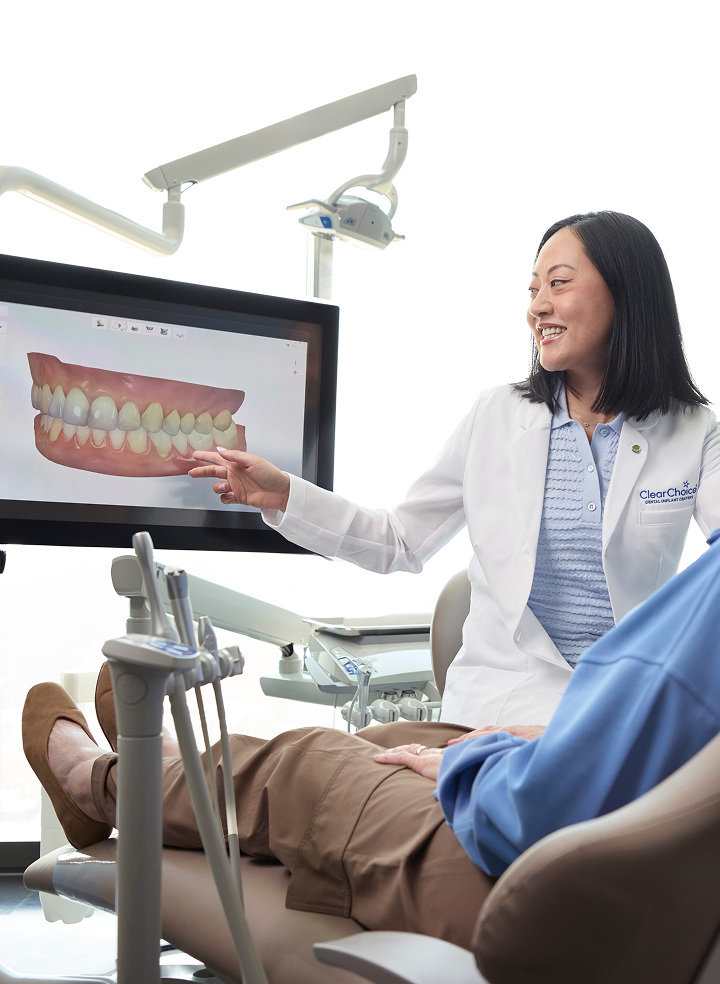
Maybe you noticed it in the bathroom mirror: your teeth look a little longer than they used to, and there's a strip of tooth near the gum line that wasn't visible last year. Or maybe a cold drink now sends a jolt through one particular tooth that never used to bother you. A little unsettled, you wonder whether this is serious, and whether it means you're on track to lose that tooth.
Take a breath. Gum recession is common, and treatment options may be available, particularly when it is identified early. This article explains why gum recession happens, what it actually means for the long-term health of your teeth, and what can be done about it.
What is gum recession?
Gum recession happens when the gum tissue surrounding a tooth pulls back, or wears away, exposing more of the tooth's surface and sometimes the tooth root underneath.
The signs are often subtle at first:
Teeth that appear longer than before
New or increased sensitivity to hot, cold or sweet foods and drinks
A visible notch or indentation along the gum line
A tooth root that looks slightly yellow or exposed near the gum
Because gum recession usually develops gradually, over months or years, it can go unnoticed until a dentist points it out during a routine cleaning, or until the sensitivity becomes hard to ignore.
Why does gum recession happen?
Gum recession rarely comes from a single cause. More often, a few factors combine over time. Some of the most common contributors include:
Gum disease. Ongoing inflammation from plaque and bacteria buildup along the gum line, sometimes progressing into periodontitis, can gradually break down the tissue and bone that support your teeth.
Brushing too hard. A stiff-bristled brush or an aggressive brushing technique can wear away gum tissue over time, even with good intentions.
Genetics. Some people are simply born with thinner gum tissue or less bone covering the front of their teeth, which makes recession more likely regardless of how well they care for their teeth.
Teeth grinding or clenching. The extra force placed on teeth and gums during grinding, often at night, can contribute to recession over time.
Tobacco use. Smoking and other tobacco products are linked to a higher risk of gum disease and recession.
Misaligned teeth. Teeth that sit outside the normal arch, or an uneven bite, can put extra strain on the surrounding gum and thin bone tissue in specific spots.
Hormonal changes. Shifts in hormone levels, such as during pregnancy or menopause, can make gum tissue more sensitive and more vulnerable to recession.
Because so many factors can play a role, a dental professional is best positioned to identify what is actually driving recession in your specific case.
What gum recession means for keeping your teeth
This is the question most people really want answered: does gum recession mean you are going to lose a tooth?
Not necessarily, but it is worth taking seriously. As the gum line pulls back, more of the tooth root becomes exposed. Unlike the crown of the tooth, the root is not covered in hard enamel, which makes it more prone to sensitivity and more vulnerable to decay.
In more advanced cases, particularly where the underlying cause is gum disease, recession can be a sign that bone loss is also underway beneath the surface. Once the bone that anchors a tooth begins to break down, teeth can loosen, and if the process continues unchecked, this can eventually lead to tooth loss.
The encouraging part is that identifying gum recession early may provide more treatment options. Treatment approaches may vary depending on the extent of recession and when it is evaluated by a dental professional. If you have noticed signs of gum recession, or a dentist has already flagged it, a professional evaluation is the best next step. It can also help clarify whether other health factors, including certain medical conditions, are playing a role.
Can receding gums grow back?
Unfortunately, no. Once gum tissue recedes, it does not grow back on its own. This is exactly why prevention and early treatment matter so much.
That does not mean the outlook is bleak. While the tissue will not regenerate naturally, treatment may help address the underlying causes of gum recession, and certain procedures may be recommended depending on the individual's condition. The right approach depends on how advanced the recession is and what is causing it, which is something only a dental professional can properly assess after an exam.
Gum recession treatment options
Gum recession treatment exists along a spectrum, from simple lifestyle changes to surgical procedures, and the right option depends on severity.
Non-surgical approaches are often the starting point for mild to moderate recession, and may include:
Improving oral hygiene habits, including a gentler brushing technique
Professional cleaning, such as scaling and root planing, to remove plaque and bacteria from below the gum line
Desensitizing treatments to ease exposed root sensitivity
Addressing the underlying cause, such as switching to a soft-bristled brush or wearing a night guard if grinding is a factor
Surgical approaches are typically reserved for more advanced cases. These may involve gum grafting or similar procedures, performed by a dentist or periodontist, to cover exposed roots and help rebuild lost tissue.
Because the right treatment depends on your specific situation, a dentist or periodontist should always be the one to diagnose the cause and recommend a course of action, rather than trying to address recession on your own.
How to help prevent gum recession
Not every case of gum recession can be prevented, especially when genetics are involved, but good oral health habits may support overall gum health:
Brush gently, twice a day, with a soft-bristled brush
Floss daily to clear plaque from between teeth and along the gum line
Keep up with regular dental cleanings and checkups
Avoid tobacco products
Wear a night guard if you grind or clench your teeth
If you have had braces, where your retainer at least several hours a day to keep teeth from moving back
Small, consistent habits like these may help support long-term gum health.
When gum recession leads to tooth loss: exploring your options
In more advanced cases, particularly where gum disease has progressed significantly, gum recession can eventually contribute to losing one or more teeth. When that happens, discussing tooth replacement options with a dental professional may be appropriate, as gaps left behind may affect bite alignment, bone levels, and neighboring teeth.
Dental implants are one tooth replacement option that may be discussed with your dental professional if you find yourself in this position. For patients missing several or all of their teeth, full-mouth dental implants are one treatment option that a dental professional may discuss alongside other restorative solutions. If you are unsure whether this is the right time to explore implants, or want to understand what the investment typically looks like, a professional evaluation is the clearest way to get answers specific to your situation.
Gum recession: The bottom line
Gum recession is common, and it happens for identifiable reasons, from brushing habits and genetics to underlying gum disease. Gum tissue does not grow back on its own, which is why noticing the signs early and seeking evaluation from a dental professional is important.
If you have more general questions about the process, the dental implants FAQ is a good place to start. And if gum recession has already contributed to missing or failing teeth, scheduling a free ClearChoice consultation is a low-pressure way to understand your options and plan your next step.