Last updated 10.19.2026
Tooth replacement options in Cincinnati: How to compare dentures and dental implants

Written by: Dr. Julianne Sotomil, DMD, MSD
Compare tooth replacement options in Cincinnati, from dentures to dental implants, and learn what to expect at a free ClearChoice® consultation.

Maybe your dentures have started to slip. Maybe your remaining natural teeth are failing, or you have been putting off dental care for longer than you would like. Whatever brought you here, the question is usually the same: what are my options for replacing missing teeth?
If you live in the Cincinnati area, that question can lead in several directions. Bridges, partial dentures, traditional dentures, implant-supported dentures and fixed implant-supported teeth all work differently, and the right choice depends on your mouth, your health and what you want your teeth to do for you.
Whether you are replacing one tooth or an entire arch, the most useful question is not what other people have done. It is what can be done for you now, based on your oral health, available bone, medical history, priorities and budget. This guide walks through the main options, how to compare them and what to expect at a consultation.
What are the main tooth replacement options?
Tooth replacement generally falls into two categories: removable options that you take out for cleaning and fixed options that stay in place during daily use. The right fit depends on how many teeth are missing, where they are located, the health of your gums and jawbone and what you want from your new teeth. For a broader overview, see our guide to permanent teeth replacement or our comparison of alternatives to dental implants.
When one or a few teeth are missing, options may include a dental bridge, a partial denture or single tooth implants. Bridges and partial dentures rely on neighboring natural teeth for support, while an implant is placed in the jawbone and does not depend on adjacent teeth. Our guide to partial dentures vs dental implants covers the tradeoffs.
When all of the teeth in an upper or lower arch are missing, three broad options may come up during a consultation:
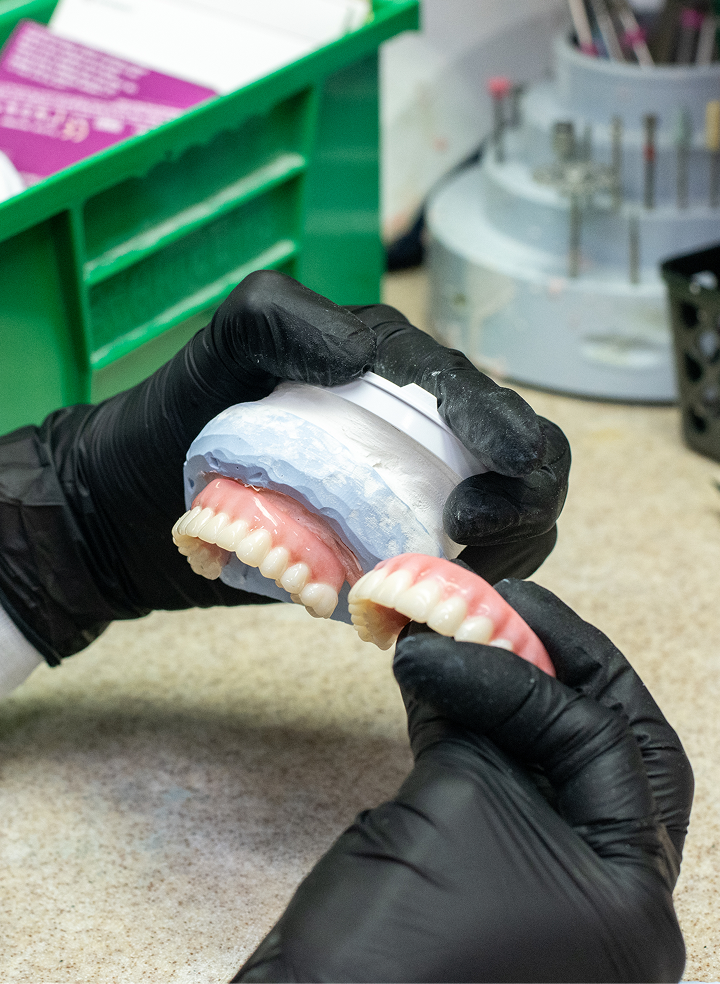
Traditional dentures are removable and rest on the gums. They replace the visible teeth without requiring dental implants. Because the mouth and jaw can change over time, denture fit may also change, and some people use adhesives or need adjustments or relining. Our page on dentures vs implants offers a side-by-side look.
Implant-supported dentures attach to dental implants for additional stability. They are still removable for cleaning, which distinguishes them from fixed full arch teeth. For some patients, this approach offers a middle ground between a traditional denture and a fixed restoration. Learn more about snap-in dentures and implant dentures.
Fixed full arch restorations are supported by multiple implants and remain secured in place during normal daily use. They require implant surgery, healing, daily cleaning around the restoration and professional follow-up. Explore full mouth dental implants or see how snap-in dentures compare with permanent full arch implants.
The fact that implants provide additional stability does not make them the automatic choice for everyone. Treatment needs to fit your anatomy, health, maintenance preferences, goals and financial circumstances. A good consultation should explain the tradeoffs among the options rather than presenting one solution as universally better.
Why the number of missing teeth changes the treatment discussion
Replacing an entire arch of teeth is different from replacing one missing tooth. A full arch restoration needs to function as a complete set, and patients often think about several issues at once: chewing, speech, appearance, denture movement, adhesives, cleaning and comfort in everyday situations.
Someone who has worn dentures for many years may have very different priorities from someone who is about to lose their remaining natural teeth. A long-time denture wearer may be most frustrated by movement while eating or repeated adjustments. A person facing extractions for the first time may be more concerned about whether they will have teeth during treatment and how different the replacement will feel.
The jawbone becomes part of the discussion too. After teeth are lost, the bone in those areas can change over time because natural tooth roots are no longer present. For anyone considering implants after a long period of tooth loss or denture use, evaluating the amount and location of available bone is an important part of treatment planning.
None of those questions can be answered by your age or by what worked for someone else. They require an examination, a health-history review and appropriate imaging. And if you have postponed dental care for a while, your first appointment does not need to be about explaining or defending the past. The useful starting point is the condition of your mouth today and what you would like to improve.
Can long-time denture wearers still consider implants?
Possibly. Wearing dentures for many years does not by itself determine whether someone can or cannot receive dental implants.
The main question is what the mouth looks like now. Because the jawbone can change after tooth loss, a long-time denture wearer may have less bone in some areas than someone whose teeth were lost more recently. That is why 3D imaging is useful. It allows the dental team to evaluate bone and oral structures rather than making assumptions based on how many years someone has worn dentures. Our guide to dental implants with bone loss explains how teams approach these situations.
If bone levels have changed, the clinician can explain what that means for treatment. Depending on the findings, the discussion may include implant position, bone grafting, another preparatory procedure, an implant-supported denture, fixed full arch treatment or a nonimplant alternative.
Bring your current dentures to the consultation, even if you rarely wear them because they are uncomfortable. Their fit and wear can help the team understand what has been working, what has not and what you hope a new treatment will change.
Is there an age limit for dental implants?
There is generally no strict upper age limit for dental implants. Chronological age is much less informative than the health factors that affect surgery, healing and long-term maintenance. Our guides on dental implants for seniors and whether you are too old for dental implants go into more detail.
The dental team will want to know about medical conditions, medications, gum health, oral hygiene, available bone and nicotine use. A well-managed health condition may have very different implications from the same condition when it is poorly controlled, which is why a current medical history matters more than simply checking a box next to a diagnosis.
Bring a complete medication list to the consultation, including doses when possible. Tell the team about recent hospitalizations, procedures or significant changes in health. If another healthcare professional needs to be consulted before treatment, accurate information can make that coordination easier.
What happens at a Cincinnati dental implant consultation?
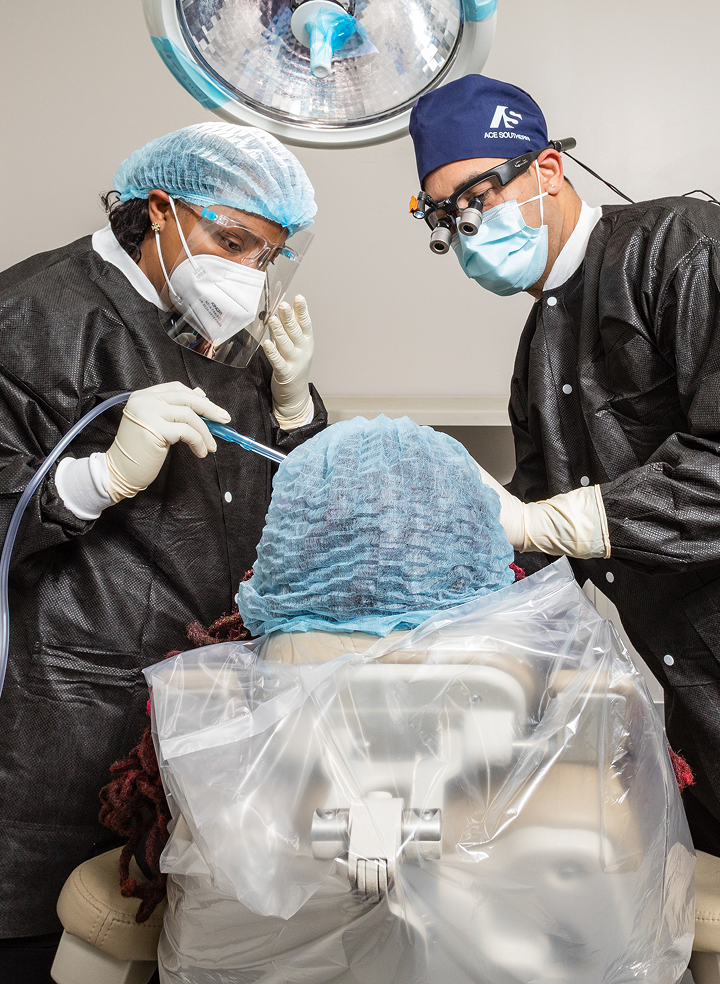
A consultation should turn broad questions about tooth replacement into information about your particular situation. The team reviews your dental concerns, goals, health history and medications. Dental X-rays and 3D CBCT imaging are typically used to evaluate available bone and oral structures when implants are being considered. Learn more about what happens during a dental implant consultation.
At the ClearChoice Cincinnati center in West Chester, prosthodontists and oral surgeons work together in one location. That allows the surgical plan and the design of the replacement teeth to be coordinated as parts of the same treatment process.
If full arch treatment is appropriate, ask what you would wear while the implants heal. For some patients, a provisional set of teeth can be placed on the day of surgery. Not everyone qualifies, and the provisional restoration is not the final set of teeth. Healing and follow-up continue before the final restoration is placed. Our guide to who may qualify for same-day teeth explains what affects eligibility.
By the end of the consultation, you should understand which options are appropriate, what the imaging shows, the expected treatment stages and what the recommended restoration will require from you afterward.
Think about eating, speaking and cleaning
Tooth replacement is ultimately something you live with every day, so it helps to discuss function in practical terms.
If eating is one of your main concerns, tell the dental team which foods have become difficult and why. A denture that moves during chewing presents a different problem from pain caused by failing natural teeth. After treatment, there may also be a period when food texture needs to be modified according to the team’s instructions while the mouth heals.
Speech and adaptation can matter as well. The shape and position of replacement teeth, available tongue space and previous experience with dentures may influence how a new restoration feels at first. If a change in speech or function persists, report it rather than assuming that every concern will resolve without evaluation.
Cleaning is another important difference among options. Removable dentures are taken out for cleaning. Fixed full-arch restorations remain secured in the mouth but still require daily cleaning around the implants and beneath the restoration using methods recommended by the care team.
No tooth replacement option makes maintenance optional. Understanding the routine before choosing treatment can prevent surprises later.
What should you ask before choosing a replacement?
A productive consultation does not require knowing dental terminology. The most useful questions are the ones that help you understand what is happening in your mouth and how each option would fit your life. Consider asking:
Which tooth replacement options are appropriate for my oral health?
What does my 3D scan show about the amount and location of bone?
Would I need extractions, gum treatment, bone grafting or another procedure first?
How do my medical history and medications affect the plan?
Is the proposed restoration fixed or removable?
What would I wear while treatment is healing?
How would I clean and maintain the replacement teeth?
How many appointments and follow-up visits should I expect?
What is included in the treatment estimate?
What could change the treatment plan, timeline or cost?
If you have worn dentures for years, add questions about the problems you currently experience. Ask what the proposed treatment is expected to change and what limitations would still remain.
The goal is not to leave knowing everything about dental implants. It is to leave understanding your choices well enough to make an informed decision.
Planning for transportation and support
Some adults manage every stage of dental treatment independently. Others appreciate help with transportation, appointments, meals or keeping track of instructions during recovery.
If a family member or caregiver is involved, decide together what role would actually be useful. With your permission, that person may attend the consultation, take notes or help ask questions. After a procedure, the care team can explain what assistance may be appropriate based on the treatment performed.
Transportation deserves particular attention if you will be traveling to West Chester from elsewhere in the Cincinnati area or rely on someone else for rides. Ask how many visits are expected and which appointments may require a driver. It is easier to plan those details before treatment than to solve them on procedure day.
Support should fit your needs rather than your age. Many older adults need little assistance, while someone younger may need substantial help because of mobility, health or transportation circumstances.
How should you compare treatment costs?
Cost can vary according to the tooth replacement solution, number of implants, restoration materials and any preparatory procedures that are needed. That makes a personalized written estimate more useful than a general advertised price.
If you are comparing treatment plans, check whether each estimate covers the same arch or arches and includes the same major components. Ask about imaging, extractions, preparatory care, implant placement, provisional teeth, final teeth, materials and follow-up. An estimate that appears lower may simply include less.
If financing is part of the plan, evaluate it separately from the treatment price. Review the interest rate, fees, repayment term, monthly payment and total amount you would repay. A monthly payment tells you whether a payment may fit your budget, but the total repayment tells you what the financing actually costs. Third-party financing options may be available for qualified applicants.
ClearChoice does not process insurance directly, though you may be able to submit your bill to your insurer for potential reimbursement, depending on your plan. Verify your benefits directly with your insurer. Visit our page on dental implant costs and financing to learn more.
Finding ClearChoice dental implant care near Cincinnati
ClearChoice Cincinnati is located in West Chester at 9100 Centre Pointe Drive. The center can provide location-specific information about consultations, treatment options, scheduling and follow-up.
Location is worth considering when treatment involves several visits. Think about transportation not only for the initial consultation, but also for procedure day, follow-up appointments and long-term maintenance. If you are still comparing providers, our guide to finding a dental implant provider in Cincinnati can help.
Convenience matters, but it should support a clinically appropriate treatment plan rather than replace one. Choose a team that can explain what your examination and imaging show, why a particular treatment is being recommended and what will be required after the new teeth are placed.
Frequently asked questions
Can someone with no natural teeth get dental implants?
Possibly. People with complete tooth loss may be evaluated for implant-supported dentures or fixed full-arch dental implants. Available bone, gum health, medical history and other individual factors help determine which options may be appropriate.
Are dental implants better than dentures for everyone?
No. Dental implants may provide additional stability for many patients, while traditional dentures remain an appropriate option for others. Anatomy, health, maintenance preferences, treatment goals and budget should all be considered.
Can I get implants if I have worn dentures for many years?
Some long-time denture wearers can. Because the jawbone can change after teeth are lost, 3D imaging is important for understanding the amount and location of available bone. Those findings help determine which options may be appropriate.
Am I too old for dental implants?
Age by itself does not determine candidacy. The dental team considers oral health, bone, medical history, medications, healing considerations and the proposed treatment.
Where is ClearChoice Cincinnati?
The ClearChoice Cincinnati dental implant center is in West Chester at 9100 Centre Pointe Drive. The center can provide information about consultations and treatment based on your individual needs.
Ready to explore your tooth replacement options in Cincinnati?
Choosing how to replace missing teeth is a personal decision, and it begins with your own circumstances: what you want to improve, what your mouth and 3D imaging show, what your health history means for treatment and which replacement option you feel prepared to maintain.
Schedule a free consultation at the ClearChoice Cincinnati center in West Chester to review your oral health, discuss traditional and implant-supported tooth replacement options and receive an individualized treatment plan and estimate. You can also explore our full range of dental implant services before you visit.
This article is intended for general educational purposes and does not replace personalized medical or dental advice. Treatment options, candidacy, recovery and results vary by patient. A qualified provider must evaluate each patient.