
Last updated 09.10.2026
Do I need a bone graft? How bone loss might impact your dental implant treatment plan
Wondering if a bone graft is necessary for dental implants? Learn why bone loss matters, how it's evaluated and what to expect if grafting is recommended.
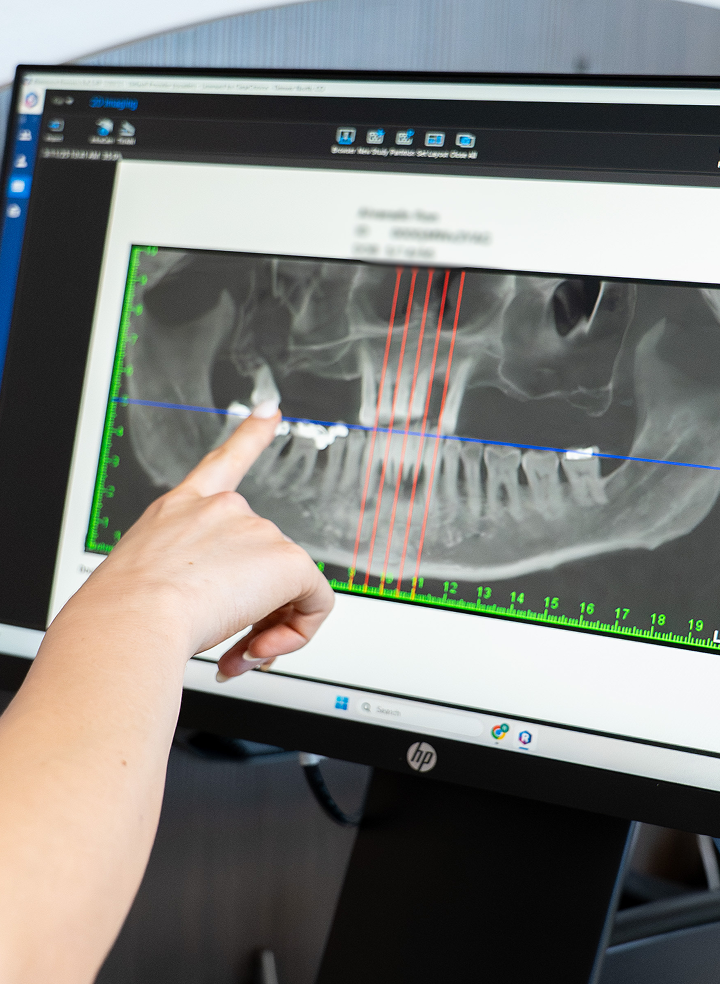
Hearing that you may need a bone graft before dental implants can raise more questions than it answers. Why is a graft necessary? Does everyone with bone loss need one? And how does it change the timeline for getting your smile back?
ClearChoice already has resources that explain what a bone graft is and what it costs. This guide takes the next step: why bone availability matters when planning implant treatment, how a dental team decides whether grafting is needed, and what to ask if a graft comes up as part of your recommended plan.
What does a bone graft have to do with dental implants?
A bone graft is a procedure that adds or rebuilds bone in the jaw, helping provide sufficient bone support for implant placement. ClearChoice's Bone Graft for Dental Implants guide covers the procedure itself in more depth. Here, the focus is on why it comes up at all.
Dental implants are designed to function like natural tooth roots, which means they rely on the surrounding jawbone for support. Unlike a traditional denture or bridge, which rest on top of the gums or attaches to nearby teeth, an implant is placed directly into the bone. That makes bone quality and quantity a central part of any implant evaluation.
So if a provider brings up bone grafting, it is not a red flag about your candidacy. It is simply a sign that your care team is thinking ahead about how to help create an appropriate foundation for implant placement.
Why bone loss can matter for implant treatment
Bone loss in the jaw is common, and it happens for reasons that have nothing to do with anything you did wrong. The most frequent contributors include:
Time since tooth loss. Bone in the jaw is stimulated by the pressure of chewing. Once a tooth is missing, the bone beneath it can begin to shrink.
Gum disease history. Periodontal disease gradually erodes the bone that supports teeth and in more advanced states of bone loss the tooth becomes mobile andmust be extracted. To place an implant in the jaw where the tooth used to be, bone must be grown.
Long-term denture wear. Traditional dentures rest on the gums rather than stimulating the bone, which can accelerate bone loss over time.
Prior injury or trauma. An old jaw fracture, jaw cyst or abscessed tooth extraction can sometimes affect the bone in the area needed for an implant.
None of these are unusual findings, and none of them automatically rule out implants. What matters most is how much bone volume and density remains in the specific area where an implant is planned, since that affects how the implant can be placed and the treatment options that may be available.
How a dental team evaluates bone
The only way to know how much bone is available, and where, is to look. That is why 3D imaging, including a CT scan, is a standard part of an implant evaluation. ClearChoice's How 3D Imaging Improves Dental Implant Placement article explains the technology in more detail.
During this imaging, the clinical team is looking at a few specific things: the volume of bone available, its density, and its location relative to structures like nerves and sinuses that need to be avoided during placement. This gives the team a precise, individualized picture rather than a general estimate.
That level of detail also helps the provider evaluate whether grafting may be appropriate as part of the treatment plan.
Does everyone with bone loss need a graft?
No. Having some degree of bone loss is common among people considering implants, and it does not automatically mean grafting is required, nor does it mean implants are off the table.
The decision depends on individual anatomy and treatment goals. In some cases, there is enough bone in the right location to place an implant without any additional procedure. In other cases, a graft may be recommended when additional bone support is needed for implant placement.
In short, a bone graft recommendation is not a verdict on whether you can get implants. It is a decision about how to get the best possible outcome for your specific mouth.
What happens if a bone graft is recommended?
If your team recommends grafting, it generally means adding bone material to the area where an implant is planned, then allowing time for that area to heal and integrate before or alongside implant placement. ClearChoice's Bone Graft for Dental Implants page walks through the different types of grafting in more detail.
Logistically, this typically means one additional procedure and a healing period. Depending on your specific case, that healing period may need to happen before an implant is placed, or in some cases, grafting and implant placement can be coordinated at the same surgery visit. Which approach applies to you is something your care team will determine based on your imaging and treatment goals, not a one-size-fits-all rule.
If cost is part of what you are weighing, ClearChoice's Bone Graft Cost resource describes the scheduling and sequencing of a bone graft which may or may not affect cost.
How bone grafting affects treatment planning and timing
Grafting can affect your overall timeline, but how much depends entirely on your individual plan. Some patients need the graft to heal fully before an implant is placed, which adds time upfront in exchange for a stronger foundation. Others may be candidates for an approach where grafting and implant placement happen at the same surgery appointment.
There is no universal timeline here, and that is by design. The specifics of your sequencing, healing time, and overall schedule will come from your treatment plan, built around your imaging and your goals, not a generic estimate.
If you are also researching more significant bone loss, ClearChoice's Severe Bone Loss and Dental Implants article addresses that specifically.
What should you ask at your consultation?
If a bone graft has come up, or you suspect it might, a consultation is the place to get a direct answer. Consider bringing questions like:
Why is a bone graft being recommended in my specific case?
Are there alternatives to grafting for my situation?
How would grafting affect my overall treatment timeline?
How does grafting affect the total cost of my treatment plan?
For a full walkthrough of what that appointment involves, see What to Expect at a Dental Implant Consultation.
Ready for an individualized answer?
A bone graft recommendation is part of a personalized treatment plan, not a judgment on whether implants can work for you. Rather than assuming bone loss rules anything out, or that a graft is automatically necessary, the most useful next step is understanding why it applies to your case specifically. Schedule a free ClearChoice consultation, including imaging, to get that individualized answer directly from your care team.