Last updated 02.09.2026
What most people get wrong about dental implants—and facts you should know
Misunderstandings about implants can delay treatment. Learn the truth behind 7 common dental implant myths.
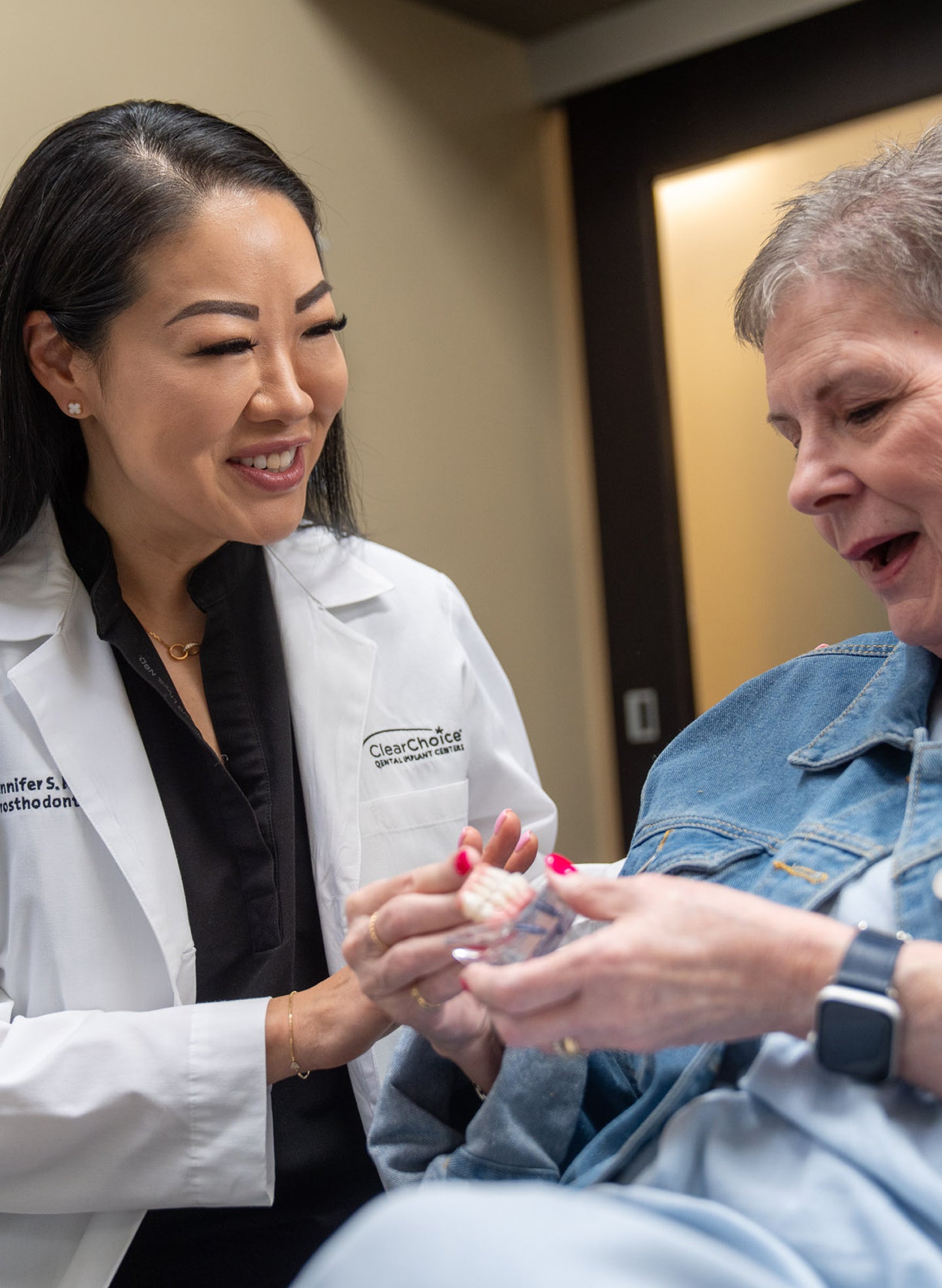
Dental implants are one of the most studied and widely used options for replacing missing teeth. Still, common misconceptions about dental implants continue to cause confusion—and may delay people from exploring care that could support their oral health and quality of life.
Below, we address seven common myths about dental implants, explain where these misunderstandings come from, and share evidence-based context to help you make informed decisions.
Myth #1: Implant technology hasn’t changed over the years
Some people assume dental implants today are no different from those placed decades ago. Implant technology and the teeth that are attached to them has evolved significantly.
What’s changed in new dental implant technology
Advances in imaging, digital planning, and materials have improved how implants are evaluated and placed. Modern dental implant technologies often allow prosthodontists to plan treatment with greater precision, assess bone structure more accurately, and design restorations that better align with a patient’s anatomy.
How custom dental implant solutions support better outcomes
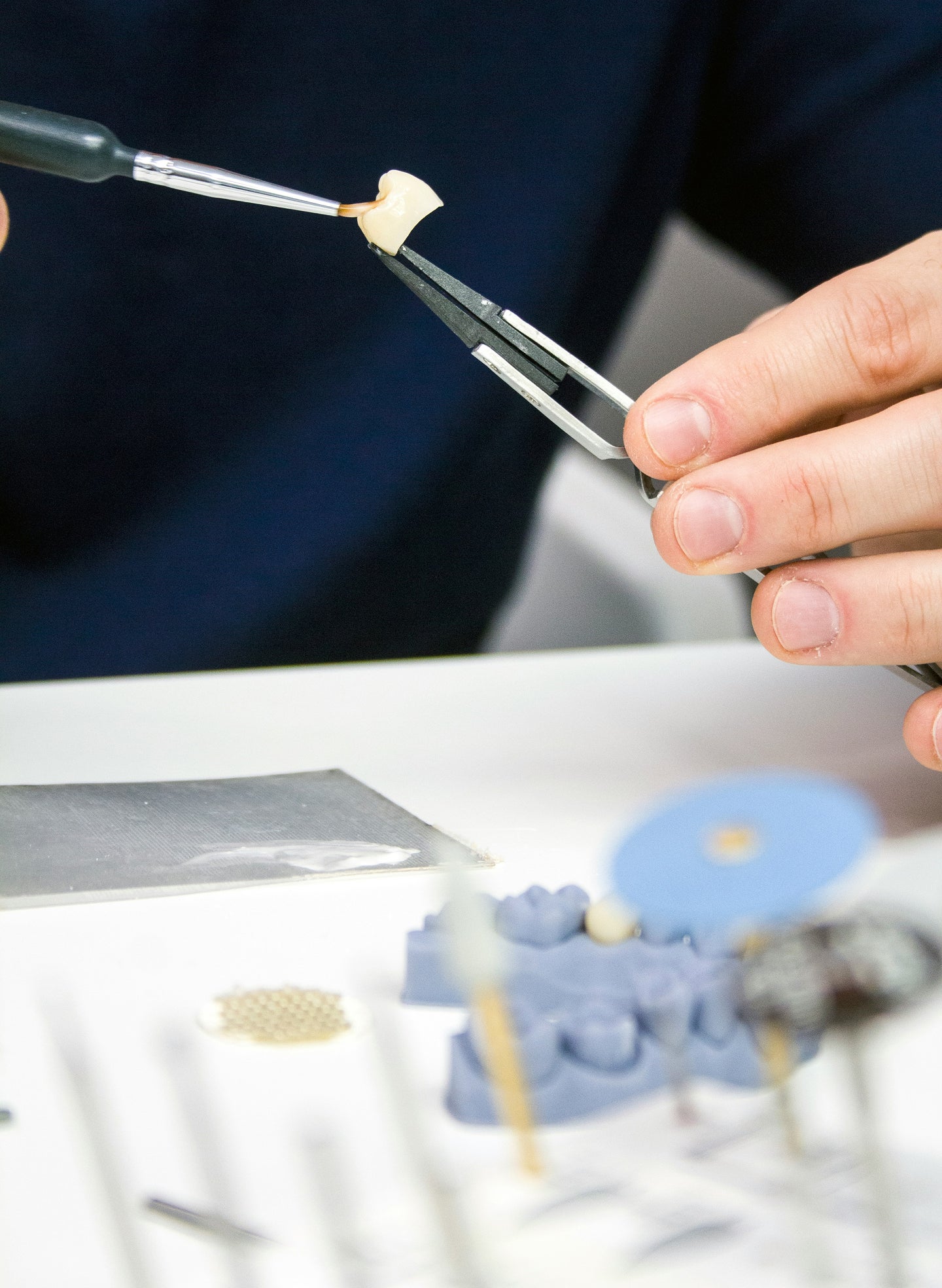
Today, dental implant restorations are designed selecting from an extensive collection of commercial components combined with custom digitally manufactured components to yield a one-of-kind prosthesis for every patient. This treatment strategy supports improved fit, comfort, and function by accounting for individual face shape, bite patterns and jaw structure. These advances are what makes implant planning so highly personalized.
Myth #2: You can eat anything immediately after surgery
Another common misconception is that eating returns to normal right away after implant placement.
Post dental implant diet
Following implant surgery, dietary adjustments are typically recommended during the early healing phase. Softer foods are often advised to minimize pressure on the implant site and surrounding tissues as new bone grows around the implant and the gums lifted at surgery reattach.
How long after dental implants can you eat normally?
The timeline for returning to a regular diet varies depending on the type of restoration, bone quality, and healing response. Your prosthodontist will provide guidance on what to eat after dental implant surgery and when certain foods may be reintroduced safely.
Myth #3: Failed dental implants cannot be fixed
Hearing about dental implant failure can understandably cause concern, but failure does not always mean there are no options.
Causes of dental implant failure
Failed dental implants may occur due to factors such as infection, insufficient bone support, excessive force, or challenges during healing. Smoking and inconsistent oral hygiene may also increase risk of failure in some patients.
How prosthodontists may address or correct the issue
In many cases, a prosthodontist can evaluate the cause of the issue and determine whether corrective treatment may be appropriate. Addressing failed dental implants often starts with identifying contributing factors and developing a revised treatment approach.
Myth #4: There’s no risk with 24-hour teeth
At ClearChoice, patients leave surgery with teeth in place. Healing, however, continues beneath the surface. The implants and surrounding gums need time to stabilize and integrate, which is essential for long-term success.
The facts about 24-hour or one-day dental implants
ClearChoice treatment allows patients to have teeth in place at the time of implant surgery. Even so, healing continues beneath the surface as the implants integrate with the bone and the gums recover. This healing phase plays an important role in supporting comfort, function, and long-term outcomes.
Why proper healing time matters for long-term results
Even with full arch implant teeth delivered on surgery day, long-term implant success depends on proper healing and follow-up care. Rushing the process or overlooking individual factors may increase the risk of complications.
Myth #5: Dentures work just as well as implants
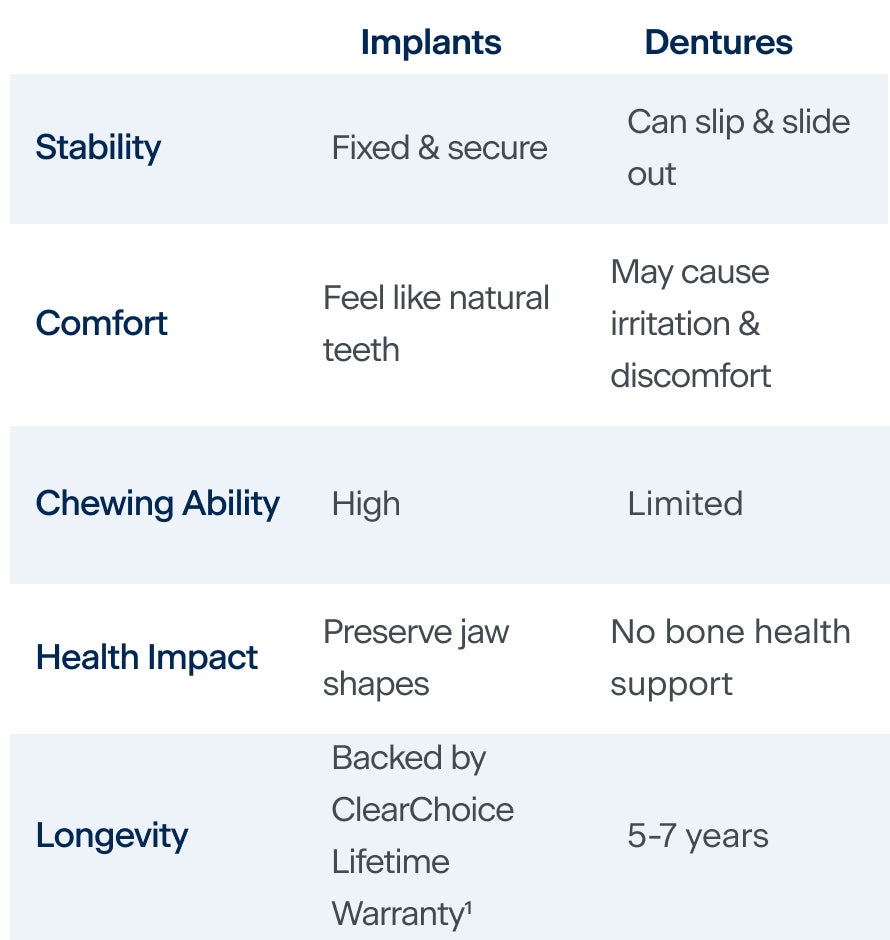
¹The Lifetime Zirconia Warranty applies to cracks or breaks in the zirconia arch only and not complications with implant integration or ordinary wear and tear. The warranty will be void if the patient fails to follow clinician care instructions, receives treatment outside the ClearChoice Network or is dismissed as a patient. Available in participating ClearChoice Dental Implant Center locations for treatment on or after 03/21/2025.
Dentures and implants are sometimes discussed as interchangeable options, but they function differently.
Key differences between dentures and implant prostheses
Traditional dentures are removeable teeth that rest on the gums and are not attached to anything, while dental implants are anchored in the jawbone and the teeth are attached to the implants. The implant prosthesis is not removable. These differences affect stability, chewing efficiency, and long-term bone support. Patients say the implant prosthesis behaves more like natural teeth.
Why implants may better support long-term health and bone structure
Dental implants may help support the jawbone by providing stimulation like natural teeth. Over time, this may help reduce bone loss associated with missing teeth. Dentures and implant prosthesis are both options to replace missing teeth, but function differently, serving different needs, and the right option depends on individual patient circumstances.
Myth #6: Smokers can’t get dental implants
Smoking is often mentioned in discussions about implant eligibility, leading some people to assume implants are not an option at all.
Can smokers get dental implants?
Smoking can affect healing and increase the risk of complications, but it does not automatically disqualify someone from treatment. Each case is evaluated individually.
What your prosthodontist considers during evaluation
Your ClearChoice Dental Implant Center team may consider smoking habits, overall health, bone quality, and willingness to follow post-treatment recommendations when determining candidacy.
Myth #7: Dental implants are one-size-fits-all
Some people assume implants come in standard shapes and sizes with little variation.
The role of dental implant custom implants and abutments
There are many implant companies worldwide. Almost all companies have a proprietary manufacturing process and produce a large variation of implants and abutments. Even in the same implant company, there is much variation in implants: length, diameter, number and shape of the screw threads, surface coatings on the implants, shape of the implant, internal configuration of the implant where the abutment fits in, etc. Abutments also have much variation on angle, height, how it seats inside the implant, etc.
The implants and abutments are selected and designed to connect in a way that reflects the patient’s anatomy. At ClearChoice your team chooses from this vast library of prefabricated implant components to create a customized treatment plan for you. This customized selection assures quality control of the components and translates to better alignment, comfort, and bite function.
How personalized implant planning supports comfort and function
Dental implant restoration planning often includes digital scans, imaging, and detailed measurements. This allows the ClearChoice dental team to tailor custom treatment to each patient rather than using a one-size-fits-all approach.
Dental implant misconception FAQs
Can dental implants fail?
Dental implant failure is possible, but it is relatively uncommon when treatment is carefully planned and maintained. Regular home care and professional monitoring may help reduce risks.
Are dental implants better than dentures?
Dentures and implants serve different purposes. Dental implants may offer greater stability and bone support, while dentures may be appropriate in other situations. Your prosthodontist can help determine the right option for you.
Can I eat right after implant surgery?
Most patients are advised to follow a modified diet immediately after surgery. Your post dental implant diet will depend on healing progress and restoration type.
Are dental implant restorations customizable?
Yes. Many modern dental implant restorations use custom components and personalized planning to support fit, comfort, and function.
Understanding the facts can help you move forward
Misconceptions about dental implants are common, but accurate information can help you make confident decisions. If questions or concerns have delayed treatment, a consultation with a ClearChoice Dental Implant Center may provide clarity based on your individual needs and goals.