Last updated 10.07.2026
A caregiver’s guide to choosing between dentures and dental implants

Written by: Dr. Asma Samara, DDS
Help a parent compare dentures, implant-supported dentures and fixed dental implants based on health, daily life, maintenance, recovery and cost.

When a parent, spouse or older loved one needs to replace missing or failing teeth, the decision can involve much more than comparing dentures with dental implants. You may find yourself helping schedule appointments, taking notes during consultations, reviewing costs, arranging transportation or figuring out what recovery would look like at home.
Those are useful roles for a caregiver, but the person receiving treatment should remain at the center of the decision. Start by asking what they want tooth replacement treatment to change. Loose dentures, difficulty chewing, sore spots, appearance, cleaning, speech and anxiety about dental treatment can all matter, and their priorities may be different from yours.
Once those priorities are clear, you can help compare the options according to something more meaningful than which treatment or provider costs the least. The goal is to find an approach and provider team that fits the patient's oral health, overall health, daily routine, preferences and ability to maintain the result over time.
Start with what matters to the patient
Caregivers often begin by researching treatments. It can be more useful to begin by understanding the problem from the patient’s point of view.
Ask what has become difficult. Does a denture move while eating? Are certain foods uncomfortable to chew? Are failing teeth causing repeated dental visits? Is appearance the main concern, or is the patient more frustrated by adhesives, cleaning, having to totally avoid certain foods, or the possibility of losing additional teeth?
Then ask what matters most in a replacement. Some people place a high value on having teeth that remain secured in the mouth. Others are comfortable with a removable teeth option that might have a lesser cost, but treatment time and number of appointments might be similar for either treatment. If surgery is necessary in the treatment plan, the recovery may also influence the decision.
Try writing down the patient’s priorities in their own words before the consultation. That gives the dental team a clearer picture of what the person hopes to accomplish and helps keep the conversation focused on the patient’s goals rather than the caregiver’s and dentist’s assumptions.
Understand the three main tooth-replacement approaches
For someone missing all or most of an arch of teeth, the conversation may include traditional dentures, implant-supported dentures and fixed implant teeth. These options differ in the treatment steps, whether the teeth rest on the gums, and how they might also be attached to implants and the big difference, whether the patient removes the teeth to clean them.
Traditional dentures are removable prostheses that rest on the gums and are known to move during chewing and speaking. They replace many or all of the teeth without implant surgery. Patients may have a learning curve and a level of acceptance to manage the movement of the dentures. This movement is less of a problem with an upper denture that usually develops suction against the roof of the mouth. Fit can change as the mouth changes over time, so some patients use adhesive or need adjustments, relines or eventual replacement.
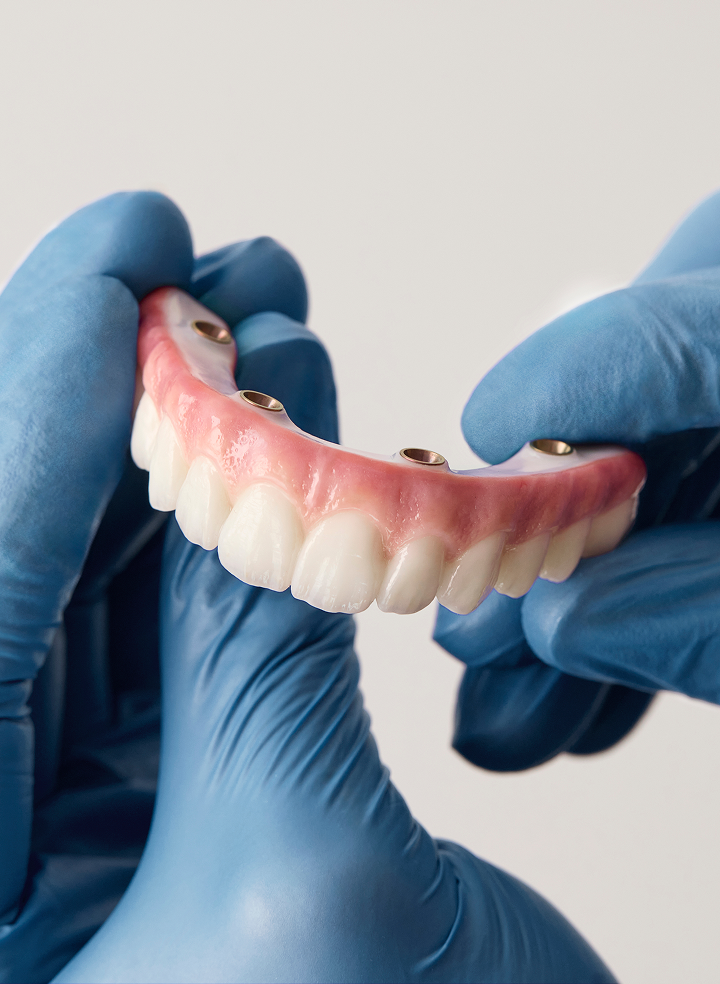
Implant-supported dentures use dental implants for additional retention. The denture attaches to the implants and rests on the gums but is still removed by the patient for cleaning. For someone who is frustrated by the constant movement of a traditional denture but wants a removable solution, this may be an option worth discussing.
Fixed full-arch restorations are secured to several implants and remain in place during normal daily use. Some patients report that this solution feels more similar to natural teeth. The patient does not remove the restoration each night, although cleaning is still required around and beneath it. Treatment involves implant surgery, healing and professional maintenance.
These are not the only possibilities for teeth replacement. If the patient’s remaining teeth are in good condition and they only need to replace a few missing teeth, choices are a partial denture, a dental or short implant bridge, or a single-tooth implant. These are all treatments intended to preserve natural teeth. Several problem teeth do not automatically mean that an entire arch should be replaced.
Compare what everyday life would look like
A useful comparison goes beyond what the replacement teeth look like. Ask how each option would affect eating, speaking, cleaning and the patient’s normal routine.
Traditional dentures can move during eating or speaking, particularly when fit changes. Implant attachments in a denture can provide additional retention, while fixed implant-supported teeth are designed to remain secured in place. Individual comfort and function still vary, so ask the provider what the patient can realistically expect rather than assuming a particular treatment will restore every aspect of natural teeth.
Appearance and speech deserve the same kind of discussion. Ask how tooth shape, position, shade and lip support will be planned and how much input the patient will have. If treatment involves provisional teeth worn after surgery until the final restoration, find out when adjustments can be made and how feedback from the patient regarding the provisional teeth is incorporated into the design of the final restoration. Ask the provider whether provisional teeth are part of the treatment process and how patient feedback may be incorporated before a final restoration is placed.
Caregivers sometimes focus heavily on what will happen on procedure day. Daily life afterward is just as important. The right option should be something the patient can live with and maintain, not simply something that can be placed successfully.
Think about health and implant candidacy
Age alone does not determine whether someone is a candidate for dental implants. The dental team looks at oral health, available bone, gum condition, medical history, medications, nicotine use, healing considerations and the treatment being proposed.
This is an area where a caregiver can be especially helpful. If your loved one sees several healthcare providers or takes multiple medications, help prepare an accurate medication list that includes doses and schedules. Make note of allergies, recent hospitalizations, surgeries and significant changes in health. If the patient has had difficulty healing after previous procedures, mention that as well.
Bone is another part of implant planning. After teeth are lost, the jawbone can change over time. A 3D CBCT x-ray scan helps clinicians evaluate the amount and location of bone and nearby oral structures. If bone levels have changed, the team can explain whether grafting, another preparatory procedure or a different treatment approach may need to be considered.
The purpose of this review is not to find a reason to disqualify an older adult. It is to understand what treatment can be planned safely and realistically for that particular person. This treatment is more than dentistry but requires complex medical and healthcare decisions. Make sure you understand how the dental team evaluates the patient's oral health, medical history and treatment considerations.
Consider cleaning before choosing a restoration
Maintenance can be underestimated when caregivers and patients are focused on replacing the teeth. It should be part of the decision from the beginning.
Traditional dentures and implant-supported dentures are removed for cleaning. Fixed full-arch teeth remain secured in the mouth, but the patient still needs to clean around the implants and beneath the restoration using techniques and tools recommended by their care team.
Think about what is realistic for your loved one. Dexterity, vision, memory and mobility can affect how easy a cleaning routine is to follow. Removable prostheses can be lost or misplaced. Caregivers may wish to discuss with the provider how different restoration types could affect daily cleaning routines and long-term maintenance. If a particular restoration requires a technique the patient has never used before, ask the team to demonstrate it and give the patient an opportunity to practice.
Do not automatically assume that a family member will take over long-term oral care. Some patients will manage it independently. Others may want help. If assistance is likely to be needed, discuss that openly so the maintenance plan reflects the person’s actual circumstances.
Professional follow-up matters with every option. Dentures may require adjustments or relines, implant attachments in the implant-supported prosthesis can wear, and implants and the surrounding tissues need dentist monitoring. Ask what ongoing care is expected before choosing the treatment.
Plan for appointments and recovery
Implant treatment can involve several stages, including consultation, x-ray imaging, possible extractions or preparatory treatment, implant placement, healing checks, provisional teeth, final teeth and long-term maintenance. The number and order of appointments vary according to the patient and treatment plan.
If transportation is likely to be a challenge, ask for the expected visit schedule before treatment begins. Find out whether the patient will need someone to drive or stay with them after a procedure and discuss with your doctor if mobility limitations could affect scheduling and length of appointments on your end. Planning these details early can prevent unnecessary stress later.
Recovery is another area where caregivers can provide practical support. Depending on the procedure and the instructions from the care team, that may mean preparing appropriate foods, keeping written instructions easy to find, helping track medications or making sure follow-up appointments are on the calendar.
Compare costs without making cost the only decision
Traditional dentures generally have a lower initial cost than implant-supported treatment, but the first price is not the only number worth considering. Adjustments, relines, replacement, attachment maintenance and other future needs may add expense depending on the option.
For implant treatment, request a written estimate that identifies what is being treated and what is included. Look for the arch or arches, proposed restoration, proposed implant number, materials, preparatory procedures, provisional and final restoration and included follow-up. If you are comparing providers, make sure the estimates address the same clinical problem and solution before comparing the totals.
If third-party financing is being considered, review the annual percentage rate, fees, repayment term, monthly payment and total amount to be repaid. A lower monthly payment may look more manageable while producing a higher total cost over a longer term.
Insurance reimbursement varies by plan and should be verified with the carrier. Keep the clinical decision and the financial decision connected, but do not let a financing approval determine which treatment is medically appropriate.
Questions caregivers can bring to the consultation
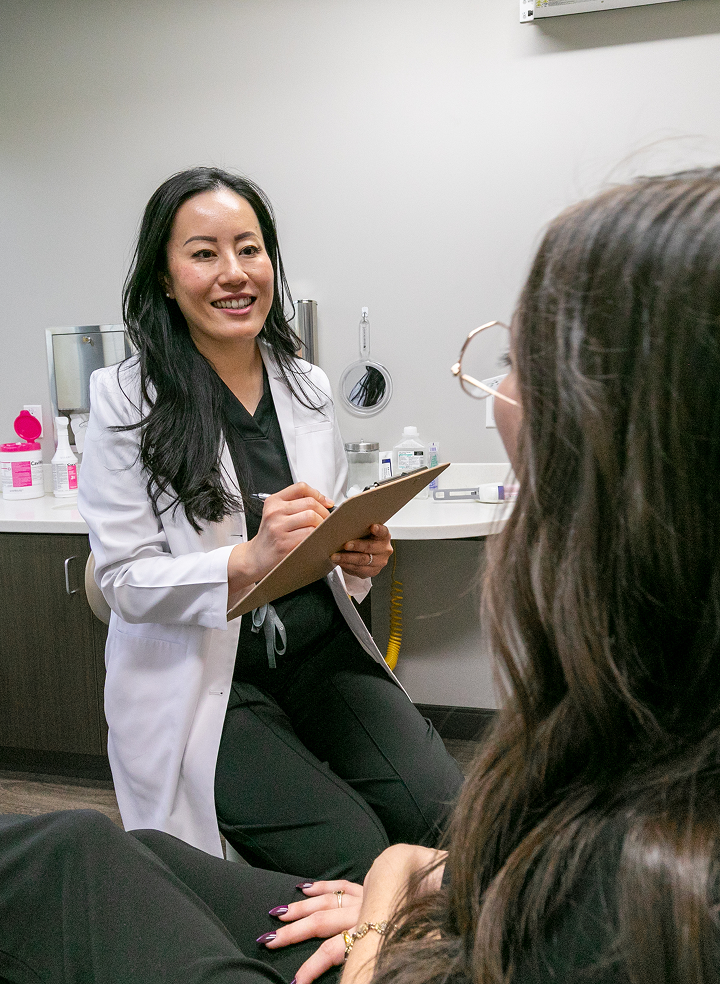
A caregiver can be especially useful as a second set of ears. With the patient’s permission, take notes and make sure the questions that matter at home are addressed before leaving.
Consider asking:
Which teeth can be treated, and which may need to be replaced?
What does the 3D x-ray scan show about bone and oral health?
Which fixed and removable teeth options are appropriate?
Why are you recommending this option for this patient?
How would each option affect eating, cleaning and daily routines?
What kind of help might be useful after the procedure?
How many visits and follow-up appointments should we expect?
What maintenance will be needed over time?
You may also want to ask which decisions need to be made promptly and which can wait. A painful or infected tooth may require attention before the patient is ready to choose a long-term replacement. Understanding what is urgent can make a complicated treatment discussion feel much more manageable.
Know when to step forward and when to step back
Being a caregiver does not automatically mean becoming the decision-maker. Many older adults manage their own healthcare choices independently and may want help with transportation or note-taking without wanting someone else to direct the conversation.
When support is wanted, it tends to work best when it is collaborative. Ask questions such as, “What matters most to you about this?” or “Would you like me to take notes?” rather than assuming what the patient should choose.
If family members disagree about treatment, bring the discussion back to the patient’s preferences and the clinically appropriate options explained by the provider. The dental team can clarify the benefits, limitations and practical requirements of treatment, but they should not be expected to resolve a family disagreement that is unrelated to dental care.
Legal decision-making authority is a separate issue. Being someone’s caregiver does not automatically transfer authority to make healthcare decisions for them. If legal authority is relevant to the patient’s situation, it should be handled according to the applicable documents and law.
Preparing for a useful consultation
A little preparation can make the appointment considerably more productive. Bring a current medication list, relevant health information, and notes about changes in eating, comfort, speech, appearance or daily routines.
If the patient currently wears dentures, bring them to the appointment even if they are uncomfortable or rarely worn. The fit and wear of an existing denture can give the clinical team useful information about what the patient has been experiencing.
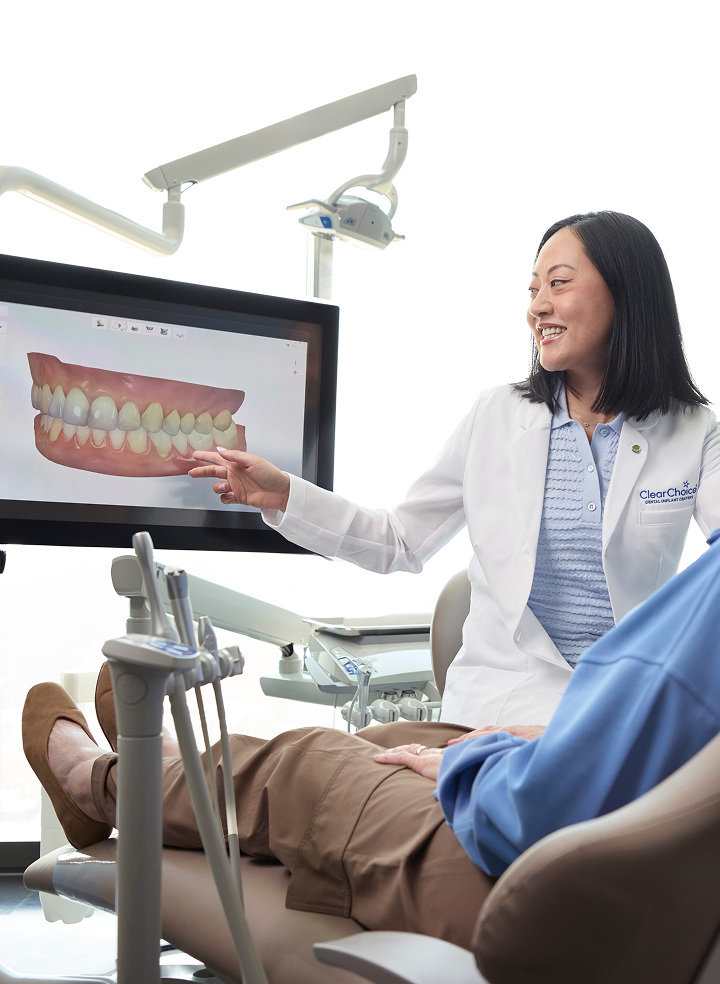
During the consultation, ask the team to explain findings in plain language and show relevant features on the 3D x-ray scan when appropriate. Before deciding, request the recommended treatment, alternative treatments, timeline, maintenance expectations, and estimated cost in writing.
A consultation is an opportunity to gather information before you make a decision. The patient does not need to arrive having already chosen dentures or dental implants.
Frequently asked questions
Are dental implants better than dentures for every senior?
No. The appropriate choice depends on oral health, available bone, medical history, treatment goals, maintenance preferences, budget and the patient’s own priorities. A fixed restoration may be attractive to one person while a removable option fits another person’s circumstances better.
Can someone who has worn dentures for years still qualify for implants?
Dental implants were developed as one option for replacing missing teeth and supporting tooth restorations. A qualified dental professional can evaluate whether implant treatment may be appropriate for an individual patient. Long-term tooth loss can be associated with changes in the jawbone, so 3D x-ray imaging and an individualized evaluation are important. The scan and examination can help determine how implants can be deployed and whether preparatory procedures might be necessary for implants. Whether a patient is a candidate for a fixed implant-supported solution depends on their individual clinical circumstances and evaluation findings.
Can a caregiver attend a dental implant consultation?
A caregiver or family member may attend the consultation if they have the patient's permission. A caregiver can take notes, help organize questions and assist with treatment logistics while keeping the patient involved in the discussion and decisions.
Are implant-supported dentures fixed?
No. Implant-supported dentures attach to implants for added stability and to diminish the movement of the denture, but are removed by the patient for cleaning. Fixed full-arch restorations remain secured in place during normal daily use and can only be removed by the dentist.
How much help will someone need after implant treatment?
That varies with the procedure and the individual. Ask the care team about transportation, food, medication instructions, activity and follow-up before surgery day. Some patients manage much of their recovery independently, while others may appreciate more support.
Next steps
There is no specific tooth-replacement option that is right for every older adult. As a caregiver, one of the most useful things you can do is help your loved one identify what matters to them, understand the clinically appropriate choices and think through how each option would fit into everyday life.
Schedule a free consultation with ClearChoice to compare appropriate tooth-replacement options based on the patient’s oral health, goals, daily routine and circumstances. Bring questions, medications, and medical history information, and use the appointment to gather the information the patient needs to make their own informed decision.
This article provides general educational information and does not replace individualized medical, dental, legal or financial advice. Treatment suitability, recovery, costs and results vary by patient.