
Last updated 09.07.2026
How dental implants can affect nutrition and daily life for adults 65+
Learn how missing teeth and dental implants may affect nutrition, eating and daily life for adults 65+, and what to consider before a free consultation.
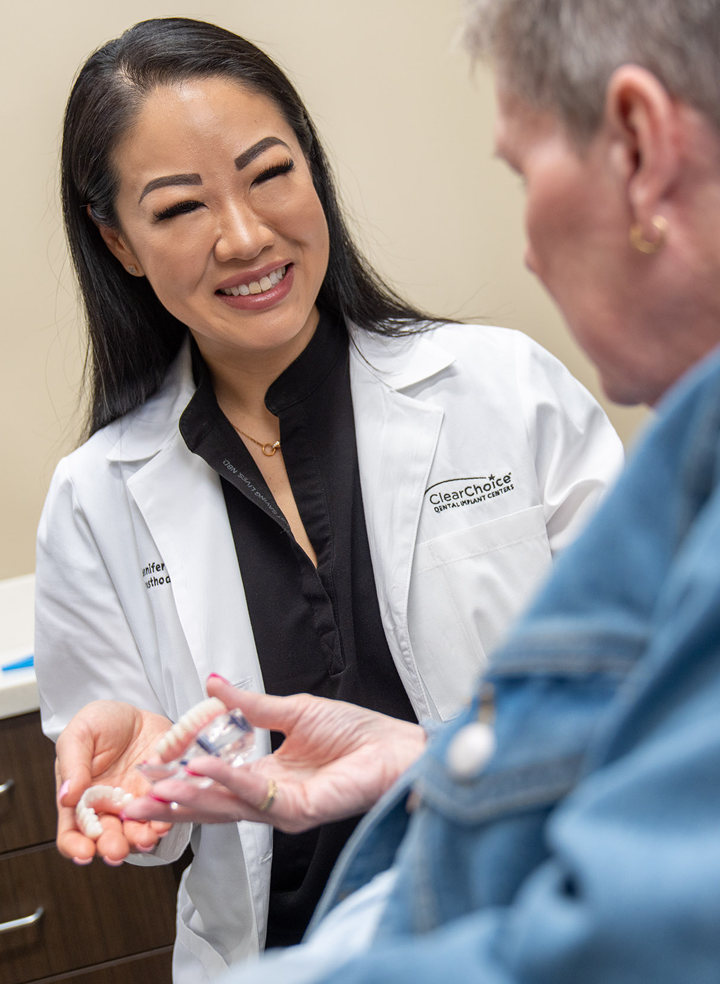
Missing teeth can affect far more than a smile. For adults older than 65, changes in chewing, food choices and daily routines often become part of the bigger conversation about replacing missing teeth. A meal that once took 10 minutes to eat might now take 30. A favorite dish might quietly disappear from the rotation because it has become too hard to chew comfortably.
These everyday shifts are worth paying attention to, and they are a legitimate part of deciding how to move forward to restore missing and failing teeth. Dental implants are one of the tooth-replacement options ClearChoice discusses with patients, alongside other approaches suited to individual needs. Understanding the connection between dental implants and daily life, separate from candidacy questions or product comparisons, can help seniors and their families prepare for a more informed consultation.
How missing teeth can affect everyday eating
When chewing becomes uncomfortable or unreliable, eating habits tend to shift gradually, often without a person even noticing at first. Crunchy vegetables, chewy meats and fibrous fruits are frequently the first foods to go, replaced by softer, more processed options that are easier to manage. Over time, this pattern can narrow the variety of foods on a plate, and with it, the range of vital nutrients a person takes in. Whole fruits, fresh vegetables and lean proteins, foods that often require more chewing effort, are among the first to be scaled back.
This is not a guaranteed outcome for every person with missing teeth or an unstable denture, but it is a common pattern many dental teams see in older patients. The effects can extend beyond the plate. Missing teeth and nutrition concerns often intersect with the social side of eating too: ordering something different at a restaurant to avoid embarrassment, skipping certain family recipes at holiday meals, or simply eating more slowly and finishing later than everyone else at the table. For some, mealtimes shift from something enjoyable to something to get through.
Recognizing these patterns matters, because they are often the first sign that tooth loss is affecting daily life in ways that go beyond appearance, and they are a reasonable starting point for a conversation with a dental provider.
Why replacing missing teeth can be part of an overall oral-health plan
Chewing function is closely tied to oral health, and oral health is closely tied to overall health. When teeth are missing, the jawbone that once supported them no longer receives the stimulation it needs, which can affect bone density over time. (Read more about how dental implants preserve jawbone health.) Reduced chewing ability can also make it harder to maintain a varied diet, and diet is one of many factors that affects general wellness as people age.
None of this means dental implants are the only answer, or that they are guaranteed to resolve every nutrition-related concern. Implants, especially full arch replacements, are noted to come the closest to the chewing function of healthy natural teeth when compared to dentures. This should tell you that replacing missing teeth is not simply a cosmetic decision. For many adults 65 and older, it is one piece of a larger oral-health conversation, one that also includes gum health, bone health, existing medical conditions and overall goals for daily comfort and function.
Framing tooth replacement this way, as part of a broader plan rather than a standalone fix, is one reason ClearChoice starts every relationship with a conversation, not a sales pitch. A qualified dental team can help sort through which factors matter most for a specific patient's mouth, health history and lifestyle.
What should adults 65+ consider before implants?
Considering dental implants after 65 often comes down less to age itself and more to a combination of bone health, gum health, medical history, current medications, how well a person's body is expected to heal, and what lifestyle goals that they may be missing out on because of their dental condition. A dental implant consultation is designed to evaluate exactly these factors for each individual, since no two patients arrive with the same combination of circumstances. For a full breakdown of age and candidacy, see Am I too old for dental implants?
Beyond the clinical factors, there are a few practical, life-stage considerations worth thinking through. Dental implant treatment typically involves more than one appointment, so it helps to have a general sense of the expected timeline before getting started. Having a friend or family member available for support, whether that means a ride home after a procedure or simply company during recovery, can make the process easier. It is also worth mentioning any existing physicians or specialists involved in ongoing care, since coordinating dental treatment with other medical care should be part of a thorough evaluation and facilitates expert treatment.
None of these considerations are meant to be discouraging. They are simply part of an honest, upfront conversation that you can expect at ClearChoice. Many patients who assume their health condition, medications or past denture experience rules them out are surprised to learn that a personalized plan is still possible. The only reliable way to know what applies to a specific situation is a consultation with a qualified dental team.
How dentures and implants differ in daily use
One question that comes up often is how implants and dentures actually differ day to day, beyond the initial cost and procedure. Traditional dentures rest on the gums and can shift during eating or speaking, which is why some denture wearers describe omitting certain foods or speaking more carefully in social settings. Dentures also tend to change fit over time as the jawbone and gums naturally change shape, which can mean periodic adjustments or relines, or even remake, of the dentures.
Dental implants, including full-mouth dental implants for patients missing most or all of their teeth, are anchored into the jawbone itself, without putting pressure on the gum tissue, which is why many patients describe a more stable, natural-feeling experience while eating and speaking. Daily cleaning routines differ as well. Implants are generally cared for similarly to natural teeth, with regular brushing and flossing, while removable dentures require their own cleaning and nighttime storage routine with the teeth taken out of the mouth.
This is not a complete implants-versus-dentures comparison, and the right option depends heavily on individual anatomy, health and patient goals. For a fuller look at how the two options compare for older adults, see Am I too old for dental implants? and Implant benefits for seniors. What matters here is simply that dental implants for seniors and traditional dentures tend to feel different in daily use, and that difference is often part of what patients weigh when considering tooth replacement for seniors.
Eating during and after implant treatment
Eating habits typically continue to shift during implant treatment itself, though the details vary by patient and by the specific treatment plan. In the earlier stages of healing soon after surgery, many patients find it more comfortable to favor softer foods for a period of time before gradually reintroducing a fuller range of textures. This is a normal, temporary part of the process rather than a long-term restriction.
As healing progresses, many patients describe gradually returning to a wider variety of foods than they were able to manage with missing teeth or the previous unstable denture. Every treatment plan and every patient's healing timeline is different, so it is worth asking a dental team what to expect at each stage rather than relying on a general timeline. For detailed, stage-by-stage guidance on eating with dental implants, from the first days after treatment through longer-term recovery, see Eating with dental implants.
Maintenance and long-term care
Once treatment is complete, ongoing care becomes a routine part of daily life rather than a major undertaking. Most patients maintain their implants much like natural teeth, with regular brushing, flossing, water flossing with an antibacterial solution, and periodic checkups with their dental team. Sticking to this routine is one of the most meaningful ways patients can support the long-term investment they have made in their treatment.
Diet plays a role here too. A varied, balanced diet, one that steady chewing function makes easier to accomplish, supports both oral health and overall well-being over the long term. This is part of why the conversation about nutrition and daily life does not end once treatment is finished. It continues as an ordinary part of everyday care. For a complete guide to daily cleaning, professional checkups and long-term implant care, see Caring for dental implants.
Questions to ask about treatment
Every patient's situation is different, so it helps to walk into a consultation with a few guiding questions in mind. Consider asking:
How might this affect what I am able to eat day to day, both during treatment and afterward
What does recovery typically look like for someone my age and health background
What ongoing care and maintenance will this require over time
How does cost and financing work, and what would my personalized treatment plan include
These questions are meant as a starting point, not an exhaustive checklist. A dental team can help tailor the conversation to a patient's specific goals and circumstances.
Ready to talk it through?
A dental implant consultation is the most reliable way to understand how tooth replacement may fit an individual's eating habits, daily routine and overall health. Schedule a free consultation with ClearChoice to explore which options may suit your needs.