Last updated 09.03.2026
A caregiver's guide to supporting a parent through dental implant treatment

Written by: Dr. Max Smith III, DMD, MS, FACP
Helping a parent consider dental implants? Learn practical ways to support them through appointments, recovery, and decision-making.

If you are helping a parent, spouse, or older loved one think through dental implants, you are not alone. Caregivers are frequently part of this decision, whether that means attending a consultation, helping track medical history, or simply being a second set of ears when a lot of new information comes up at once.
This guide covers practical ways to support someone through the process, from the first consultation through recovery, without taking over decisions that are ultimately theirs to make.
Supporting the decision-making process
There is a meaningful difference between helping someone gather information versus making the decision for them. As a caregiver, your most useful role is usually logistical and emotional support rather than medical decision-making. That means helping organize paperwork, asking questions your loved one might not think to ask, and making sure they feel heard, not necessarily steering them toward a particular outcome.
A collaborative tone matters here. Instead of telling your parent what they should do, try framing conversations around what they want. Questions like “what's bothering you most about your current teeth” or “what would make you feel comfortable moving forward” keep the focus on their goals.
One concrete way to help: gather and organize dental and medical history, including a current list of medications and supplements. Providers use this information when planning treatment, and having it ready ahead of time may help appointments go more smoothly.
If your parent is unsure whether they even qualify for treatment, resources like Am I a candidate for dental implants? and Am I too old for dental implants? can help answer those questions directly. Candidacy depends on factors such as bone health and overall medical history, not age alone, and a personalized evaluation is the only way to know for certain.
Helping with appointments and logistics
Dental implant treatment typically involves multiple visits rather than a single appointment, and planning around that can reduce a lot of stress.
Transportation is one of the most practical things a caregiver can help with. Depending on what a given appointment involves, your parent may need a ride, particularly after any procedure involving sedation. It helps to ask prior to the upcoming appointment if the patient can drive themselves.
Appointments at ClearChoice generally fall into a few categories:
Consultation and 3D x-ray imaging. A conversation about goals and history and imaging to evaluate candidacy.
Oral examination and additional x-ray images. Additional x-rays if needed to finalize your implant treatment plan.
Surgical appointment. Implant placement, which is typically the longest single visit.
Follow-up visits. Checking on healing and, eventually, fitting the final set of teeth.
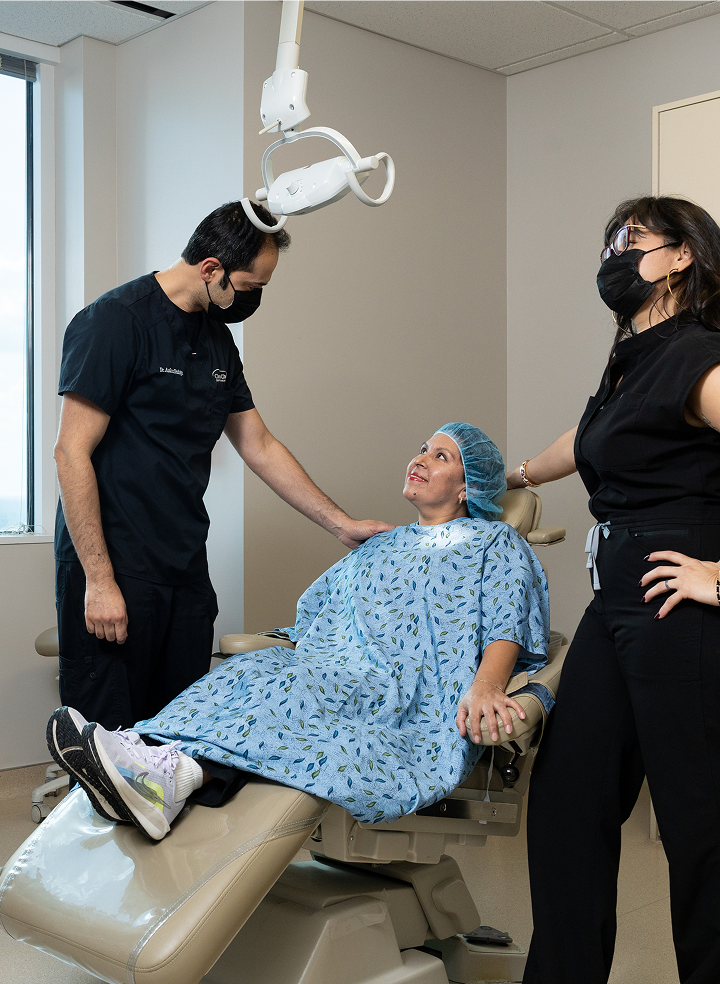
Being present for these visits, with your parent's permission, can be genuinely helpful. A second set of ears may help some patients and caregivers remember details afterward, especially when a lot of clinical information is covered in one sitting. Just make sure your parent has said they would like you there. Some people prefer to handle appointments on their own, and that preference deserves respect.
Preparing for recovery
Recovery after implant surgery is where a lot of caregiver support tends to matter most, largely because it happens at home over an extended period.
A few ways to prepare in advance:
Stock soft foods such as soup, yogurt, mashed vegetables, and smoothies for the first several days after surgery.
Set up a comfortable recovery space at home, ideally somewhere your parent can rest with pillows, water, and any prescribed medication within reach.
Keep written aftercare instructions in a visible spot, since it is easy to forget verbal instructions once at home.
Track follow-up appointments on a shared calendar, along with the timeline for moving from the first set of teeth to the final set of teeth.
It is worth understanding that healing, a process called osseointegration where the implant fuses with the jawbone, takes place over several months, not just the days immediately following surgery. Unless you have special circumstances, your parent will receive the first set of teeth on surgery day, with the final restoration coming later once healing is complete. Knowing this ahead of time may make it easier to plan for both of you.
Recognizing when more support is needed
Not every senior who gets dental implants needs a caregiver closely involved, and age by itself is not a reason to assume otherwise. Many older adults manage their own appointments, aftercare, and recovery without difficulty.
That said, a few personal situations are worth paying attention to:
Difficulty following aftercare instructions, such as missing prescribed rinses or medications.
Mobility barriers that require special consideration to attend follow-up appointments
Communication gaps between your parent and their care team, where questions may seem to go unanswered or unasked.
A pattern of missing appointments unrelated to scheduling conflicts.
If you notice any of these, it may be worth offering more direct support, such as attending the next appointment together or helping set reminders. The goal is to fill gaps as they appear, not to assume from the outset that your parent cannot manage on their own.
Communicating with the care team
If you are going to be involved in your parent's treatment, it helps to establish that early, and with their consent. Letting the care team know that you may be joining calls or appointments, or that you are the point of contact for scheduling, prevents confusion later.
A few questions worth asking the care team, either alongside your parent or after they have given permission:
What should we expect during recovery, and how long does healing typically take?
Are there any warning signs after surgery that would warrant calling the office?
Are there specific dietary or activity restrictions we should plan around?
What is the timeline between first set of teeth and the final set of teeth?
Who should we contact with questions between appointments?
Having this information directly from the provider, rather than secondhand, may help reduce the chance of miscommunication and may provide additional clarity about what support could be useful in the weeks ahead.
Respecting independence throughout the process
Even with the most involved caregiver, this remains your parent's decision and their treatment. It can be tempting to take on more than they have asked for, especially if you are worried about them, but the most supportive role is usually one that responds to what they want.
That might mean stepping back once recovery is going smoothly, or checking in periodically rather than managing every detail. Balancing support with autonomy looks different for every family, and it is fine to adjust as you go. What matters is that your parent continues to feel like this is their choice, made with your help rather than around them.
Ready to help your parent take the next step?
If you are helping a parent or loved one consider dental implants, a consultation is a good place to start, for them and, if they would like, for you to be part of the conversation. It is an opportunity to ask questions, learn more about the proposed treatment plan, and discuss what kind of support may be helpful along the way.
To learn more about how implants may fit your parent's needs, dental implants for seniors: benefits, options, and what to know before treatment is a helpful next read, or you can help your loved one schedule a free consultation to start the conversation directly with a ClearChoice care team.
Schedule your free ClearChoice consultation today.