Last updated 03.30.2026
3-on-6 dental implants explained: what it is, who it's for, and how it compares to others
Learn what “3-on-6” typically refers to, how it compares to other full-arch implant options, what affects cost, and what to ask at a ClearChoice Dental Implant Center consultation.

3-on-6 dental implants explained: What it is, who may be a fit, and how it compares to other full-arch options
If you've been researching full mouth dental implants or full arch dental implants, you may have come across the term 3 on 6 dental implants. It often appears in online ads and search results, but it's not always clearly defined.
This guide explains what "3-on-6" typically refers to, how it compares to other approaches like all on 4 dental implants, and what factors may influence whether this type of treatment is appropriate for you.
At ClearChoice Dental Implant Center, treatment planning is based on your individual needs, not a one-size-fits-all label.
Quick answer: What does "3-on-6" mean?
The phrase 3-on-6 dental implants is a general term used to describe a type of full-arch dental implant solution supported by multiple implants.
In many cases, the "6" refers to the number of implants placed in the jaw to support a full arch of teeth. The "3" may refer to how the final teeth are structured or grouped. However, it's important to understand that:
"3-on-6" is not a standardized clinical term
Different providers may use the term in different ways
The exact design depends on your anatomy, bite, and treatment plan
Because of this, it's helpful to ask any provider how they define "3-on-6" in their practice and how it applies to your specific case.
What is a full-arch dental implant solution?
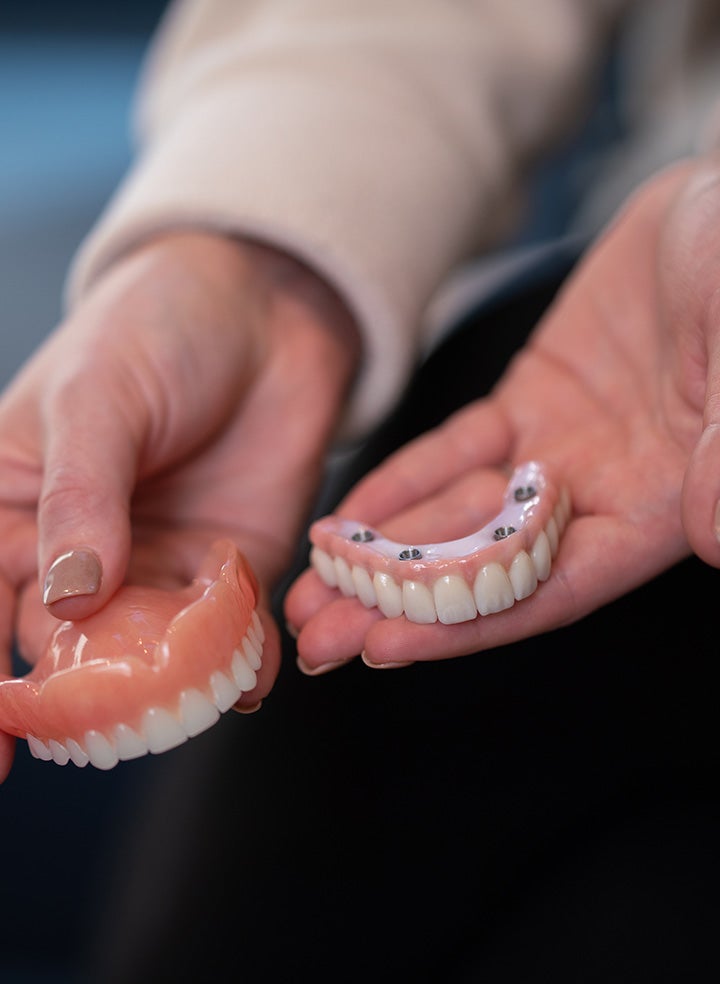
A full arch dental implant approach is designed to replace most or all teeth in the upper or lower jaw using dental implants to support replacement teeth.
These treatments typically involve two main phases:
Surgical phase
Dental implants are placed in the jaw to serve as anchors.
Restorative phase
Replacement teeth are designed and attached to the implants.
Some patients may receive temporary teeth soon after implant placement. For others, timing may vary depending on healing and planning. Final teeth are typically delivered later, based on the treatment plan.
How 3-on-6 typically works
While details vary, a 3-on-6 dental implants approach generally involves placing multiple implants across the arch to support a full set of teeth.
Planning usually considers:
Implant positioning to support the arch evenly
Bite alignment to help distribute forces
Bone levels and anatomy, which affect placement decisions
Spacing and design of the restoration, which may influence function and maintenance
The type of materials used for the final teeth may also affect durability, aesthetics, and long-term care.
Because every case is different, your provider will design a plan based on your specific needs rather than following a fixed template.
3-on-6 vs All-on-4 vs other full mouth dental implant options
Many patients compare 3 on 6 vs all on 4 when researching full-arch options. These approaches share similar goals but may differ in design and planning.
What's similar
Both approaches:
Are types of full mouth dental implants
Use implants to support a full arch of teeth
Aim to restore function and appearance
What may differ
Number and placement of implants
Different approaches may use different numbers and positions of implants, depending on anatomy and planning.
Bone and anatomy considerations
Some approaches may be considered based on available bone and overall structure.
Restoration design and materials
The way the teeth are constructed and the materials used may vary.
Maintenance and follow-up
Each approach may involve different long-term care and maintenance needs.
There is no single "best" solution for everyone. The right option depends on your anatomy, goals, and overall treatment plan.
Who may be a fit for 3-on-6
Candidacy for 3-on-6 dental implants depends on several factors evaluated during a consultation.
Bone levels and anatomy
Why it matters: Implants need adequate support.
What is evaluated: Bone shape, density, and structure through imaging.
Gum and oral health
Why it matters: Healthy tissue supports healing and long-term outcomes.
What is evaluated: Gum condition and overall oral health.
Bite forces and habits
Why it matters: Clenching or grinding may affect planning.
What is evaluated: Bite patterns and wear.
Medical history
Why it matters: Certain conditions or medications may influence treatment planning.
What is evaluated: Overall health and relevant history.
Some patients may be a good fit for a 3-on-6 approach, while others may benefit from alternative full-arch solutions. A consultation helps determine what may be appropriate.
Cost questions: What affects 3-on-6 dental implants cost?
Searches for 3 on 6 implants cost and full mouth dental implants cost are common. Instead of a single price, several factors may influence cost.
These may include:
Whether treatment involves one arch or both arches
The number of implants used
What is included in the plan (imaging, extractions, temporary teeth, follow-ups)
The materials used for final teeth
Case complexity and any additional procedures that may be discussed in some cases
Ongoing maintenance and follow-up needs
Compare treatment plans carefully
When reviewing options, compare what is included in each plan. This can help ensure you are making an informed decision rather than focusing only on a headline cost.
For some patients, third-party financing options may be available for qualified applicants.
Questions to ask any provider advertising "3-on-6"
Because the term can be used differently, asking the right questions can help you understand your options.
Consider asking:
What does "3-on-6" mean in your office?
How many implants are you recommending for me, and why?
Are temporary teeth included? What about final teeth?
What is the long-term maintenance plan?
What happens if adjustments or repairs are needed?
Clear answers to these questions can help you compare options and set realistic expectations.
What to expect at ClearChoice Dental Implant Center
At ClearChoice Dental Implant Center, patients begin with a dental implant consultation focused on understanding their goals and evaluating their oral health.
During this process, your care team may:
Review your medical and dental history
Evaluate imaging to assess bone and anatomy
Discuss potential treatment options, including full-arch solutions
Explain the surgical and restorative phases
Provide guidance on long-term maintenance
ClearChoice Dental Implant Center coordinates planning across both surgical and restorative aspects of care, helping patients understand each step of the process.
For those exploring payment options, third-party financing options may be available for qualified applicants.
FAQs: 3-on-6 dental implants
Is 3-on-6 better than All-on-4?
It depends on your anatomy, treatment goals, and plan. Different approaches may be appropriate for different patients.
Does 3-on-6 mean you get teeth the same day?
Not necessarily. Some patients may receive temporary teeth soon after implant placement, but timelines vary. Final teeth are typically delivered later based on the treatment plan.
How long can dental implants last?
With proper care, dental implants are implants that can last a lifetime. The teeth attached to them may require maintenance or replacement over time.
How much does 3-on-6 cost?
Cost varies based on factors such as the number of implants, materials used, and what is included in the treatment plan. A consultation provides the most accurate information for your case.