Last updated 05.14.2026
Zygomatic dental implants: what they are, who may be a candidate, and what to expect
Have severe bone loss and been told you can't have implants? Learn how zygomatic dental implants may offer a path forward — without bone grafting.
Zygomatic dental implants are a specialized type of implant anchored in the zygomatic bone (cheekbone) rather than the upper jawbone. They are designed for patients with severe upper jawbone loss who may not be candidates for traditional dental implants.
For some patients, zygomatic implants may provide an alternative when:
Bone grafting is not recommended
Previous bone grafting has failed
Traditional implant placement is not possible due to severe bone loss
If you’ve been told you do not have enough bone for implants, this treatment approach may be worth discussing with a specialist team at ClearChoice Dental Implant Center.
What are zygomatic dental implants?
Traditional dental implants are typically anchored in the jawbone. Zygomatic implants are different because they anchor into the zygomatic bone, commonly known as the cheekbone.
The zygomatic bone is:
Denser than the upper jawbone
Often unaffected by severe upper jawbone loss
Able to support longer implant posts in some patients
This approach may allow patients with advanced bone loss to receive a fixed implant-supported restoration without extensive bone grafting.
Zygomatic implants are generally considered an advanced implant procedure and are planned carefully using 3D imaging and specialist evaluation.
How are zygomatic implants different from traditional dental implants?
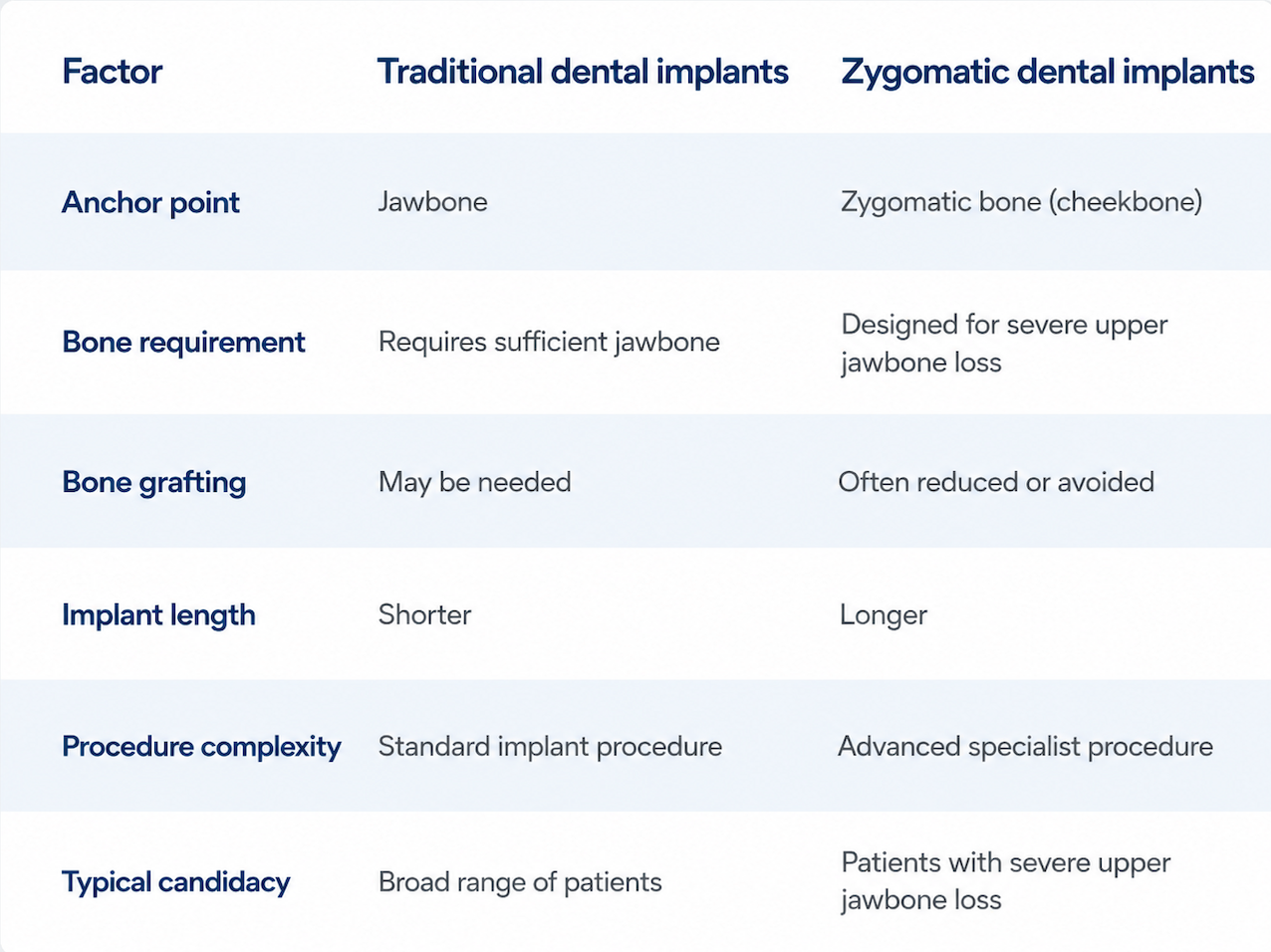
The most appropriate implant approach depends on anatomy, bone density, and overall health. A consultation and 3D imaging evaluation help determine what may be appropriate for your situation.
Who may be a candidate for zygomatic dental implants?
Patients researching who is a candidate for zygomatic implants are often individuals who have already been told they may not qualify for traditional implants.
Patients who may be candidates include:
Patients with severe upper jawbone loss
Bone loss may occur after long-term tooth loss, periodontal disease, or prolonged denture wear.
Patients for whom bone grafting has failed
Some patients may have undergone previous grafting procedures that did not produce the desired bone support.
Patients previously told they cannot receive implants
Zygomatic implants may provide an alternative pathway for some patients who lack sufficient upper jawbone.
Long-term denture wearers
Years of denture use may contribute to upper jawbone resorption over time.
Patients with failed previous implants
Insufficient bone support may contribute to implant complications in some cases.
Not every patient with bone loss is a candidate for zygomatic implants. Certain health conditions, infections, or anatomical factors may influence treatment planning.
A specialist evaluation and 3D imaging review at ClearChoice Dental Implant Center help determine individual suitability.
Zygomatic implants when bone grafting is not an option
Patients searching for zygomatic implants when bone grafting fails are often looking for alternatives after being told traditional implants may not work.
For many patients with severe upper jawbone loss, traditional implant treatment may involve:
Bone grafting
Sinus lift procedures
Extended healing timelines
However, grafting is not always appropriate or successful for every patient.
Because zygomatic implants anchor into the cheekbone rather than the upper jaw, they may reduce or eliminate the need for bone grafting in many cases.
This approach may allow some patients who were previously told “no” to potentially explore a fixed implant-supported solution.
Whether zygomatic implants are appropriate depends on individual anatomy, sinus structure, and overall health. A 3D imaging evaluation is essential before treatment planning.
What does the zygomatic implant procedure involve?
The zygomatic implants surgery process is carefully planned and coordinated by a specialist team.
1. Consultation and evaluation
Your care team performs:
Comprehensive oral examination
3D CT imaging
Evaluation of bone structure and sinus anatomy
Review of medical and dental history
2. Treatment planning
An oral surgeon and prosthodontist work together to develop a personalized treatment plan.
3. Surgical placement
The longer implant posts are placed through the upper jaw and anchored into the zygomatic bone. General anesthesia or IV sedation may be discussed depending on the procedure.
4. Temporary restoration
In many cases, a fixed temporary restoration may be attached during surgery or shortly afterward.
5. Healing phase
Osseointegration occurs over time as the implants integrate with the surrounding bone structure.
6. Final restoration
After healing is confirmed, the final custom restoration is placed.
The specific steps involved depend on your treatment plan and anatomy. Your specialist team will explain what may apply to your situation.
What are the pros and cons of zygomatic dental implants?
Patients often search for zygomatic implants pros and cons when comparing options.
Potential advantages
May reduce or eliminate the need for bone grafting
May allow treatment for patients with severe upper jawbone loss
Anchored in dense zygomatic bone
Can support a fixed full arch restoration
Important considerations
More complex procedure than traditional implants
Requires advanced imaging and surgical planning
Not appropriate for all patients
Recovery and treatment planning may be more involved
Individual outcomes depend on anatomy, healing, and overall health. A consultation helps determine whether this approach may be appropriate.
How much do zygomatic dental implants cost?
Searches for zygomatic implants cost and cost of zygomatic dental implants are common because this is a more specialized implant procedure.
Costs vary based on:
Number of implants placed
Type of restoration used
Overall treatment complexity
Imaging and surgical planning needs
Whether additional procedures are recommended
Because zygomatic implants involve advanced planning and specialist-level surgical care, treatment costs are often higher than traditional implant procedures.
A personalized cost breakdown is provided during your consultation at ClearChoice Dental Implant Center.
For some patients, third-party financing options may be available for qualified applicants.
You can also explore our guide to implant cost before your consultation.
Are zygomatic implants covered by insurance?
Coverage for zygomatic implants varies depending on the insurance plan.
Most dental insurance plans have annual maximums that may not cover the full cost of advanced implant procedures.
In some situations, portions of treatment may qualify for medical insurance consideration if the procedure is deemed medically necessary — such as reconstruction related to trauma or other complex conditions.
Coverage depends on individual plan terms and circumstances. The team at ClearChoice Dental Implant Center can help patients review available insurance information and financing options during the consultation process.
Taking the next step
For patients with severe upper jawbone loss, zygomatic implants may offer a treatment pathway that was previously thought unavailable.
If you’ve been told you are not a candidate for traditional implants or are exploring alternatives to bone grafting, a consultation at ClearChoice Dental Implant Center can help clarify:
Whether zygomatic implants may be appropriate
What the procedure may involve
What treatment options may fit your situation
You can schedule a free consultation to learn more about your options and speak with a specialist team.
To hear directly from patients who have undergone treatment, visit our patient reviews page or learn more about why ClearChoice has become a trusted name in implant dentistry.
With proper care, dental implants are implants that can last a lifetime with proper care, even though restorations may require maintenance over time.
FAQs: Zygomatic dental implants
What are zygomatic dental implants?
Zygomatic dental implants are specialized implants anchored in the zygomatic bone (cheekbone) rather than the upper jawbone. They are often considered for patients with severe upper jawbone loss.
Who is a candidate for zygomatic dental implants?
Patients who may be candidates often have severe upper jawbone loss, failed bone grafting, or have been told they lack enough bone for traditional implants. A consultation and 3D imaging evaluation determine individual suitability.
Can zygomatic implants be used if bone grafting has failed?
In many cases, yes. Because zygomatic implants anchor into the cheekbone rather than the jawbone, they may provide an alternative when grafting is not appropriate or has not been successful.
How much do zygomatic dental implants cost?
Costs vary depending on treatment complexity, the number of implants, and the restoration used. A personalized estimate is provided during the consultation process.
Are zygomatic implants covered by insurance?
Coverage varies by insurance plan. Some portions of treatment may qualify for coverage in certain situations, but many plans have limitations related to implant procedures.