Last updated 01.20.2026
Understanding why humans smile and how to restore yours with confidence
Smiles are powerful human signals of connection and emotion. Explore the science—and what to do if you're hiding yours.

At ClearChoice Dental Implant Center, we meet people every day who want to smile—at family dinners, in photos, during a big presentation—but feel like they can’t. Sometimes it’s because of missing teeth. Sometimes it’s discomfort. Sometimes it’s years of feeling self conscious about “smiling teeth” that don’t look the way they used to.
Smiling is deeply human. It’s tied to psychology, emotion, and social connection—and it’s also closely tied to how we see ourselves. In this ClearChoice guide, we’ll explore why humans smile, what the psychology behind a smile tells us, and what options may help with smile restoration if you’ve been hiding yours.
Why do humans smile? An evolutionary perspective
Humans didn’t evolve smiles just for fun. Smiles are powerful social signals—fast, visible cues that can communicate friendliness, safety, and belonging.
A smile can say:
“I’m approachable.”
“We’re okay.”
“I’m glad you’re here.”
“I understand.”
That’s why smiles show up in moments of connection: greeting a friend, meeting someone new, calming a tense moment, celebrating a win. In many cases, we smile not only because we feel good, but because we’re with other people.
Smiling as a social bonding tool
From an evolutionary standpoint, it makes sense that humans developed ways to signal cooperative intent. A relaxed facial expression and an open, friendly smile can reduce uncertainty in social situations. Over time, the human smile became a key part of how we build trust, connect with others, and express our personality. When someone avoids smiling, it can unintentionally affect how they’re perceived—something many patients say they worry about in everyday interactions.
That’s also why losing confidence in your smile can feel bigger than “just teeth.” When you don’t want to smile, you may hold back in conversations, avoid photos, or skip moments you’d otherwise enjoy.
The psychology of smiling
Smiles are fascinating because they work in two directions: outward (how others read us) and inward (how we experience ourselves).
Emotional and physiological effects of smiling
Smiling can be associated with positive social interaction and improved mood—especially when it’s genuine and connected to real emotion. Some research suggests facial expressions may influence emotional experience (often discussed as “facial feedback”).
A way to think about it:
Smiling can support connection with others.
Connection can support your feelings of well-being.
Feeling confident enough to smile can make it easier for you to engage socially.
At ClearChoice, we’re careful not to frame dental care as an emotional cure. But we do understand that restoring function and improving the look of your smile can be closely tied to confidence—and confidence can influence how you show up in daily life.
How human smiles differ from other species
You’ve probably seen posts about animals with smiles—dogs “grinning,” dolphins “smiling,” even primates showing teeth. But the meaning of those expressions isn’t always the same as a human smile.
Do animals smile? Why our smiles mean something different
Some animals display facial expressions that resemble a smile to us, but those signals can represent different things depending on the species—play, submission, stress, or social bonding cues. Humans, on the other hand, use smiles with even more complex social meaning.
A human smile can express:
joy
reassurance
gratitude
empathy
nervousness
politeness
“I’m trying to make this comfortable”
That flexibility is part of what makes smiling so powerful—and why changes to your teeth can have a surprisingly big impact on how you communicate and connect.

Why your smile matters—emotionally and socially
If you’ve ever caught yourself worrying about your teeth before a conversation, a date, or a photo, you already know: a smile is more than a feature. It’s part of how we feel seen.
How smiles influence first impressions and self-image
Smiles shape first impressions because they signal friendliness and openness. But they also shape self-image. When you like your smile, you tend to use it more. When you don’t, you might:
Smile with your lips closed
Cover your mouth when laughing
Angle away from cameras
Avoid social situations
Feel self conscious even with people you trust
Searches like “why is my smile so ugly” or “ugly teeth smile” are often less about vanity and more about vulnerability. People aren’t always chasing perfection—they’re looking for relief from constant self-monitoring.
Smiling and mental health: Confidence, joy, and social connection
Your smile doesn’t determine your worth. But being able to smile comfortably can support social connection, and social connection is associated with personal well-being. If you’ve been hiding your smile for years, it’s normal to feel like something is missing.
At ClearChoice Dental Implant Center, our role is to help patients restore oral function and create a smile that looks natural—so they can feel more comfortable in everyday moments. Emotional benefits may follow for some people, but they’re personal and not guaranteed.
When medical or emotional challenges affect your smile
Many people become self conscious for a reason only they can point to—then the emotional weight builds over time.
Tooth loss, pain, or embarrassment
Common reasons people hesitate to smile include:
Loose or uncomfortable dentures
Teeth that have shifted over time
Visible gaps
Ongoing pain or sensitivity
Concerns about gum health and bad breath
Stains or uneven edges
Sometimes people are living with discomfort. Other times, it’s the fear of being judged—or the feeling that their smile no longer matches who they are.
Feeling like you have to “hide your smile”
“Hiding your smile” can become automatic. You might not even realize you’re doing it until you see a photo or someone says, “You should smile more.”
If your confidence has been impacted, it’s okay to name that. It’s also okay to seek help—not because you “should” look a certain way, but because you deserve to feel comfortable eating, speaking, and smiling.
Ways to restore your smile and regain confidence
Smile restoration can mean different things for different people. For some, it’s a simple improvement. For others, it’s comprehensive treatment.
You may hear terms like:
Smile makeover (a broader plan that may combine multiple services)
Cosmetic treatments (whitening, veneers, bonding)
Restorative care (crowns, bridges, dentures)
Replacement options (including dental implants)
What’s right for you depends on your oral health, your goals, and your provider’s evaluation.
How dental implants may support a healthy, confident smile
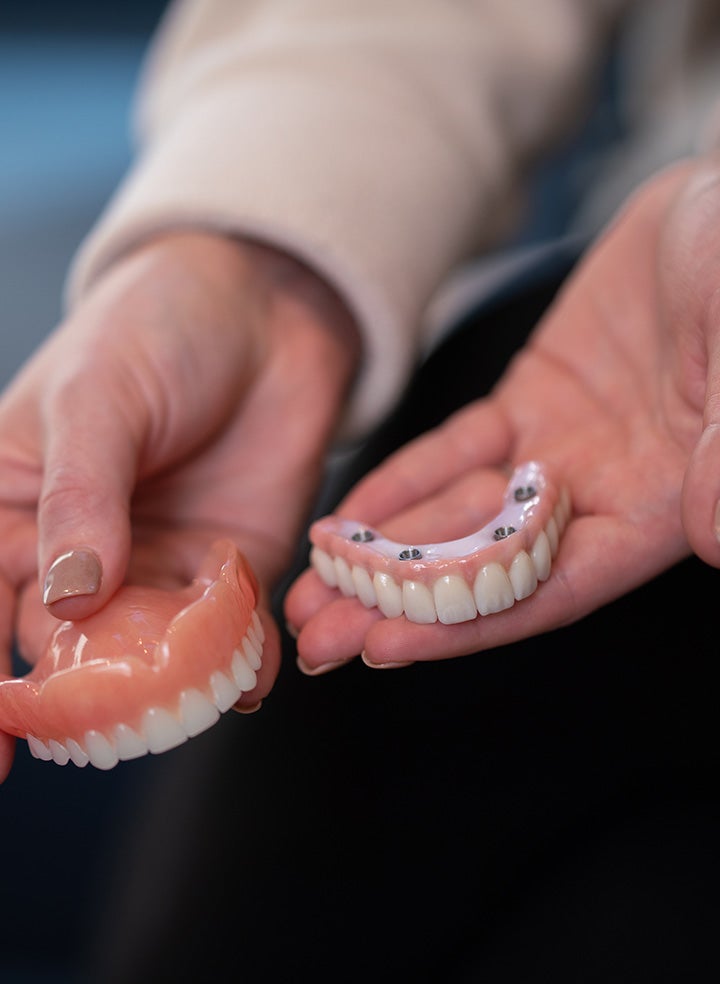
Dental implants are a common option for replacing missing teeth. They’re designed to replace the tooth root and support replacement teeth that look and function like natural teeth.
People often explore implants because they may help with:
Function (biting and chewing)
Comfort (stability compared to some removable teeth options)
Appearance (a natural-looking smile line)
Long-term oral health planning (based on individual needs)
At ClearChoice Dental Implant Center, we focus on comprehensive dental implant care, starting with an evaluation to determine whether implants are appropriate for you. Treatment plans can vary widely depending on your health history, bone levels, and goals—so the best next step is a personalized consultation.
The value of comprehensive care for emotional well-being
Dental decisions can feel heavy when you’re already self conscious. Comprehensive care can help by offering:
Coordinated treatment planning
Clear expectations and education
A team approach focused on both function and aesthetics
Support through each step of care
ClearChoice’s approach is designed to help patients understand their options and move forward with a plan that fits their needs—without framing implants as “cosmetic only” and without promising emotional outcomes.
Human smiles and restoration FAQs
Why are humans the only species that smile?
Humans aren’t the only species with smile-like facial expressions, but the human smile carries especially complex social meaning. We use it to communicate friendliness, empathy, reassurance, and belonging across many contexts—not just happiness.
Can restoring your smile improve your mood or confidence?
It may. For some people, improving oral function and smile aesthetics is associated with feeling more comfortable socially. But confidence is personal, and dental treatment shouldn’t be framed as a fix for emotional concerns. At ClearChoice, we focus on restoring teeth and function—while recognizing that confidence may be an important part of the patient experience.
Are there treatment options if I’m embarrassed to smile?
Yes. Depending on what’s driving your concern (stains, chips, spacing, missing teeth, discomfort), options may include whitening, bonding, veneers, orthodontics, dentures, or dental implants. A professional evaluation with ClearChoice can help you understand what’s realistic and healthiest for your mouth and how implants might be considered.
How can dental implants support a natural-looking smile?
Dental implants can replace missing teeth by supporting restorations designed to look natural. A well-planned treatment considers your facial features, bite, gum line, and long-term function—so your smile looks like yours, not like a template.
Ready to stop hiding your smile?
Smiling is deeply human—and you deserve to feel comfortable doing it. If tooth loss, discomfort, or embarrassment has changed how you show up, ClearChoice Dental Implant Center can help you explore options for smile restoration with a plan designed around your health, function, and goals.
A smile restored doesn’t have to mean “perfect.” For many people, it simply means feeling confident enough to laugh, talk, eat, and smile again—without hesitation.
Disclaimer: This content is for informational purposes only and does not substitute professional dental advice. Always consult your ClearChoice Dental Implant Center care team for personalized recommendations.