Last updated 03.17.2026
Snap-in dentures explained: How they work, benefits, and who may be a fit
Many people who wear dentures are familiar with the challenge of keeping them stable throughout the day.
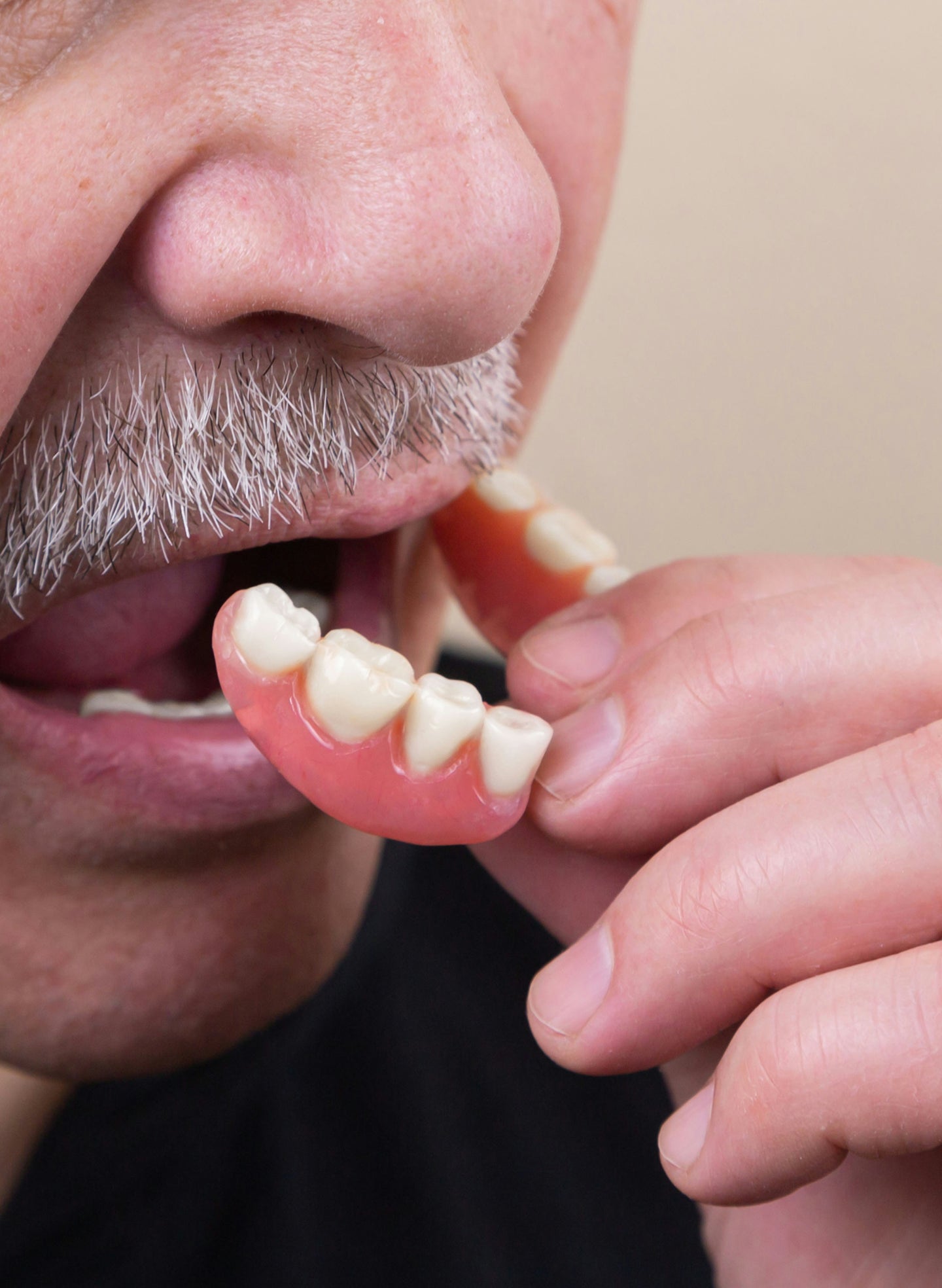
Slipping while speaking or eating, difficulty chewing certain foods, or relying on denture adhesive can be frustrating.
That’s why many patients search for snap in dentures, implant dentures, or implant supported dentures when looking for alternatives. These options may provide additional stability for some denture wearers by using dental implants as anchors.
If you’re researching snap in denture implants or comparing dentures vs implants, understanding how these systems work can help you decide whether a consultation may be worthwhile.
What are snap-in dentures?
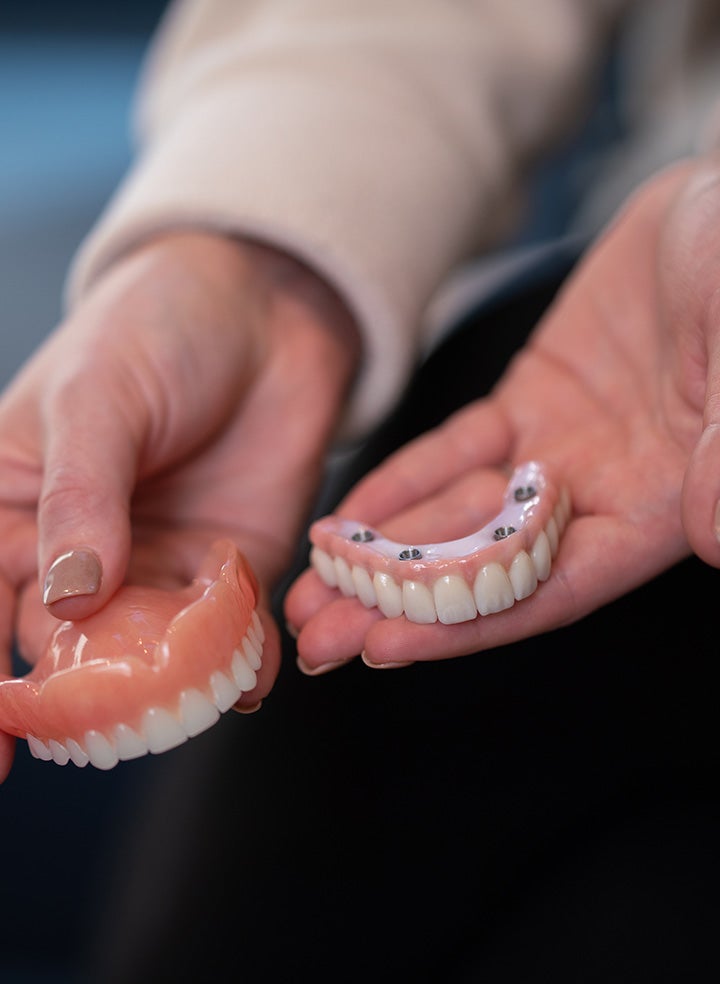
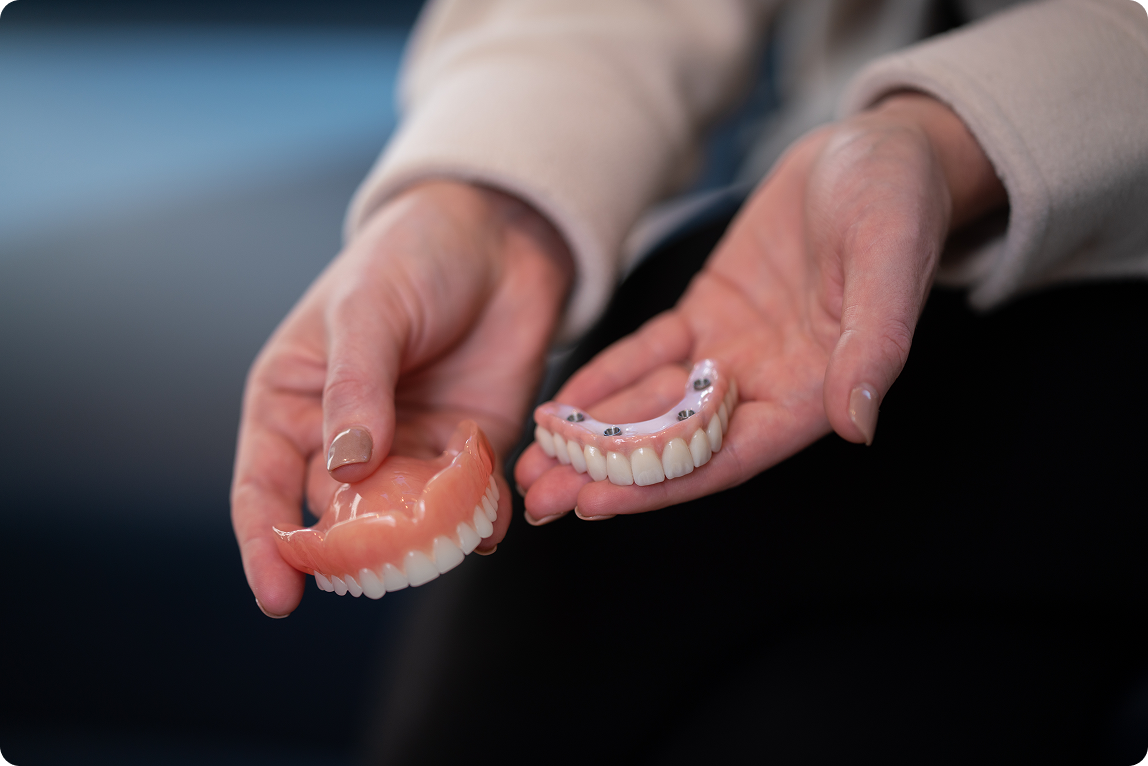
Snap-in dentures are removable dentures that attach to dental implants placed in the jaw. Because they connect to implants rather than relying only on gum tissue and suction, they may offer additional stability compared to traditional dentures for some people.
You may also hear snap-in dentures referred to as:
Snap-on dentures
Implant dentures
Implant-supported dentures
Denture implants
Implant over dentures
While the terms vary, they typically describe the same general idea: a removable denture that attaches to implants to help reduce movement.
The goal of snap-in dentures is not to permanently fix teeth in place, but to provide added support and stability while still allowing the denture to be removed for cleaning.
How do snap-in dentures work?
Snap-in dentures combine three main components.
Dental implants
Implants are small posts placed in the jawbone during a surgical procedure. In a few weeks, they integrate with the surrounding bone and serve as anchors for replacement teeth.
The denture
The denture is a removable set of replacement teeth designed to attach to the implants.
Attachment system
A connection mechanism allows the denture to snap onto the implants, helping it stay in place during daily activities such as speaking and chewing.
When properly seated, the denture attaches securely to the implants but can still be removed by the patient when it’s time to clean it.
Cleaning and maintenance
Because snap-in dentures are removable, daily cleaning is still required. Most patients remove the denture to clean both the denture itself and the gum tissue around the implants.
Your care team will explain specific cleaning steps and maintenance instructions based on your treatment plan.
Snap-in dentures vs traditional dentures: What’s different?
Traditional dentures and implant supported dentures both replace missing teeth, but they rely on different types of support.
Traditional dentures
Traditional dentures sit directly on the gums and typically rely on:
The shape of the gums
Using the tongue to hold the lower denture in place
Suction on the upper jaw
Sometimes denture adhesive
Many people wear traditional dentures successfully, but some experience movement or looseness over time, particularly with lower dentures.
Snap-in dentures
Snap in dentures connect to implants placed in the jaw, which may help improve stability for some people. This can sometimes reduce reliance on denture adhesive.
However, snap-in dentures are still removable and require regular cleaning and maintenance.
Fit and comfort can change over time for both traditional dentures and implant-supported dentures, which is why ongoing care and adjustments may be recommended.
Snap-in dentures vs fixed full-arch implants: Are they the same?
People often compare implant dentures with fixed implant teeth.
While both options use dental implants, they are designed differently.
Snap-in dentures
Removable by the patient
Attach to implants for added stability
Removed daily for cleaning
Fixed full-arch implant restorations
Not removable by the patient
Remain in place continuously
Cleaned similarly to natural teeth
Some people prefer removable options because they find them easier to clean or more flexible for maintenance. Others prefer fixed restorations because they do not want to remove their teeth.
The right option depends on anatomy, oral health, lifestyle preferences, and treatment goals.
Benefits of snap-in dentures for many denture wearers
While results vary from person to person, snap in dentures may offer several advantages for many people who struggle with traditional dentures.
Increased stability
Because the denture attaches to implants, it may feel more stable while speaking or chewing.
Improved confidence
Some patients report feeling more comfortable in social situations when their dentures move less.
Less movement compared to some traditional dentures
Implants may help reduce shifting during everyday activities.
Lower denture stability improvements
Lower dentures can sometimes be more challenging to stabilize than the upper denture, because the lower jaw moves, and the tongue moves against the denture during speaking and chewing. Implant-supported dentures may help address this concern for some patients, especially with the lower denture.
However, outcomes vary, and not every patient will experience the same level of improvement.
Considerations and possible downsides
Like any dental treatment, snap-in denture implants involve trade-offs.
They are still removable
Snap-in dentures must be removed daily for cleaning.
Attachments may require maintenance
Over time, attachment components may wear down and may need replacement or adjustment.
Not everyone is a candidate
Factors such as bone levels, gum health, and medical history may affect whether implants are recommended.
Treatment includes a surgical phase
Dental implants are placed through a surgical procedure, and healing is part of the overall process.
Your care team can explain how these considerations may apply to your specific situation.
Who may be a fit for snap-in dentures?
Snap-in dentures may be considered for people who:
Wear dentures that feel loose or unstable
Are missing many or most teeth
Want a removable option with more stability
Want to explore alternatives to frequent use of denture adhesive
During a dental implant consultation, providers typically evaluate several factors, including:
Bone levels and anatomy
Gum and oral health
Medical history
Bite forces or grinding habits
Overall treatment goals
Because each person’s anatomy and needs are different, candidacy for implant supported dentures is determined individually.
Snap-in dentures cost: What affects price?
Searches for snap-in dentures cost and implant supported dentures cost are common, but pricing varies based on several factors.
Cost considerations may include:
Number of implants used
Design and materials of the denture
Whether extractions are needed, which can require more appointments
Bone and tissue considerations, which may involve grafting discussions in some cases
Complexity of the case and follow-up care
What services are included in the treatment plan
Compare treatment plans carefully
When evaluating options, look at the entire treatment plan rather than focusing on a single price number.
Plans may differ in what they include, such as imaging, surgical procedures, follow-up visits, and maintenance guidance.
For some patients, third-party financing options may be available for qualified applicants.
What to expect at ClearChoice Dental Implant Center
Patients exploring snap on dentures or other implant options often begin with a consultation at ClearChoice Dental Implant Center.
During this visit, the care team may:
Discuss treatment goals and expectations
Review medical and dental history
Evaluate imaging to understand bone structure and anatomy
Explain possible options, including traditional dentures, snap-in dentures, or fixed solutions
ClearChoice Dental Implant Center coordinates planning across the surgical and restorative phases, helping patients understand what each step may involve.
Patients also receive guidance on long-term care and maintenance to help protect their oral health and implant-supported teeth.
For those exploring financial planning, third-party financing options may be available for qualified applicants.
Snap-in dentures FAQs
Are snap-in dentures the same as implant-supported dentures?
Yes. Snap in dentures, snap on dentures, and implant supported dentures are commonly used to describe removable dentures that attach to dental implants.
How many implants are used for snap-in dentures?
The number of implants varies depending on anatomy, treatment goals, and the design of the denture. Your care team determines this during planning.
Do snap-in dentures feel more secure than regular dentures?
For many people, snap-in dentures may feel more stable because they attach to implants. However, individual experiences vary.
Can snap-in dentures reduce the need for denture adhesive?
Some patients find they rely less on denture adhesive when their denture connects to implants, but adhesive use may still vary depending on the individual case.
How long can dental implants last?
With proper care, dental implants are implants that can last a lifetime. The denture and attachment components connected to them may require maintenance or replacement over time.
How do I clean snap-in dentures?
Snap-in dentures are typically removed daily for cleaning. Your provider will give instructions for cleaning both the denture and the gum tissue around the implants.
If you’re researching snap in dentures, a consultation can help you understand whether implant-supported dentures may be appropriate and how they compare with other tooth replacement options.