
Last updated 03.11.2026
Permanent teeth replacement: options, benefits, and how to choose what’s right for you
If you’re searching for permanent teeth replacement, you’re likely looking for something that feels stable, reliable, and long-lasting.
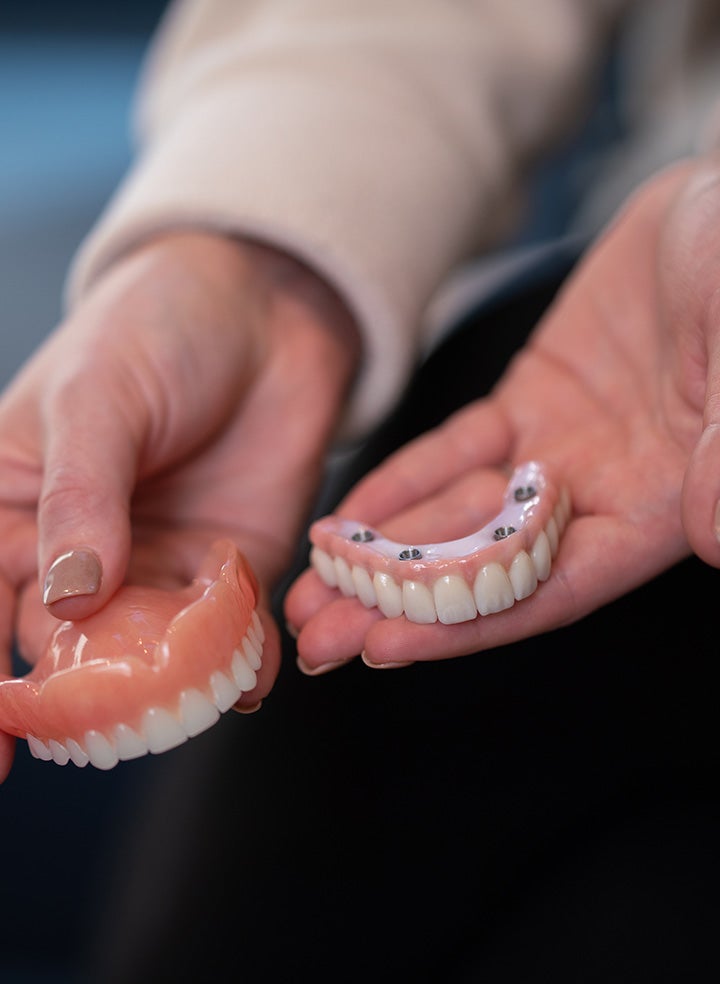
Tooth loss can affect chewing, speech, confidence, and daily comfort. Fortunately, there are several modern tooth replacement options — including dental implants, implant dentures, snap-in dentures, dental bridges, and traditional dentures.
This guide explains what “permanent” really means, how the options compare, what affects cost, and what to expect at ClearChoice Dental Implant Center.
What does “permanent teeth replacement” mean?
The word “permanent” can mean different things depending on context.
For some people, it means:
Not removable
Long-lasting
Stable during eating and speaking
A solution that feels close to natural teeth
In reality, many tooth replacement options are designed to be long-lasting but durability of the treatment depends on:
Oral health
Medical history
Maintenance
Bite forces
The best option depends on your individual goals, anatomy, and long-term expectations.
Tooth replacement options: A quick overview
Here are the most common teeth replacement options:
Dental implants (single tooth, multiple teeth, or full mouth dental implants)
Implant dentures / snap-in dentures
Traditional removable dentures
Dental bridge (fixed restoration supported by neighboring teeth)
Let’s look at each more closely.
Dental implants as a tooth replacement option
A dental implant consists of:
A small post placed in the jawbone
A custom restoration (crown, bridge, or full-arch teeth)
People often consider implants because they may offer:
Stability during chewing
A natural-feeling bite
Independent support without relying on adjacent teeth
Implant treatment includes both:
A surgical phase
A restorative phase
Timelines vary depending on healing and complexity.
Dental implants are designed to be implants that can last a lifetime with proper care, although restorations placed on implants may require maintenance over time.
For patients missing many or most teeth, full mouth dental implants may be discussed as part of comprehensive planning.
Implant dentures and snap-in dentures
Many people searching for snap-in dentures are looking for more stability than traditional removable dentures provide.
Implant dentures (often called snap-in dentures) are removable dentures that attach to implants for added retention.
For many individuals, this option may:
Reduce slipping
Decrease reliance on adhesives
Improve chewing confidence
Because they are removable, daily cleaning and follow-up visits remain important. Stability may improve compared to traditional dentures, but maintenance is still required.
Traditional dentures (removable teeth replacement)
Traditional dentures are removable appliances that replace multiple or all missing teeth.
They may be considered when:
A removable option is preferred
Surgical treatment is not desired
Budget or medical considerations limit other approaches
Some individuals report challenges over time, such as:
Movement during eating
Increasing reliance on adhesives
Fit changes as gums and bone shift
However, dentures remain appropriate for some patients depending on their needs.
Dental bridge: When it’s used and how it compares
A dental bridge is a fixed tooth replacement supported by adjacent natural teeth.
It may be considered when:
A single tooth is missing
Neighboring teeth are healthy and suitable for support
Unlike implants, a bridge does not replace the root in the jawbone. It relies on the strength of surrounding teeth.
Hygiene and long-term maintenance are important with bridges, and suitability depends on the health of adjacent teeth.
Choosing the right option: Which solution fits your situation?
The best solution depends on how many teeth are missing and your goals.
If you’re missing one tooth:
Single tooth replacement options may include an implant or a dental bridge.
If you’re missing several teeth:
Implants, bridges, or partial dentures may be discussed.
If you’re missing most or all teeth:
Full mouth dental implants
Implant dentures (snap-in dentures)
Traditional dentures
The right approach depends on bone levels, medical history, lifestyle, and long-term expectations.
A consultation helps clarify candidacy and planning.
Cost and planning: What affects the price of permanent teeth replacement?
Searches for dental implants cost and permanent dentures cost are common — and understandable.
Cost varies depending on:
Number of teeth replaced (single vs full arch)
Type of restoration (implant crown, bridge, denture, snap-in)
Bone or tissue considerations
Overall case complexity
Long-term maintenance needs
When comparing providers, ask what is included in the treatment plan so you can make an apples-to-apples comparison.
At ClearChoice Dental Implant Center, third-party financing options may be available for qualified applicants.
What to expect at ClearChoice Dental Implant Center
If you’re exploring permanent teeth replacement, your consultation may include:
A review of your goals and medical history
Digital imaging to assess bone levels and anatomy
Discussion of tooth replacement options
Coordinated planning between surgical and restorative phases
Long-term maintenance guidance
The goal is to help you understand your options clearly so you can make an informed decision about your care.
FAQs: Permanent teeth replacement
What is the most permanent way to replace missing teeth?
There is no universal answer. Dental implants are often considered a long-lasting solution because they replace both the root and the visible tooth. However, the best option depends on anatomy, health history, and goals.
Are permanent dentures the same as implants?
The term “permanent dentures” is often used loosely. It may refer to implant-supported dentures or full-arch implant restorations that are not removable. Definitions vary, so it’s important to clarify during consultation.
What are snap-in dentures?
Snap-in dentures are removable dentures that attach to dental implants for added stability. Candidacy depends on bone levels and overall health.
Is a dental bridge permanent?
A dental bridge is fixed (not removable by the patient), but longevity depends on oral health, hygiene, and support from neighboring teeth.
How long can dental implants last?
Dental implants are designed to be implants that can last a lifetime with proper care, though restorations may require maintenance over time.
Planning your next step
If you’re considering permanent teeth replacement, understanding the differences between implants, bridges, snap-in dentures, and traditional dentures can help you feel more confident.
A personalized evaluation at ClearChoice Dental Implant Center can help determine which solution aligns with your goals, anatomy, and long-term expectations.