
Last updated 04.02.2026
Dental implants before & after: realistic expectations for comfort, function, & appearance
Before & after photos can be inspiring, but every case is different. Learn what dental implant “before and after” can mean, the stages from temporary to final teeth, & what to expect at a ClearChoice.
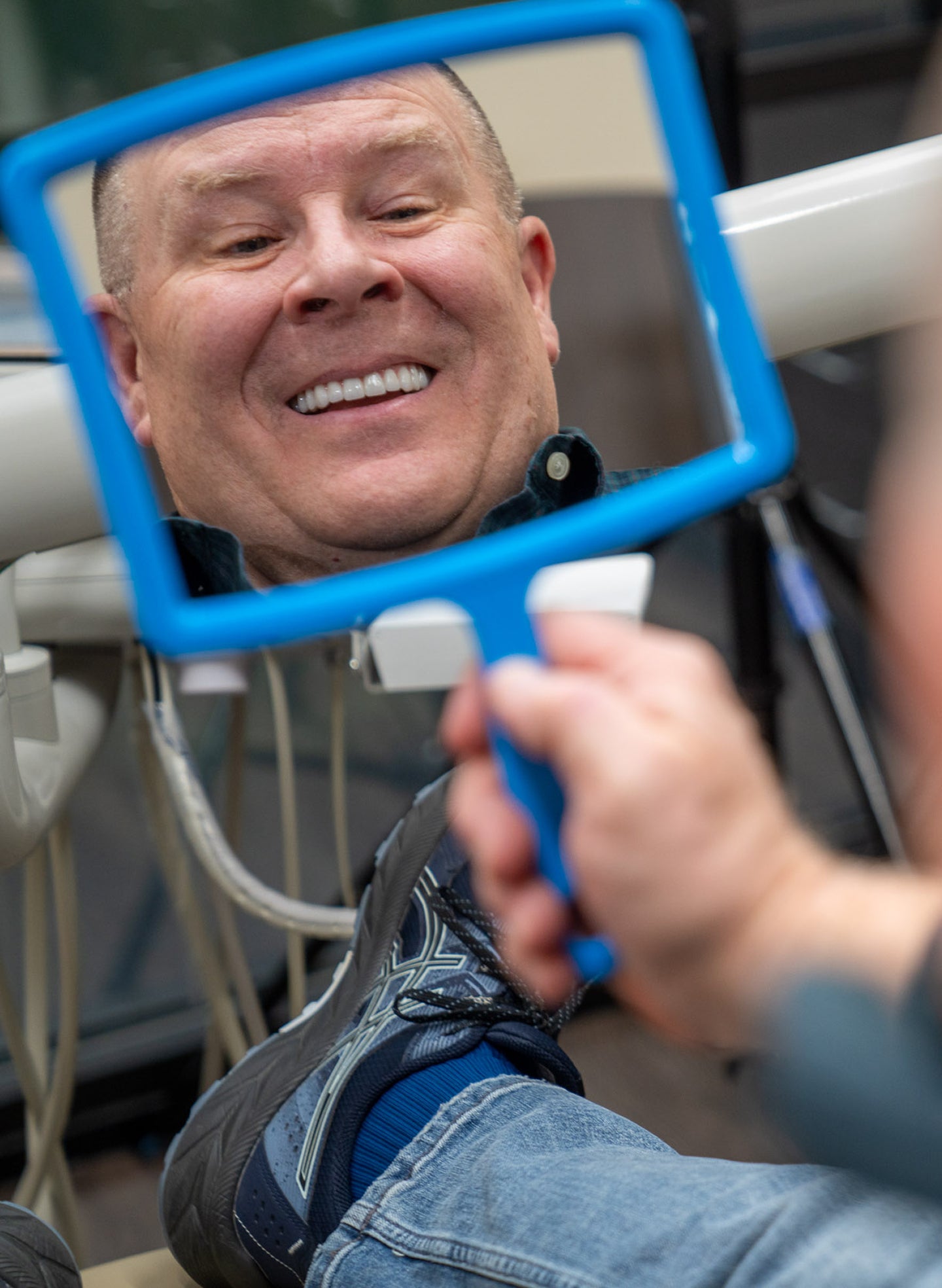
If you are researching before and after dental implants, it helps to understand what those terms actually represent, what may change, and what depends on your individual treatment plan. This guide walks through realistic expectations so you can make a more informed decision.
What does "before and after dental implants" really mean?
When people search for dental implants before and after, they are often comparing two very different points in time.
"Before" may include:
Missing one or more teeth
Loose or uncomfortable dentures
Difficulty chewing certain foods
Changes in speech
Feeling self-conscious when smiling
"After" can refer to several stages, not just one final result:
After implant placement surgery
After temporary teeth, when applicable
After final restorations are placed
Each of these stages may look and feel different. What you see in a before-and-after photo is usually the final stage, but getting there involves planning, healing, and sometimes adjustments along the way. Outcomes vary based on your starting point, anatomy, and treatment goals.
Common "before" scenarios people search for
People considering dental implants often share similar concerns. Understanding where you fall can help set expectations for your own before-and-after experience.
Single missing tooth
A missing front tooth may affect appearance and confidence, while a missing back tooth may impact chewing. Both situations can be addressed with implants, but the priorities may differ. Learn more about the single tooth implant procedure.
Multiple missing teeth or failing dental work
Some people have several missing teeth, restorations that are no longer functioning well, or toothaches. This can affect bite alignment, comfort, and daily function of chewing, speaking and smiling with ease.
Loose dentures or frequent adhesive use
Traditional dentures may shift or require adhesives. Many people explore implant dentures for added stability.
Advanced wear, shifting bite, or difficulty chewing
Teeth that are worn down or misaligned can make eating uncomfortable and may lead to further changes in oral health over time.
What may change after dental implants
Dental implants are designed to support replacement teeth that function and look like natural teeth. While results vary, many people notice improvements in several areas that they didn't even realize were so important to them until they witnessed the change for themselves.
Function: Chewing comfort and bite stability
Dental implants are placed in the jawbone and can help support replacement teeth that stay in place. For many patients, this may improve the ability to chew a wider variety of foods compared to missing teeth or loose dentures.
Bite stability may also improve, especially in cases where multiple teeth are replaced. However, comfort and function depend on proper healing, fit, and long-term care.
Confidence: Speaking, smiling, and social comfort
Replacing missing or unstable teeth may help some people feel more comfortable speaking and smiling. This can influence social interactions and daily activities.
It is important to note that dental treatment supports physical restoration. Emotional outcomes vary and are personal to each individual.
Appearance: Natural-looking teeth and smile balance
Dental implants are paired with custom restorations designed to match the surrounding teeth and facial structure. The goal is a natural-looking smile.
Aesthetic outcomes depend on detailed planning, material selection, and the final restoration design. Subtle factors such as tooth shape, color, and alignment all play a role.
What doesn't change overnight (and what takes time)
While before-and-after images highlight the end result, the process itself takes time and patience.
Healing timelines vary
After implant placement, the body needs time to heal and integrate the implant with the bone. This process differs for each person. Understanding implant healing can help you prepare for what to expect.
Temporary teeth vs final teeth
Some patients may receive temporary teeth during treatment, depending on their plan. Final restorations are typically placed later, once healing is complete. In some cases, multiple temporaries may be needed before the final restoration is placed.
Adjustments may be needed
As your bite adapts and restorations are refined, small adjustments may be part of the process.
Maintenance is ongoing
Dental implants require consistent oral hygiene and routine follow-up care. Long-term success depends on how well they are maintained.
Stages of "after": From consultation to final teeth
Understanding the general timeline can help set expectations for what happens between "before" and "after." Review the full implant process for a step-by-step breakdown.
Consultation and planning
At ClearChoice Dental Implant Center, the process begins with a consultation. This includes discussing your goals, reviewing your medical history, and evaluating imaging.
Surgical phase
Dental implants are placed in the jawbone during a surgical procedure.
Healing phase
The implants integrate with the bone over time. The length of this phase depends on individual factors.
Restorative phase
Once healing is sufficient, final crowns, bridges, or full-arch restorations are placed.
Depending on the restorative phase of treatment (crowns, bridges or full arch restorations) temporary teeth may be placed the same day as surgery. Clinical considerations influence the timeline of placement of temporary teeth.
Full mouth dental implants before and after: What's different?
Full mouth dental implants involve replacing all teeth in the upper arch, lower arch, or both. The before-and-after experience and improvements can be more complex compared to single-tooth replacement.
Common options include:
Fixed full-arch teeth that are not removable by the patient
Implant-supported dentures that can be removed for cleaning
The starting point matters. Bone levels, gum health, and whether you currently wear dentures all influence the treatment approach and outcome.
Because of these variables, full mouth dental implants before and after results can vary widely between patients.
What affects "before and after" results?
Several factors influence how dental implants look and function over time.
Bone levels and anatomy
Adequate bone is needed to support implants. In some cases, additional procedures may be considered. Patients with significant bone loss can learn more about their options.
Gum and oral health
Healthy gums help support long-term outcomes and aesthetics.
Bite forces and habits
Grinding or clenching can place extra stress on implants and restorations.
Medical history considerations
Certain health conditions or medications may affect healing and treatment planning.
Material choices for final teeth
Different materials offer varying levels of durability and aesthetics.
Long-term maintenance and hygiene
Daily care and regular visits play a major role in how implants perform over time.
Cost questions people ask when looking at before-and-after results
When reviewing before and after dental implants, cost is often part of the conversation.
What drives cost?
Number of implants needed
Single tooth vs full mouth treatment
Fixed vs removable solutions
Complexity of the case
What to look for in a quote
An "apples-to-apples" comparison may include:
Imaging and diagnostics
Surgical procedures
Temporary teeth, if applicable
Final restorations
Follow-up care
At ClearChoice Dental Implant Center, patients receive a detailed treatment plan outlining what is included. Review our implant costs guide for a full breakdown of what to expect.
Third-party financing options may be available for qualified applicants.
What to expect at ClearChoice Dental Implant Center
Choosing dental implants is a significant decision. ClearChoice Dental Implant Center focuses on a coordinated approach to care.
Comprehensive consultation
Your visit includes a discussion of your goals, a review of your medical history, and advanced imaging to assess your needs.
Coordinated treatment planning
Surgical and restorative phases are planned together to support continuity of care.
Education and transparency
You will receive information about what outcomes may be possible, what the process involves, and how to maintain your results over time.
Financial guidance
ClearChoice provides clear information about costs and available payment options, including third-party financing for those who qualify.
FAQs: Dental implants before and after
How long does it take to see results after dental implants?
The timeline varies depending on your treatment plan. Some patients may notice changes soon after initial procedures, while final results may take several months as healing progresses.
Can I get temporary teeth the same day?
In some cases, temporary teeth may be placed on the same day as implant surgery. This depends on factors such as bone quality, implant stability, and your overall restoration treatment plan.
Do dental implants look natural?
Dental implants may look natural when restorations are carefully designed to match your surrounding teeth and facial features. Results depend on planning, materials, and individual anatomy.
Are full mouth dental implants better than dentures for everyone?
Not necessarily. The best option depends on your oral health, preferences, and goals. Both fixed and removable solutions have different considerations.
How long can dental implants last?
Dental implants are designed as a long-term solution and can last a lifetime with proper care. The restorations attached to them may require maintenance or replacement over time.