Last updated 10.05.2026
All-on-4 vs. All-on-6: What is the difference and which may be right for you?

Written by: Dr. Cynthia Petrie, DDS, MS, FACP
Compare All-on-4 and All-on-6 implant configurations, learn what the numbers mean, and understand how clinicians plan a full-arch restoration.
If you’re researching ways to replace a full row of missing or failing teeth, you may come across terms such as All-on-4 and All-on-6. The basic difference sounds straightforward: All-on-4 generally uses four dental implants to support a full arch of replacement teeth, while All-on-6 generally uses six. But choosing between them is not as simple as deciding that six implants must be better than four.
The number of implants is only one part of a full-arch treatment plan. Available bone, implant position, bite forces, the condition of remaining teeth, the opposing arch and the design of the restoration all influence what may work for a particular patient. Personal priorities matter too, including whether you want a fixed or removable solution, how the restoration will be maintained, your timeline and your budget.
Understanding those factors can make it easier to compare recommendations and ask a more useful question than “Which one is better?” The better question is: Why is this particular implant configuration being recommended for me?
What do All-on-4 and All-on-6 mean?
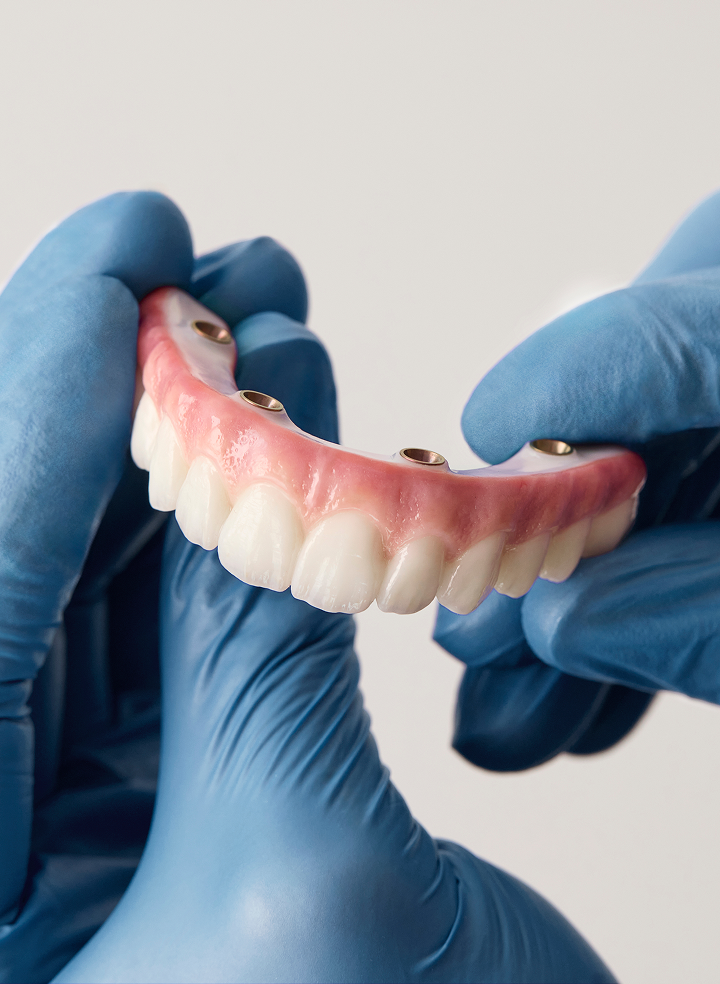
All-on-4 generally describes a full-arch restoration supported by four dental implants. All-on-6 generally describes a full arch supported by six implants. In either approach, the implants support multiple connected replacement teeth rather than placing one implant for every missing tooth.
Although the names can make them sound like standardized products, they are better understood as descriptions of implant configurations. Implant number, position, angle and restoration design work together, which means two patients receiving the same number of implants can still have very different treatment plans.
ClearChoice offers individualized full-arch solutions, including its 4-6 approach. The appropriate number and arrangement of implants are selected after an examination, 3D imaging and treatment planning rather than according to a universal formula.
How are All-on-4 and All-on-6 different?
The obvious difference is that one approach uses four implants per arch and the other uses six. Additional implants may provide more potential support points, but those implants still need to be placed where the patient has suitable bone and where the surgical and restorative plan allows them to function effectively.
An All-on-4 plan may use posterior implants placed at angles to make use of available bone and support the restoration. An All-on-6 plan uses six implant positions when the anatomy and treatment goals support that configuration. Neither description, by itself, tells you whether the plan is appropriate for your mouth.
There can also be important differences that have nothing to do with implant count. If you are comparing treatment recommendations, find out whether each quote covers one arch or both, what type of provisional teeth you would receive during healing, what material is planned for the final restoration, whether preparatory treatment is expected and what follow-up is included.
That context matters because “All-on-4” and “All-on-6” do not necessarily describe everything you are buying or everything your treatment will involve.
Is All-on-6 better than All-on-4?
Not necessarily. It can be tempting to assume that more implants automatically create a better result, but implant treatment does not work according to a simple more-is-better formula.
Each implant needs an appropriate position and adequate supporting bone. The complete restoration also has to fit the bite, distribute forces appropriately, be maintainable and meet the patient’s functional and appearance goals. Six implants are not automatically preferable if the anatomy does not provide six useful positions, just as four implants are not automatically preferable because the treatment may sound less extensive.
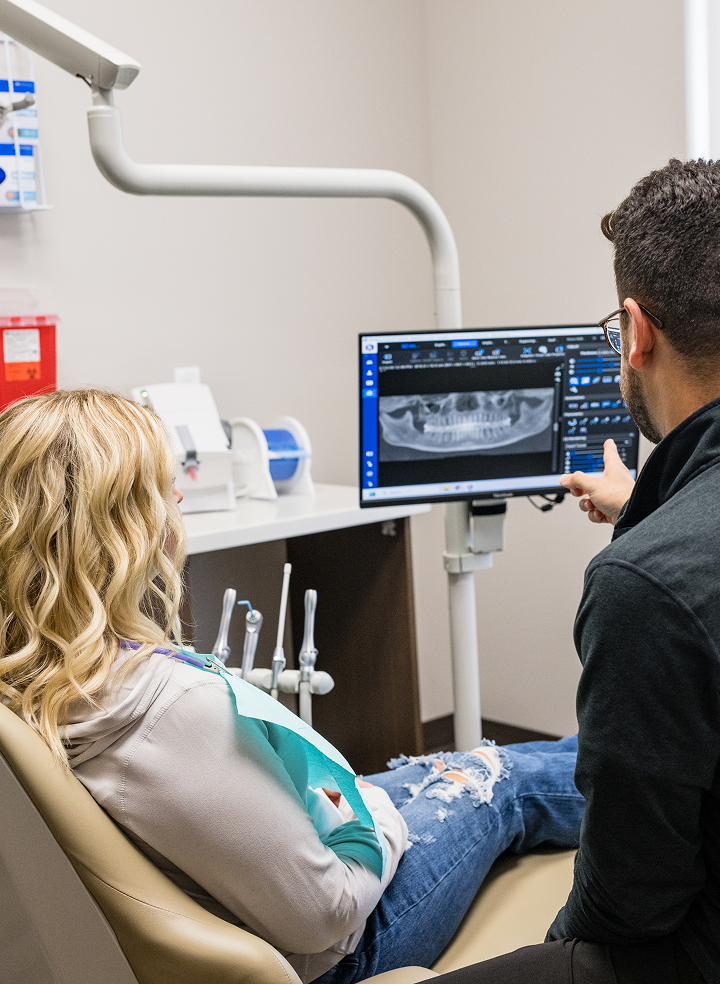
This is why the reasoning behind the recommendation matters more than the number in the treatment name. A clinician should be able to show you what they see in your 3-D imaging x-rays and explain how the proposed implant positions support the planned restoration.
What determines how many implants are used?
Planning starts with the mouth as a whole, not with a predetermined implant count. A comprehensive evaluation looks at the amount and quality of bone across the arch, the location of nearby structures such as sinuses and nerves, gum health, remaining teeth and previous dental treatment. Medical history, medications, nicotine use and health conditions that may affect healing are also relevant.
Your bite is another part of the picture. Natural teeth opposing an implant-supported restoration can create different forces from a situation in which both the upper and lower arches are being restored. Jaw relationships, available space for the restoration and habits such as grinding may also influence its design.
Then there are your priorities. Some patients are primarily interested in a fixed teeth solution, while others may be comparing fixed teeth with a removable implant-supported denture. Appearance, maintenance, treatment timing and cost can all be part of that conversation. These preferences help shape the plan, although the final recommendation still has to make clinical sense for your anatomy and health.
How do All-on-4 and All-on-6 compare with other tooth-replacement options?
All-on-4 and All-on-6 are not the only ways to replace missing teeth. If an entire arch needs to be replaced, removable traditional dentures, implant-supported dentures and fixed implant-supported restorations may all enter the conversation.
Traditional dentures rest on the gums and are removed for cleaning. Implant-supported dentures attach to implants for additional stability, rest on the gums and are also removable. A fixed full-arch restoration is secured to implants and because it can only be removed by the dentist, is intended to remain in place during normal daily use.
Not everyone who has several missing or failing teeth needs a complete arch replaced. Depending on the condition of the remaining teeth, alternatives may include preserving treatable natural teeth, replacing an individual tooth with an implant or using an implant-supported bridge. A useful consultation should explain the reasonable options rather than assuming that full-arch treatment is necessary simply because multiple teeth are affected.
If you are comparing those options, ask what would remain, what would be removed, how the replacement teeth would be cleaned and what kind of professional maintenance would be needed over time.
What happens when ClearChoice plans a full-arch restoration?
At a ClearChoice consultation, the team reviews your dental and medical history and uses 3D CBCT digital x-ray imaging to evaluate your bone and oral structures. Surgical and restorative planning are considered together so that implant placement supports the teeth being designed to go on top of them.
For many patients considering full-arch treatment, the possibility of receiving teeth on procedure day is an important question. This is the ClearChoice goal for every patient and requires a thorough initial workup, diagnoses of the bone quality and quantity, and custom planning the implant number, sizes and positions. With this collaboration between the surgeon and the prosthodontist, some patients may qualify for same-day implant treatment and may leave procedure day with a provisional prosthesis, depending on their individual clinical circumstances. That provisional restoration is not the final set of teeth. Healing and follow-up continue before the final restoration is placed.
Before deciding on treatment, ask your provider to walk you through the sequence of treatment. It should identify the arch or arches being treated, the proposed number of implants, the restoration materials, the provisional and final restoration timeline, follow-up and cost.
Questions to ask when a provider recommends All-on-4 or All-on-6
You do not need to become an expert in implant dentistry before a consultation, but you should leave understanding why the recommendation makes sense for you. Useful questions include:
Why are you recommending this number of implants for my arch?
Can you show me the available bone and proposed implant positions on my 3D scan?
What other treatment options did you consider?
Is the proposed restoration fixed or removable?
What will I wear while the implants are healing?
How soon will I receive my final restoration?
How will I clean around and beneath the replacement teeth?
What is included in the written estimate, and will there be fees added later?
What kind of professional maintenance should I expect after treatment?
If the answers are difficult to follow, ask the provider to explain them in plain language. You should understand the plan well enough to describe what is being proposed and why.
Maintenance matters whether you have four implants or six
The decision does not end when the implants and replacement teeth are placed. Full-arch restorations require daily cleaning and professional follow-up, regardless of the number of implants supporting them.
Your dental team may recommend specific tools and rinses for cleaning beneath the restoration and around the implants. The best routine depends on the design of the restoration, the spaces available for cleaning, your dexterity and your individual oral-health needs. Follow-up visits also give the care team an opportunity to evaluate the implants, supporting tissues and restoration over time.
Before choosing a treatment plan, make sure you understand who will provide long-term maintenance, how often follow-up is recommended and what changes should prompt you to contact the dental team. A treatment option needs to work not only on procedure day, but also as part of your everyday routine.
How should you compare All-on-4 and All-on-6 costs?
Implant count can affect cost, but comparing prices based only on the number of implants can be misleading. One quote may cover a single arch while another covers both. Different estimates may also include different restoration materials, preparatory procedures, provisional teeth, final teeth and follow-up services.
Ask for a written estimate that clearly identifies the complete treatment scope and distinguishes the provisional and final restoration timelines. If an All-on-6 quote includes services or materials that an All-on-4 quote does not, simply dividing each price by the number of implants will not tell you which plan offers the better value.
Financing can make treatment easier to manage over time, but it does not change the underlying treatment cost. If financing is part of your decision, review the interest rate, repayment term, fees, monthly payment and total amount you would repay before accepting an offer.
Focus on the treatment plan, not just the name
All-on-4 and All-on-6 are useful terms for understanding the basic implant configuration, but provider terminology is not always identical. A familiar treatment label should not take the place of a clear explanation of what is actually being proposed.
Before making a decision, ask for the proposed implant number, arch or arches, restoration type, materials and treatment timeline in writing. More importantly, ask why those choices fit your anatomy, oral health and treatment goals.
That gives you something much more useful than a comparison between four and six. It gives you a way to compare complete treatment plans.
Frequently asked questions
Is All-on-6 better than All-on-4?
Not for every patient. The appropriate configuration depends on factors such as available bone, anatomy, bite, implant position and restoration design. Your clinician should be able to explain why the recommended number of implants fits your treatment plan.
Do All-on-4 implants replace an entire arch?
The term generally refers to a full arch of replacement teeth supported by four implants. Ask exactly what your proposed treatment includes because materials, provisional teeth, final teeth and preparatory procedures can vary between plans.
Can full-arch implants and teeth be placed in one day?
After their initial workup to include complex planning for implants and teeth, some patients may qualify for fixed implant treatment and may leave on surgery day with a provisional prosthesis. The provisional teeth are not the final restoration. Healing and follow-up continue before final teeth are placed.
How do I choose between fixed implants and a removable implant-supported denture?
Compare how the options differ in stability, removability, cleaning, treatment requirements, cost and how they fit your daily lifestyle. Your anatomy, bone, oral health and personal goals are considered no matter which option you choose.
Next steps
If you are comparing All-on-4, All-on-6 or another full-arch approach, try not to make the implant number the deciding factor. A more useful goal is to understand why a particular configuration has been recommended, what the complete treatment involves and how the restoration will fit into your life after treatment.
Schedule a free consultation with ClearChoice to review your 3D x-ray imaging, discuss your tooth-replacement options and learn which implant configuration may fit your anatomy and treatment goals.
This article is intended for general educational purposes and does not replace personalized medical or dental advice. Dental implant candidacy, implant number and placement, restoration design, treatment timing and results are determined individually by qualified clinicians.