Last updated 09.28.2026
Sinus infection vs. tooth infection: How to tell the difference

Written by: Dr. Mohamed Kamel, DMD, BDS, MSc, MDS
Sinus infection or tooth infection? Learn the key symptom differences, whether sinus pressure can cause tooth pain, and when to see a dentist.

You wake up with a dull ache running through your upper back teeth. Your cheeks feel tender, your nose is stuffy, and you cannot tell whether the problem started in your mouth or your sinuses.
This mix-up can occur because the roots of the upper teeth are located close to the maxillary sinuses. This guide walks through how the two conditions differ, which symptoms point to each one, and when it is time to get a professional opinion.
Why sinus infections and tooth infections feel so alike
The confusion has a simple anatomical explanation. Your maxillary sinuses, the largest of your sinus cavities, sit directly above the roots of your upper back teeth. In many people, only a thin layer of bone separates the two. The teeth and sinuses also share overlapping nerve pathways.
Because of this closeness, pressure or infection in one area is easily felt as pain in the other. That is exactly what makes it genuinely hard to tell a sinus issue from a dental one without an exam. Your brain is receiving pain signals from a shared network of nerves, so it is not always clear where the trouble actually started.
Can a sinus infection cause tooth pain?
Yes. Sinus congestion and inflammation can press directly on the roots of the upper teeth, creating a dull, aching toothache, or discomfort when you bite down even when the teeth themselves are completely healthy. This is one reason people may seek information about the difference between a sinus infection and a tooth infection.
There is a fairly consistent pattern to sinus-related tooth pain. It usually affects several upper teeth at once, often on one side of the face, rather than a single tooth. It also tends to show up alongside other sinus symptoms, like congestion, or follows a recent cold or allergy flare-up.
Signs your pain is a sinus infection
If your discomfort is sinus-related, you will typically notice a few symptoms together, not just tooth pain on its own. Common signs include:
Dull pressure spread across multiple upper teeth, rather than one specific tooth
Pain that gets worse when you bend forward or lie down
Nasal congestion or discharge
Facial pressure around the cheeks and eyes on one or both sides of your face
A reduced sense of smell
Symptoms that follow a cold, sinus infection, or allergy flare
If this list sounds familiar, especially in combination with recent congestion, sinus pressure is a likely culprit. Still, only a doctor or ENT can confirm sinusitis.
Signs your pain is a tooth infection
A tooth infection, or dental abscess, tends to feel different. The pain is more localized and often more severe.
Watch for:
Sharp, throbbing pain focused on one specific tooth
Pain that intensifies when chewing or with hot and cold foods or drinks
Swelling in the gums, or a small, pimple-like bump near the affected tooth
A persistent bad taste or bad breath that does not improve
Pain that steadily worsens over time, rather than easing as a cold clears up
One important distinction: a true dental infection will not resolve on its own. If you suspect an abscess or infection around your teeth or gums, it needs professional care. You can also learn more about how dental implant infections are diagnosed and treated if you are further along in your treatment journey.
Sinus infection vs. tooth infection: a side-by-side comparison
If you are still not sure which one matches your symptoms, this quick comparison can help.
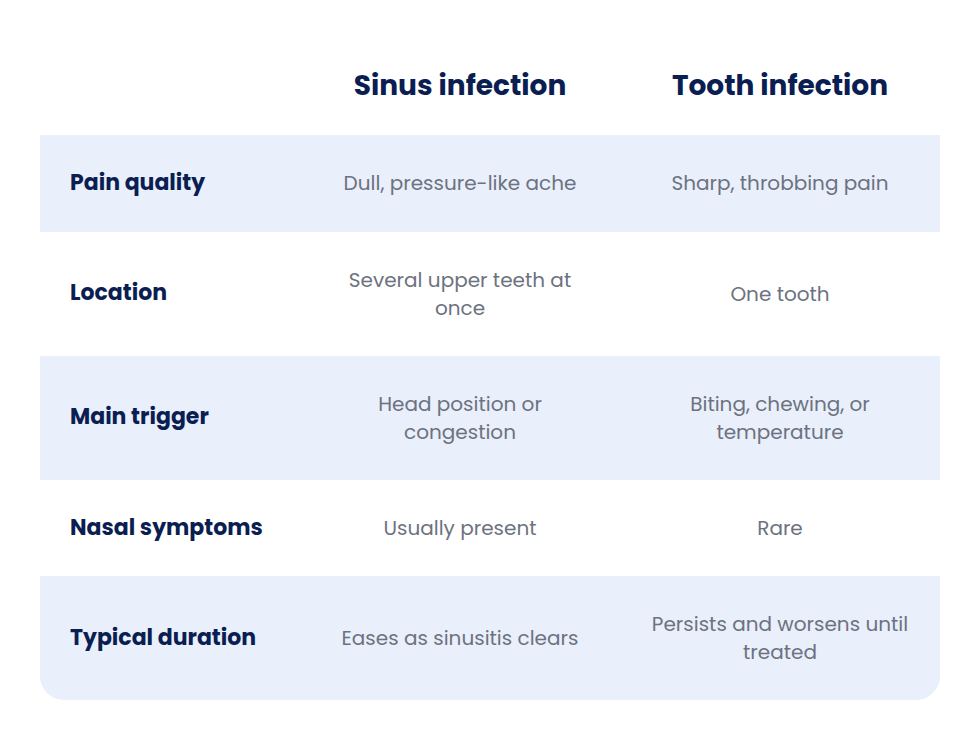
Think of this table as a starting point for the conversation with your provider, not a diagnosis. Only a clinical exam can confirm what is actually going on.
When to see a dentist vs. a doctor
Once you have a sense of which pattern fits, the next question is who to call.
Start with a dentist if:
Pain is localized to one tooth
It worsens with chewing or temperature extremes on the teeth
It began after recent dental work
See a doctor or ENT if:
Pain spans several teeth
It comes with congestion or other cold-like symptoms
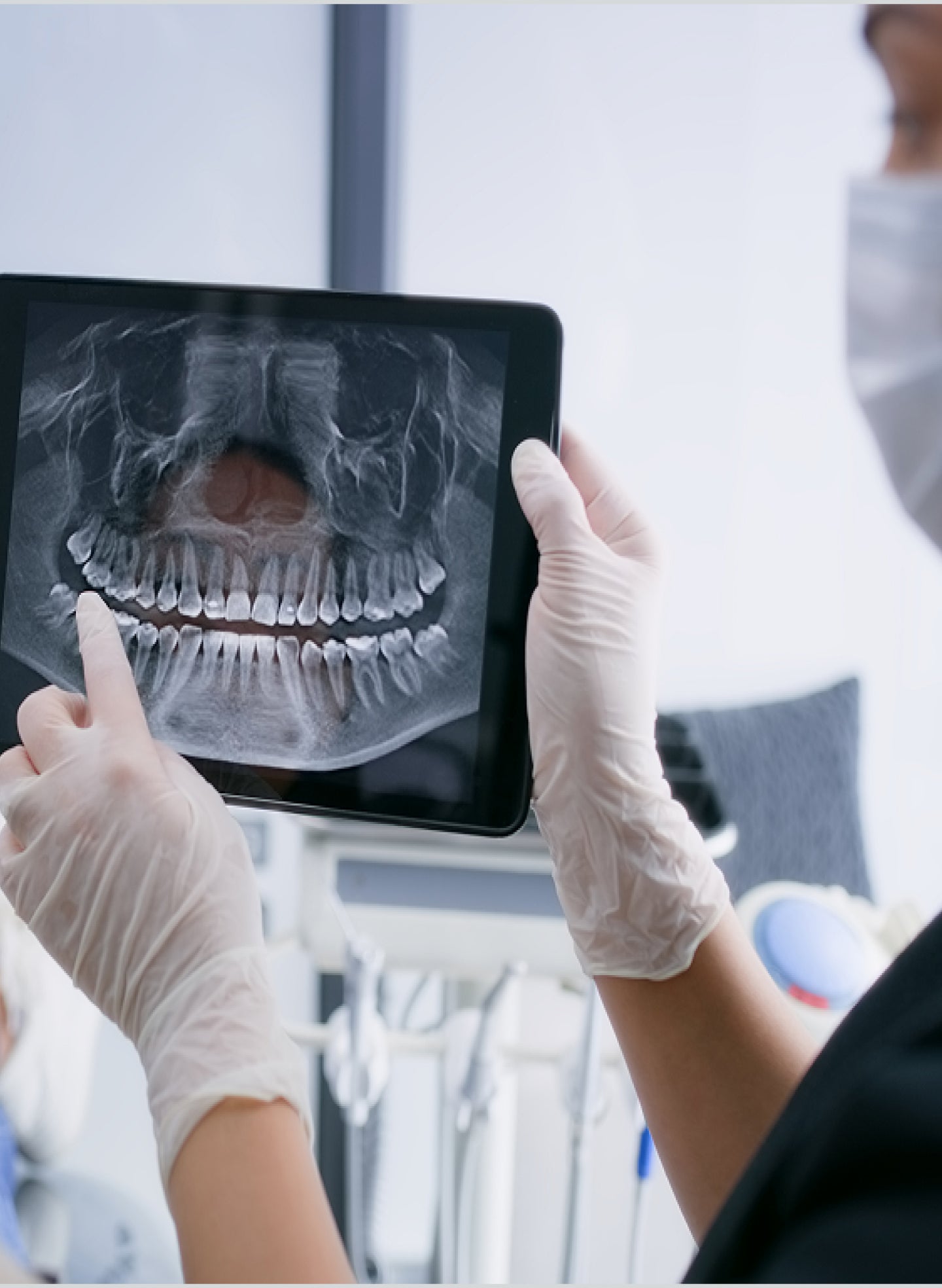
If you visit a dentist, they have diagnostic tools that can help determine the source of your pain. A clinical exam typically includes a percussion test, (gently tapping on the tooth), and a temperature test, checking your response to hot or cold. From there, imaging such as a standard dental X-ray or, in more complex cases, a 3D CBCT scan may provide additional information to help determine whether the issue is dental in origin and can image the sinuses and teeth during the same scan. If you are already considering next steps, scheduling a consultation is a straightforward way to get a clear answer.
A few symptoms warrant prompt attention no matter which condition you suspect: facial swelling, fever, or trouble breathing or swallowing. These are red flags that call for care right away, not a wait-and-see approach.
Why you shouldn’t ignore a tooth infection
It is worth taking dental pain seriously, even when it feels manageable. Left untreated, a tooth infection can spread beyond the tooth itself, potentially damaging the surrounding jawbone, and in some cases leading to the loss of the tooth. When the bone at the end of the root is only a thin layer of bone that separates the tooth from the sinus, the infection from the tooth can break into the sinus. Then the diagnosis is tooth infection and sinus infection.
That said, losing a tooth to infection does not mean your options run out. Modern tooth-replacement solutions, including dental implants that may be placed the same day a tooth is removed in appropriate cases, are designed to help restore function and appearance. Seeking timely evaluation and treatment may help preserve future treatment options, including dental implants.
Sinus infection vs. tooth infection: the bottom line
The differences usually come down to a few key patterns. Sinus-related pain tends to be dull, spread across several upper teeth, and paired with congestion. Tooth-infection pain is typically sharp, focused on a single tooth, and gets worse with chewing.
Even with these patterns in mind, self-diagnosis has its limits. If you are dealing with persistent upper-jaw, cheek, or tooth pain, an appropriate next step is a professional evaluation rather than relying on self-diagnosis. A dentist, doctor, or ENT can confirm what is really happening and get you started on the right treatment. For more guidance on dental implants and related concerns, ClearChoice’s patient resources and FAQ are a good place to keep exploring.