Last updated 09.24.2026
Deep cleaning (scaling and root planing): What to expect and why it matters

Written by: Dr. Krupa Bambal, DDS
Wondering what scaling and root planing for your teeth involves? Learn what to expect during a deep cleaning and why it matters for your gum health.
You leave your regular dental checkup and the hygienist mentions you need a “deep cleaning.” Maybe your gums bled a little during the exam, or the dentist pointed out some tartar buildup below the gumline. Now you're wondering what that actually means, whether it is going to hurt and whether something is seriously wrong.
Take a breath. Scaling and root planing is a commonly used non-surgical treatment dentists use to treat gum disease, and most patients find it far more manageable than they expected. This article walks through what the procedure is, what happens before, during and after your appointment and why it matters for the long-term health of your teeth and gums.
What is scaling and root planing?
Scaling and root planing is a two-part deep cleaning that treats gum disease at its source. Scaling removes plaque and hardened tartar (also called calculus) from the tooth surface, both above and below the gumline. Root planing then smooths the surface of the tooth root, so bacteria may be less likely to accumulate on the root surface and can support your dentist's periodontal treatment plan.
It is a commonly recommended, non-surgical treatment for gingivitis and early-to-moderate periodontitis (the more advanced form of gum disease).
The easiest way to think about the difference from a regular cleaning: a routine cleaning works above the gumline to prevent problems from developing. A deep cleaning reaches below the gumline to treat gum disease that is already present. Learn more about what is periodontal disease.
Signs you may need a deep cleaning
Only a full dental exam, including a measurement of the depth of your gum pockets, can confirm whether you need scaling and root planing. That said, a few warning signs are worth paying attention to between checkups:
Gums that bleed easily or appear swollen or red
Persistent bad breath that does not improve with brushing
Gums that appear to be pulling away from the teeth
Visible tartar buildup near the gumline
Increased tooth sensitivity or a feeling of looseness
If any of these sound familiar, it is worth learning more about periodontal disease treatment and scheduling an evaluation sooner rather than later.
What to expect during scaling and root planing
Every patient's treatment plan looks a little different, but most periodontal scaling and root planing appointments follow a similar pattern.
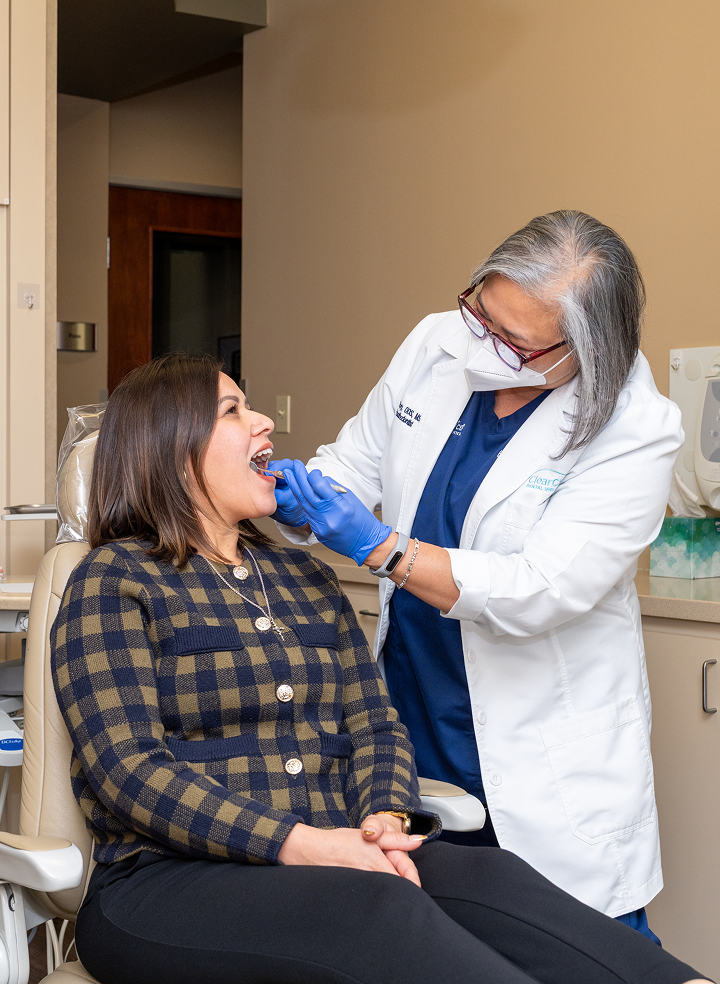
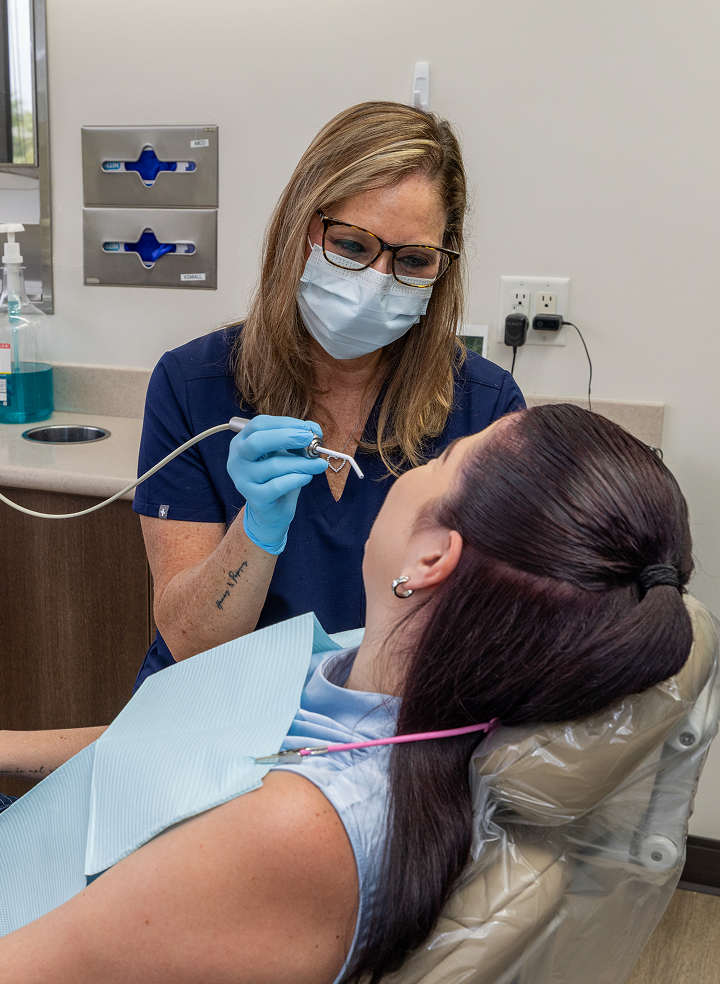
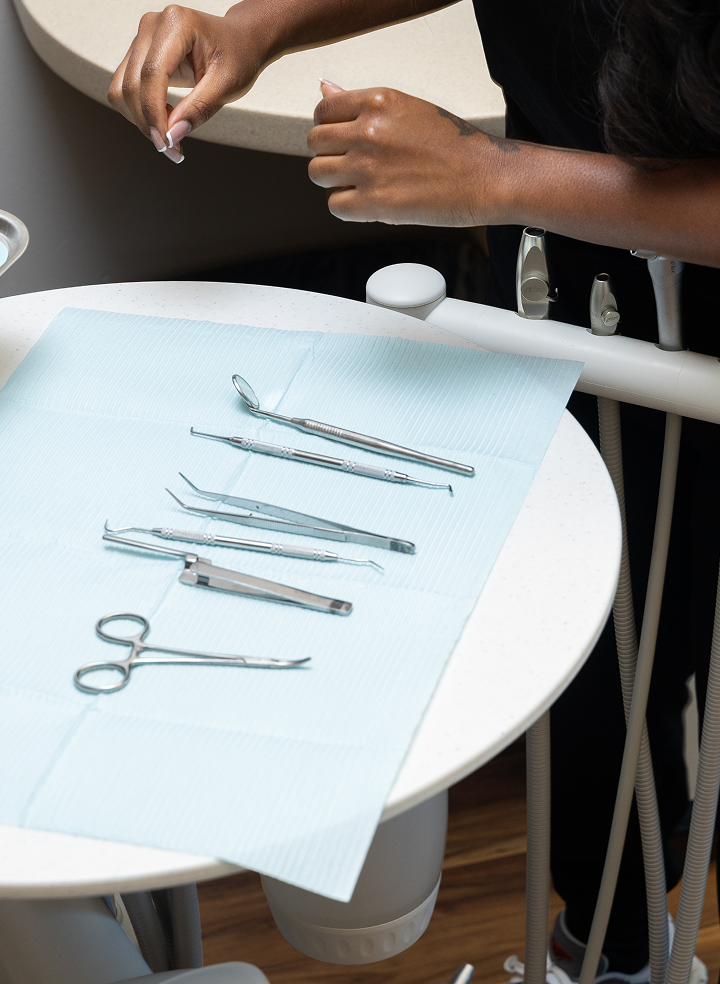
Your dental team will first examine your gums and measure the depth of the pockets around each tooth. Once the area is numbed with a local anesthetic, they will use ultrasonic handpiece and hand instruments to scale away plaque and tartar from the tooth surface and below the gumline. From there, they will plane, or smooth, the root surfaces to support the management of gum disease as part of your dentist's treatment plan. In some cases, your dentist may apply a topical antibiotic directly into the gum pockets to help control bacteria.
A typical appointment takes about one to two hours, and treatment is often split into sections, or quadrants of the mouth, over more than one visit rather than completed all at once.
Does it hurt? Because the area is numbed with local anesthetic beforehand, most patients feel pressure rather than pain during the procedure itself. Some mild discomfort afterward is normal and generally short-lived.
Recovery and aftercare: what to expect afterward
Most people return to their usual routine the same day. It is normal to notice some tenderness, sensitivity to hot or cold, or minor bleeding for a few days following treatment.
A few simple aftercare steps can make recovery more comfortable:
Stick to soft foods for the first day or two
Take over-the-counter pain relief as directed, if needed
Brush gently around the treated areas
Rinse with warm salt water to soothe the gums
Rinse with an antibacterial mouthwash if prescribed
Keep any follow-up appointments your dentist recommends
Why scaling and root planing matters
Scaling and root planing is intended to remove bacteria and buildup below the gumline. Depending on the individual's condition and response to treatment, this procedure may help support periodontal health when combined with appropriate follow-up care and oral hygiene practices.
Left untreated, can contribute to tooth loss in adults. A timely deep cleaning is one treatment option your dentist may recommend to help manage gum disease before it progresses. Beyond protecting your teeth, patients frequently notice fresher breath. Research has explored potential associations between oral health and overall health, and the relationship continues to be studied.
Life after a deep cleaning: periodontal maintenance
For more advanced cases of gum disease, one deep cleaning may not be a permanent fix. Many patients move onto a periodontal maintenance schedule, often every three to four months, paired with consistent daily brushing, waterflossing and hand flossing at home.
If your gum pockets do not improve after treatment, your dentist may recommend further evaluation or additional care. Staying consistent with maintenance visits and home care is what protects the results of your deep cleaning over time. For more guidance, see our tips on dental implant oral hygiene and maintenance and best products for gum disease.
When gum disease has already caused tooth loss
If gum disease has progressed to the point where teeth are already failing or have been lost, a deep cleaning alone may not be enough to resolve the underlying problem. That does not mean your options have run out.
Once your gums are stabilized, tooth-replacement solutions such as dental implants may be worth exploring. Healthy gums and adequate bone are among the factors your dental care team may evaluate when determining whether dental implants are appropriate, which is why a full evaluation matters. A ClearChoice team can assess your complete oral health picture and help you understand what is possible. Schedule a free consultation to learn more about your dental implant options.
Scaling and root planing: The bottom line
Scaling and root planing is a routine, non-surgical way to treat gum disease before it progresses further. There is usually less discomfort than the treatment name might suggest, and it matters because it helps protect your teeth and gums for the long term.
If you are noticing warning signs of gum disease, or your dentist has recommended a deep cleaning, do not wait to act. Explore our dental implants FAQ to learn more or reach out to schedule a consultation and get a clear picture of your gum health.