
Last updated 02.03.2026
Evolution of human teeth: Why wisdom teeth exist and impact on implants
Explore tooth evolution, the role of wisdom teeth, when to remove them and what it means for dental implants.
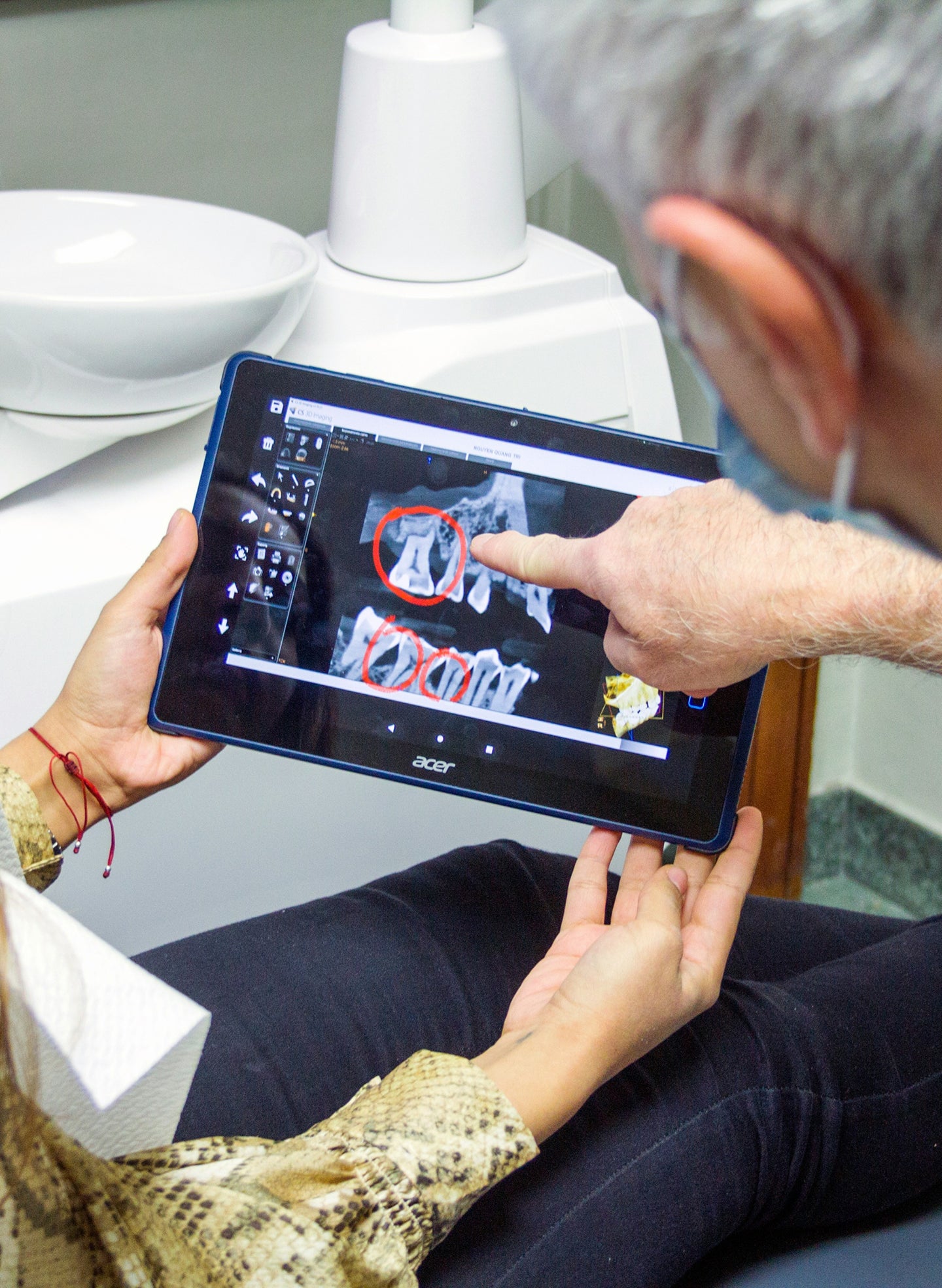
Wisdom teeth are one of the most common, and confusing, parts of human oral anatomy. Some people never notice them, while others experience pain, impaction, or are advised to have them removed. To understand why wisdom teeth still exist, and how they may affect dental implant planning, it helps to look at the evolution of human teeth.
By understanding where wisdom teeth come from and how modern jaws differ from those of our ancestors, patients can better understand when wisdom teeth matter and when they don’t.
Herbivores, Carnivores, and Humans
Teeth are tools that prepare food in the mouth, where digestion begins.
Herbivores (plant-eating animals) have large, flat molars designed for grinding tough plant material. Their jaws move side-to-side, and their teeth often wear flat over time.
Think cows and sheep.
Carnivores (meat-eating animals) have sharp incisors and canines for cutting and tearing. Their molars have pointed cusps that shear past each other rather, then grind.
Think dogs, wolves, and big cats.
Humans are omnivores and have teeth built for multiple functions:
Incisors cut
Canines tear
Molars cut and grind food
Human teeth are designed to handle both plant and animal foods.
Changes in jaw size and diet over human evolution
As human behavior evolved, so did diet:
Food preparation and cooking softened meals
Tools reduced the need for heavy chewing
Nutritional variety increased
Over time, jaw size gradually decreased likely due to the decrease in need for heavy muscles attached to the jaws. As the muscles became less strong, their pull on the bone creating a larger and wider jaw was diminished However, the genetic blueprint for tooth development remained largely unchanged. This evolutionary mismatch explains why many modern jaws struggle to accommodate all molars, especially wisdom teeth. Dentists are aware that some nationalities have larger, wider jaws with almost no crooked teeth and plenty of room for their third molars!
Why wisdom teeth still appear
Wisdom teeth, or third molars, are a remnant of our evolutionary past.
The role of third molars in ancestral diets
For early humans, wisdom teeth:
Provided additional chewing surface
Helped compensate for tooth wear or loss
Supported long-term function without dental care
In a time before oral hygiene and restorative dentistry, extra molars were beneficial.
Why many modern jaws lack room for them
Today, wisdom teeth often:
Erupt partially or not at all
Grow at angles that press against neighboring teeth
Remain trapped beneath gum tissue
This is why impacted wisdom teeth are so common and frequently evaluated during early adulthood.
Impact of keeping vs. removing wisdom teeth on oral health
Not every wisdom tooth requires removal. Some erupt normally and remain healthy. Others can contribute to oral health concerns over time.
Common issues associated with wisdom teeth
Partial impaction and crowding
Recurrent infections or gum inflammation
Damage to adjacent teeth
Difficulty cleaning, leading to decay
When removal is recommended
Removal may be discussed when wisdom teeth:
Cannot erupt properly
Cause repeated discomfort or infection
Affect neighboring teeth or bone
Complicate orthodontic or restorative planning
A comprehensive evaluation helps determine whether keeping or removing wisdom teeth best supports long-term oral health.
Wisdom teeth and dental implant eligibility
If dental implants are part of your future plan, wisdom teeth may factor into treatment planning, but they rarely determine eligibility on their own.
How wisdom teeth influence implant planning
Wisdom teeth can have some effect on implant treatment and should be addressed by a professional.
At a ClearChoice Dental Implant Center, wisdom teeth are evaluated alongside overall bone health, anatomy, and treatment goals.
Do I need an implant to replace an extracted wisdom tooth
In most cases, wisdom teeth are not replaced with implants. Third molars are not essential for appearance or function, and their removal typically does not impact chewing or speech.
In select situations, such as when a wisdom tooth played a significant role in function or when bone changes are present, your care team may discuss restoration options.
Key wisdom teeth takeaways for patients considering implants
Wisdom teeth served a purpose historically but often aren’t needed today
Removal does not automatically require replacement
Bone health and anatomy matter more than tooth count
Implant eligibility depends on individualized evaluation
Addressing wisdom teeth thoughtfully can help simplify future restorative care.
Evolution of human teeth & wisdom teeth FAQs
Why do humans still have wisdom teeth?
Wisdom teeth are evolutionary remnants from a time when larger jaws and tougher diets required extra molars.
Can keeping wisdom teeth hurt implant success?
In some cases, impacted or infected wisdom teeth may affect surrounding bone or gum health. A clinical evaluation helps determine whether removal is recommended.
When should wisdom teeth be removed before implant treatment?
Removal may be discussed if wisdom teeth interfere with implant placement, contribute to infection, or misalign the bite.
Are implants ever placed where wisdom teeth used to be?
Most wisdom teeth are not replaced with implants. Decisions depend on function, bone health, and individual treatment plans.
What this means for you
Wisdom teeth are a reminder that modern anatomy still reflects ancient adaptations. While they once played an important role, they often require careful evaluation in today’s oral health landscape.
If you’re considering dental implants, or want clarity about wisdom teeth, a consultation at a ClearChoice Dental Implant Center can help you understand your options. Third-party financing options may be available to support long-term restorative care.
Your treatment plan should be guided by your anatomy, health, and goals not by evolutionary leftovers.