Last updated 09.21.2026
Cracked tooth syndrome: The hairline crack you cannot see

Written by: Dr. Vladimir Jovic, DMD
Cracked tooth syndrome causes sharp, hard-to-pinpoint pain from a hairline crack. Learn the symptoms, causes and treatment options so you can act early.
A tooth that hurts every time you bite down, but looks completely normal in the mirror, can be unsettling. Often the cause is a crack so fine that it cannot be seen with the naked eye. This condition, known as cracked tooth syndrome, is more common than most people realize, and understanding it is the first step toward getting the right care.
This guide covers the symptoms, causes, how cracked tooth syndrome is diagnosed, treatment options and when it's time to see a dentist. A cracked tooth is a dental issue that sometimes requires oral surgery, particularly if the crack goes untreated and the tooth cannot be saved through more conservative care.
What is cracked tooth syndrome?
Cracked tooth syndrome describes the pain, sensitivity and discomfort caused by a crack in a tooth that is often too small to show up clearly on a standard X-ray. The crack itself is frequently invisible to the naked eye, which is part of what makes this condition so frustrating to identify.
The crack can begin in the outer enamel and extend down into the dentin, the softer layer just beneath the enamel. Every time you bite down, the two sides of the crack flex slightly, which can trigger a short, sharp jolt of pain. When you release the bite, the crack springs back, which can cause a second spike of discomfort right afterward.
Because the pain shows up in flashes rather than as a steady ache, cracked tooth syndrome can be easy to dismiss at first. Some people go weeks or months assuming the sensation is from a loose filling, a sinus issue or simply sensitive teeth. The pattern itself, brief and triggered specifically by biting or releasing, is often the clearest clue that something more specific is going on.
The symptoms of cracked tooth syndrome
The hallmark of cracked tooth syndrome is pain that is hard to pinpoint, but a few patterns tend to show up together:
Sharp pain when biting down on the affected tooth
A jolt of pain when releasing the bite
Sensitivity to hot, cold or sweet foods and drinks
Pain that comes and goes rather than staying constant
Discomfort that is difficult to trace to one specific tooth
These symptoms are often intermittent, which is one of the main reasons cracked tooth syndrome can go undiagnosed for months or longer. Pain that fades for a while does not necessarily mean the crack has healed. Teeth do not repair cracks the way skin heals a cut, so the underlying issue is usually still there even during pain-free stretches.
This on-and-off quality can also make it hard to identify the exact tooth. The pain may seem to move around the mouth or radiate toward the jaw, ear or temple, which is another reason a professional exam matters more than trying to self-diagnose based on where it hurts.
What causes a tooth to crack?
Several everyday habits and tooth conditions can put a tooth at risk of developing a crack:
Teeth grinding or clenching. Repeated pressure over time can weaken tooth structure, especially during sleep, when grinding often goes unnoticed until a dentist points out the wear patterns.
Large fillings. A tooth with a large filling has less of its own natural structure left to support it, which can make the remaining tooth more prone to cracking under normal biting force.
Biting hard foods or objects. Ice, hard candy, popcorn kernels and even pens can put sudden, uneven stress on a tooth that it was not built to absorb.
An uneven bite. When teeth do not meet evenly, certain teeth can end up absorbing more force than they are designed to handle, day after day.
Injury or trauma. A fall, sports injury or accident can crack a tooth even when there is no visible damage afterward, and the crack may not cause symptoms right away.
Normal wear. Teeth naturally become more brittle with age as they lose some flexibility, which can make older teeth more susceptible to cracking from everyday use.
Many people experience several of the listed conditions at the same time, which is part of why cracked tooth syndrome could be lurking in anyone’s mouth until the crack covers enough tooth surface and symptoms finally appear.
How is cracked tooth syndrome diagnosed?
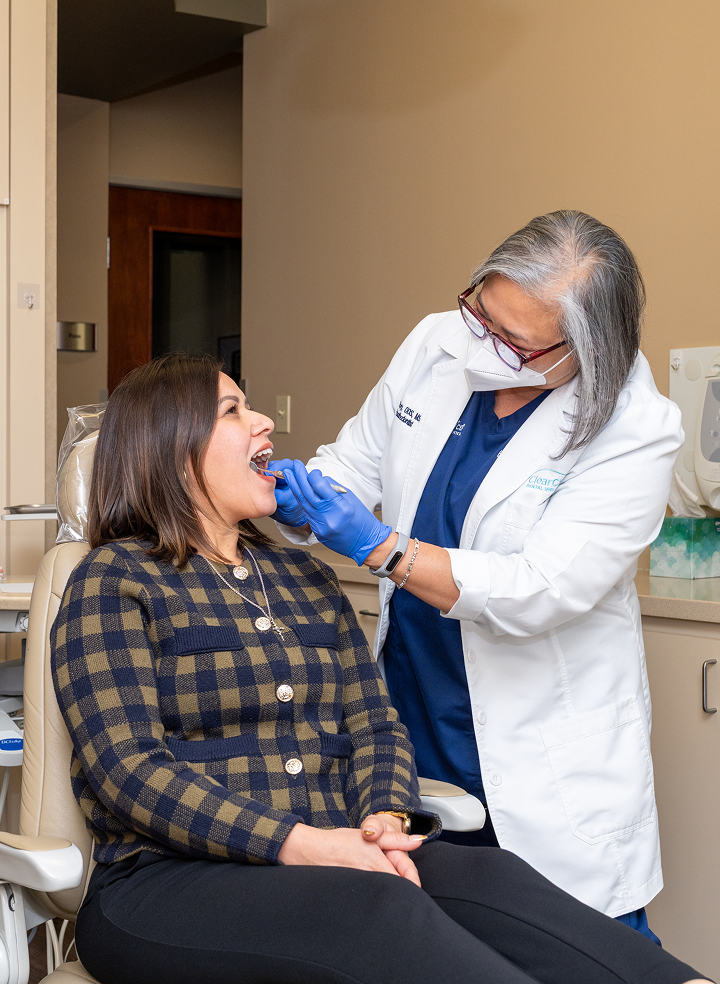
Cracked tooth syndrome is usually diagnosed through a hands-on dental exam rather than X-rays alone, since fine cracks rarely show up clearly on imaging. Because a hairline crack often runs parallel to the X-ray beam, it can be essentially undetectable even on a good scan, which is why a dentist typically relies on a combination of other clues to confirm what is going on.
Common diagnostic methods include:
A bite test, where the patient bites down on a small wooden or rubber instrument to help identify which tooth reproduces the pain on biting and then quickly releasing the bite.
Magnification, using a dental loupe or microscope to examine the tooth surface closely for a visible line
Using an intraoral fiberoptic camera that gives good lighting and is projected on a computer screen
Dental dye, which can seep into a crack and highlight its outline in a way that is otherwise difficult to see
A dentist may also gently probe near the gumline of the suspected tooth, since a crack that extends below the gum can cause localized tenderness. Only a dental professional can confirm whether a crack is present and how deep it runs. If these symptoms sound familiar, a proper examination is the right next step, rather than trying to diagnose the issue at home.
Cracked tooth syndrome treatment options
Cracked tooth syndrome treatment depends largely on how deep the crack runs and whether it has reached the tooth's inner pulp. In general, treatment options may be less extensive when a cracked tooth is evaluated before the condition progresses.
Typical treatment options include:
Bonding or a filling for minor cracks that have not affected the tooth's inner layers, often the fastest and least invasive option
A dental crown for a tooth with a more significant crack, that covers and surrounds the tooth and may help support the tooth structure
A root canal if the crack has reached the pulp, where the tooth's nerve and blood supply are located, followed by a crown to restore the tooth
Extraction if the crack has damaged the tooth beyond what can be repaired, usually reserved for cracks that extend below the gumline or split the root
When a tooth cannot be saved, replacement options such as dental implants may help support chewing function and the appearance of a patient's smile. This is often the point where a cracked tooth and dental implants intersect, since implants are one of the more common solutions once a natural tooth is lost and cannot be repaired.
What happens if a cracked tooth goes untreated?
In some cases, an untreated crack can progress and may increase the risk of complications, including infection or tooth loss. What starts as an occasional twinge of pain can progress into a more serious problem if it is left alone.
As a crack deepens, it can allow bacteria to reach the tooth's inner pulp, which may lead to infection, an abscess or persistent pain that no longer comes and goes. Earlier care may allow for less extensive treatment, such as bonding or a crown, while delay gives the crack more time to spread further into the tooth and potentially below the gumline. If you are dealing with persistent biting pain or sensitivity that will not go away, it is worth scheduling an appointment with your dentist rather than waiting to see if it resolves on its own.
This information is general in nature, and your own dentist is best positioned to evaluate your specific situation and recommend the right next step for you.
Protect your teeth and plan your next step
Unexplained tooth pain is worth acting on early. A dentist can examine the tooth, run the appropriate tests, and confirm whether a crack is the underlying cause, often before the issue has a chance to become more serious.
For readers who have already lost a tooth to a crack, or who are weighing a permanent replacement, ClearChoice specializes in dental implants, and its care teams include oral surgery expertise. A free consultation is a no-pressure way to explore your options and get clear answers about what would work best for your situation.
Schedule free consultation