Last updated 01.29.2026
Why humans can’t regrow teeth like sharks—and why that matters
Sharks regrow thousands of teeth in their lives. Humans don’t—so restoration matters when teeth are lost.
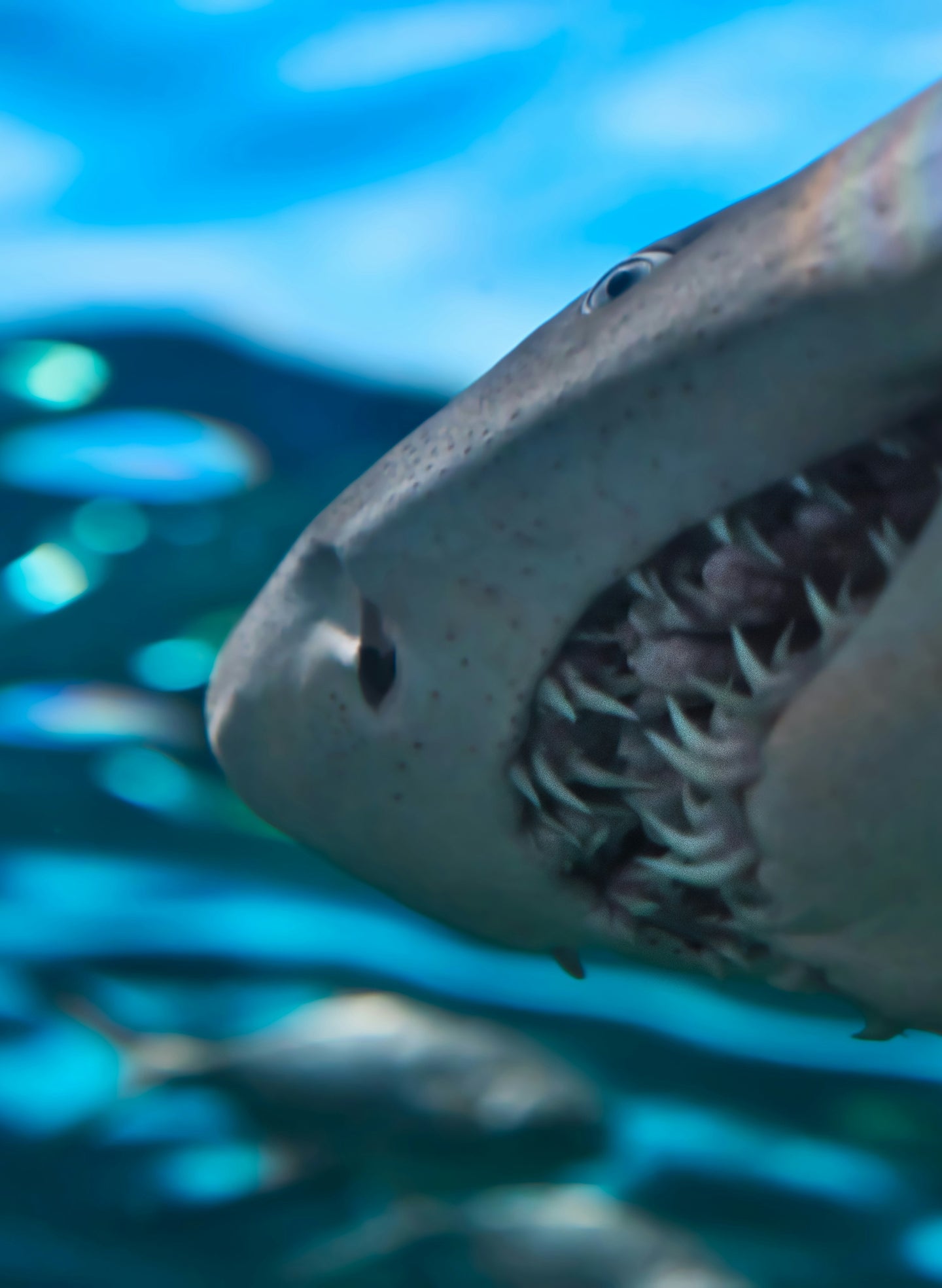
Sharks are famous for one remarkable ability: they can regrow teeth continuously throughout their lives. Sharks are so facinating,they have a full week dedicated to them on television every year. Humans, on the other hand, are ordinary from a dental standpoint, and get just two sets of teeth, and if adult teeth are lost, they don’t come back.
Good for sharks, who regenerate their teeth, unfortunately humans can’t. Lets study why human tooth loss matters, what happens when a tooth isn’t replaced, and why modern restoration options, like dental implants, play such an important role in long-term oral health.
How sharks grow and replace teeth
Sharks may replace tens of thousands of teeth over a lifetime. This isn’t a fluke, it’s an evolutionary adaptation that supports survival.
A conveyor-belt system with multiple rows
Sharks have multiple rows of teeth arranged like a conveyor belt. When a tooth breaks or falls out, another moves forward to take its place. New teeth are constantly forming behind the scenes, ready to rotate into position.
This system ensures sharks always have sharp, functional teeth even after heavy wear from feeding.
Why constant tooth replacement evolved
Sharks rely on their teeth to catch and process prey. Because their teeth experience frequent damage, evolution favored a system of continuous regeneration. Losing a tooth isn’t a problem, it’s expected.
Why humans only grow two sets of teeth
Humans follow a very different developmental pattern.
Diphyodont development: baby teeth and adult teeth
Humans are diphyodont, meaning we develop:
One set of primary (baby) teeth
One set of permanent adult teeth
Once adult teeth erupt, the body no longer produces replacements.
Human physiology
Rather than constant regeneration, human physiology favored:
Stronger, more complex teeth
A stable bite and jaw alignment
Teeth designed to last decades with proper care
This trade-off worked well until modern humans began living much longer lives. Teeth that once only needed to last into mid-adulthood now must function for many more decades.
What tooth loss means for humans
Functional, aesthetic, and bone health effects
When a tooth is lost, the impact goes beyond appearance. Tooth loss may be associated with:
Changes in chewing efficiency
Shifts in neighboring teeth
Bone changes in the jaw over time
Altered speech or bite balance
Because humans don’t have a natural replacement system, these changes may progress if the missing tooth isn’t addressed.
No natural backup: why restoration matters
Unlike sharks, humans don’t have rows of spare teeth waiting to emerge. Once a permanent tooth is gone, restoration is often the only way to support function and oral structure.
What happens if a lost tooth isn’t replaced?
Leaving a missing tooth untreated may allow:
Bone in the area to gradually change
Adjacent teeth to shift
Bite alignment to be affected
Misbalance in the chewing muscles as patients avoid chewing on the side of the missing tooth
These changes can make future restoration more complex.
Dental implants and other restoration options
How implants help restore chewing and confidence
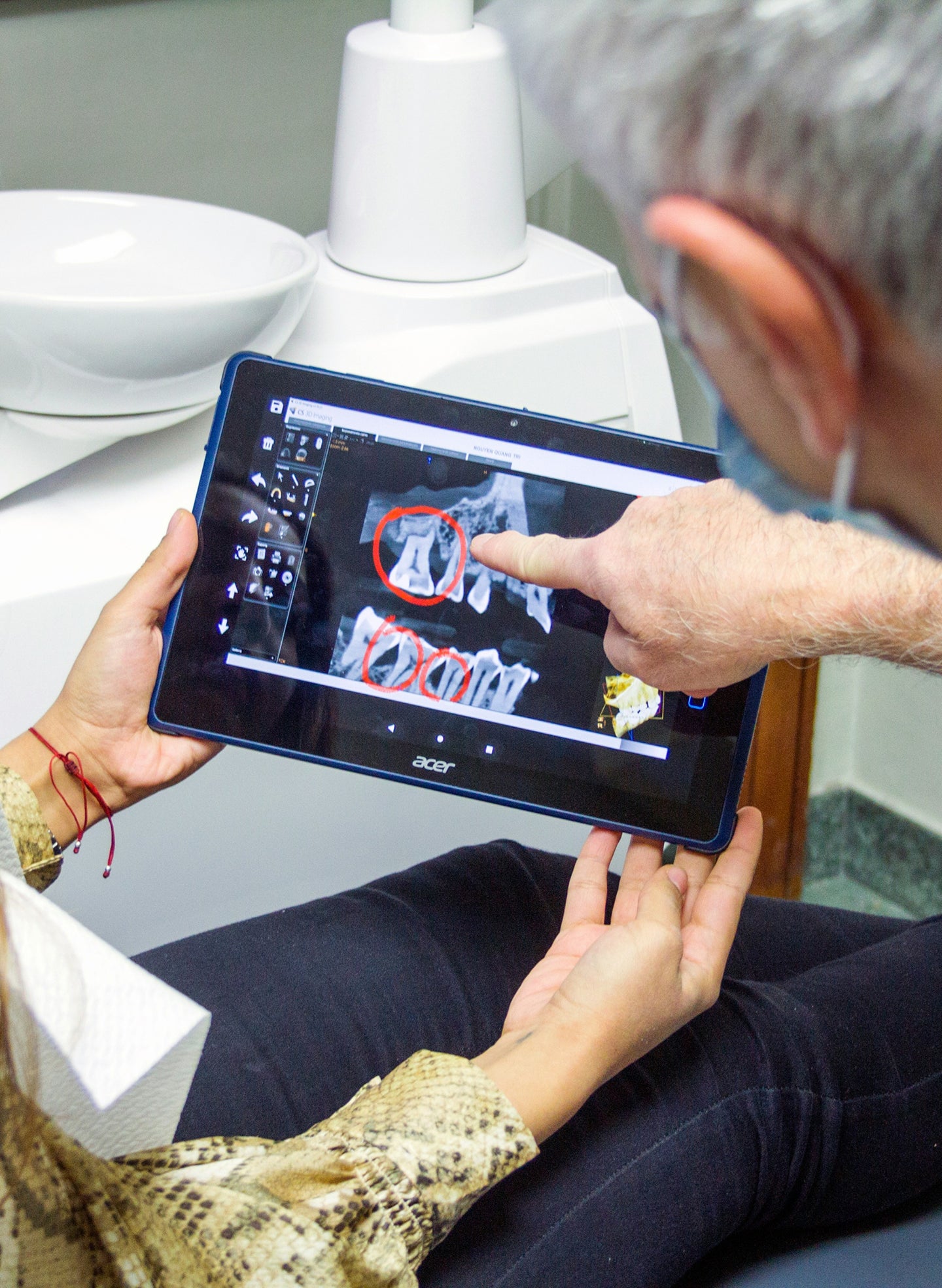
Dental implants are designed to replace missing teeth by supporting restorations that function similarly to natural teeth. They can help patients eat, speak, and smile more comfortably after tooth loss.
At a ClearChoice Dental Implant Center, implant care is planned and guided by prosthodontists as part of a coordinated team.
The role of implants in preserving bone
Because implants integrate with the jawbone, they may help support bone health in the area where a tooth is missing. This is one reason implants are often discussed as a long-term option when teeth are lost.
With proper care, implants can last a lifetime and support everyday function.
Long-term care when teeth can’t regenerate
Even with restoration, ongoing oral hygiene and follow-up care remain essential. Implants don’t eliminate the need for gum care or professional monitoring—but they do help replace what the body cannot naturally regenerate.
The future of tooth regeneration research
What scientists are studying
Researchers are exploring tooth regeneration using:
Stem cell research
Genetic signaling pathways
Tissue engineering techniques
Some early studies show promise, but these approaches are still experimental.
Why regeneration isn’t yet a practical solution
At this time, regenerative tooth therapies are not widely available, predictable, or accessible for routine patient care. Significant research is still needed before they become a realistic option.
Why restoration remains essential today
Until true tooth regeneration becomes viable, restorative dentistry remains the most reliable way to address tooth loss and support oral health.
Shark teeth and human tooth loss FAQs
Why can’t humans regenerate teeth like sharks?
Humans evolved with a different dental system designed for durability, not constant replacement. Once adult teeth are lost, the body does not naturally regenerate them.
Will humans ever regrow teeth in the future?
Research is ongoing, but regenerative treatments are not yet available for routine use. Restoration remains the practical option today.
What should I do if I lose a tooth?
Prompt evaluation can help determine appropriate options to support function and oral health.
Are dental implants the best option when a tooth is gone?
The best option depends on individual health, anatomy, and goals. A consultation at a ClearChoice Dental Implant Center can help clarify what may be appropriate.
Why this matters for your oral health
Sharks can afford to lose teeth, humans can’t. Because we don’t regenerate teeth naturally, replacing missing teeth plays an important role in maintaining comfort, function, and long-term oral health.
If you’ve lost a tooth or are considering restoration, a consultation at a ClearChoice Dental Implant Center can help you explore options designed to support your smile—today and into the future. At your consultation, you can make application for third party financing options that may help you explore restorative care.